
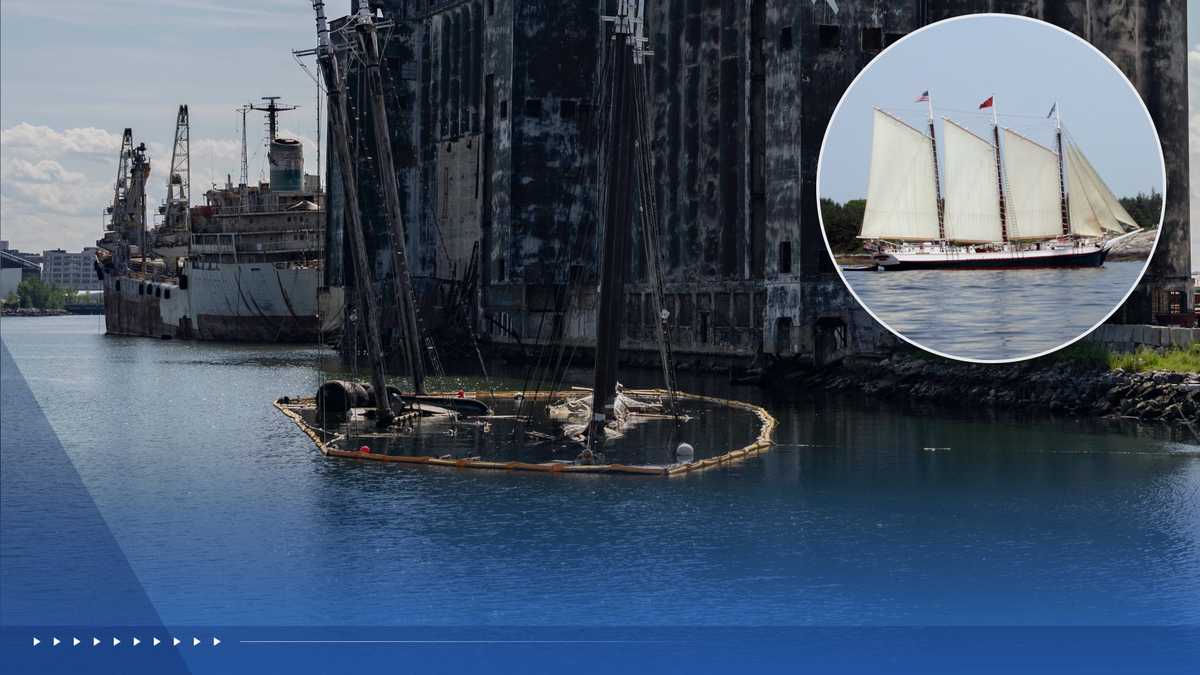
Historic Maine schooner remains at bottom of New York City canal, months after it sank

 PORTLAND, Maine —
The New York City-based company that owns a historic Maine schooner that sank near the Gowanus Canal two months ago has not decided what to do with it yet.
The 128-foot Victory Chimes was built in 1900 and is the last surviving Chesapeake ram, a kind of flat-bottomed schooner that is designed to navigate narrow and shallow waterways. Victory Chimes is also on the National Register of Historic Places, and the Maine State Quarter released in 2003 depicts a schooner resembling the vessel.
Victory Chimes operated as a windjammer in Maine from the 1950s through 2022, when the schooner was put up for sale. The boat was acquired by Crew, a company that turns historic vessels into floating bars and restaurants, at an auction about three years ago.
In early July, Victory Chimes and another Crew-owned schooner, Pilot, sank while docked on the Brooklyn waterfront. Both schooners sank around the time of strong squalls, but the exact cause of the sinkings has not been fully determined.
Maine Historical Society executive director Steve Bromage said the loss of Victory Chimes is “heartbreaking for Maine and the nation’s maritime heritage.”
“While salvaging her requires tremendous effort and expense, it would be very unfortunate to lose such an important part of history,” Bromage said.
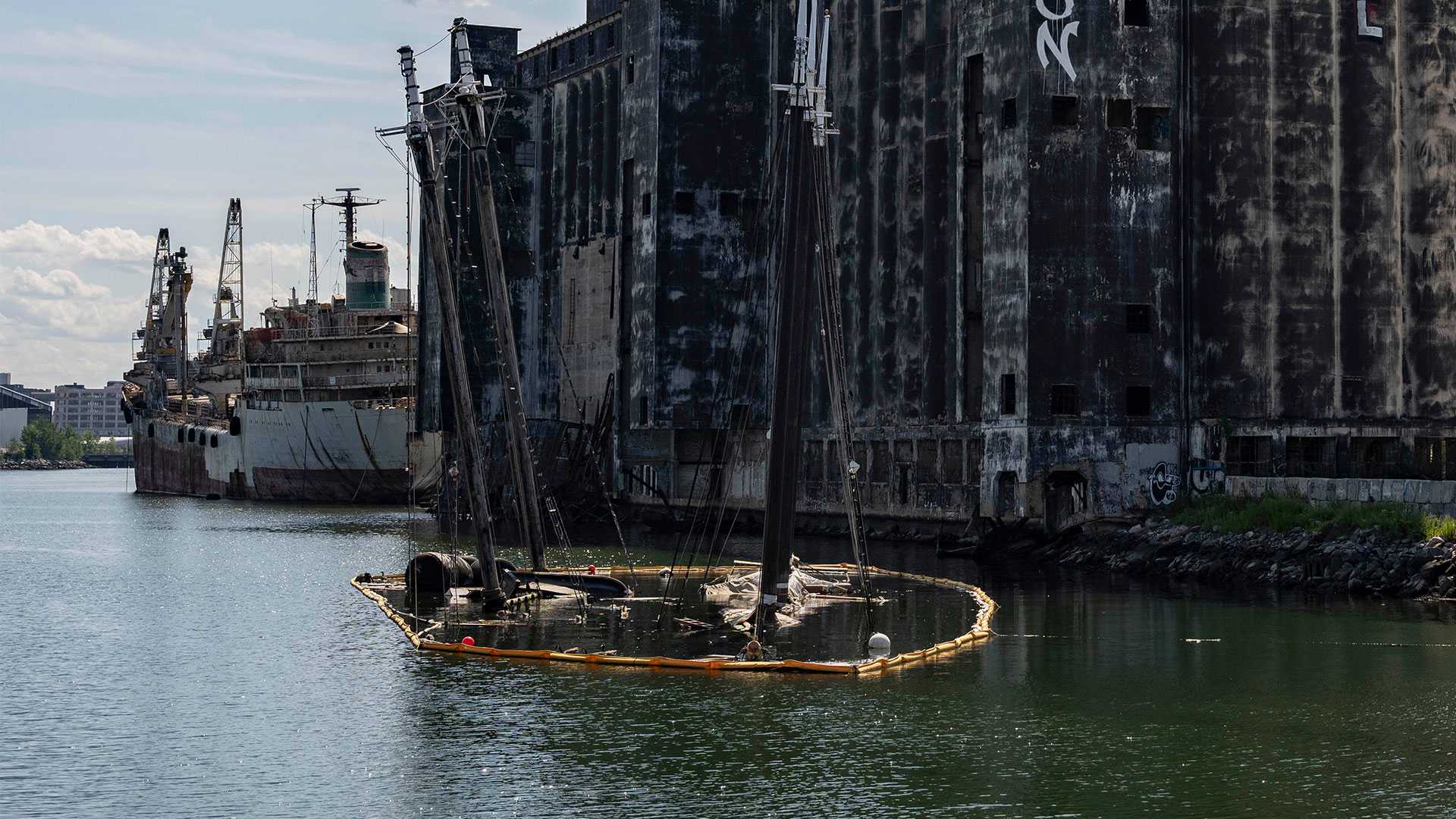
AP Photo/Yuki Iwamura
Debris of two schooners, the Victory Chimes and the Pilot, floats next to abandoned Red Hook Grain Terminal in the Henry Street Basin, Wednesday, Aug. 26, 2026, in the Brooklyn borough of New York.
Pilot also had a storied history. The 121-foot schooner, which is a little more than 100 years old, once ferried maritime pilots to larger ships in Boston Harbor. Pilot also made trips for the Coast Guard during the World War II era. It became an educational and research vessel in the 1970s and 1980s, and Jacques Cousteau spent time aboard it during that period. Crew acquired Pilot in 2015 and turned it into an oyster bar.
Crew CEO Alex Pincus said the company is working with insurers, marine salvage experts and marine surveyors to determine what to do about the sunken boats.
“Raising wooden vessels of this size is a highly complex operation that requires specialized equipment, careful planning and extensive coordination,” Pincus said. “The vessels remain submerged as part of that ongoing process while assessments and planning continue.”
It’s unclear if the schooners can be saved
Charlie Weidman, of Charlie’s Marine Service in Rockland, Maine, said even if the two ships can be raised, rebuilding them would be extremely difficult and expensive, in part because the kind of timber they were built with is no longer readily available.
Weidman, who once shared a dock with Victory Chimes, described himself as “unsentimental” about the sinking of the ships and the ill-fated attempts to turn them into floating restaurants.
“They’re not the saviors that they paint themselves to be. They’re like, ‘We’re saving the boat,'” Weidman said of Crew. “You’re trying to monetize that boat. You’re just trying to make a buck here.”
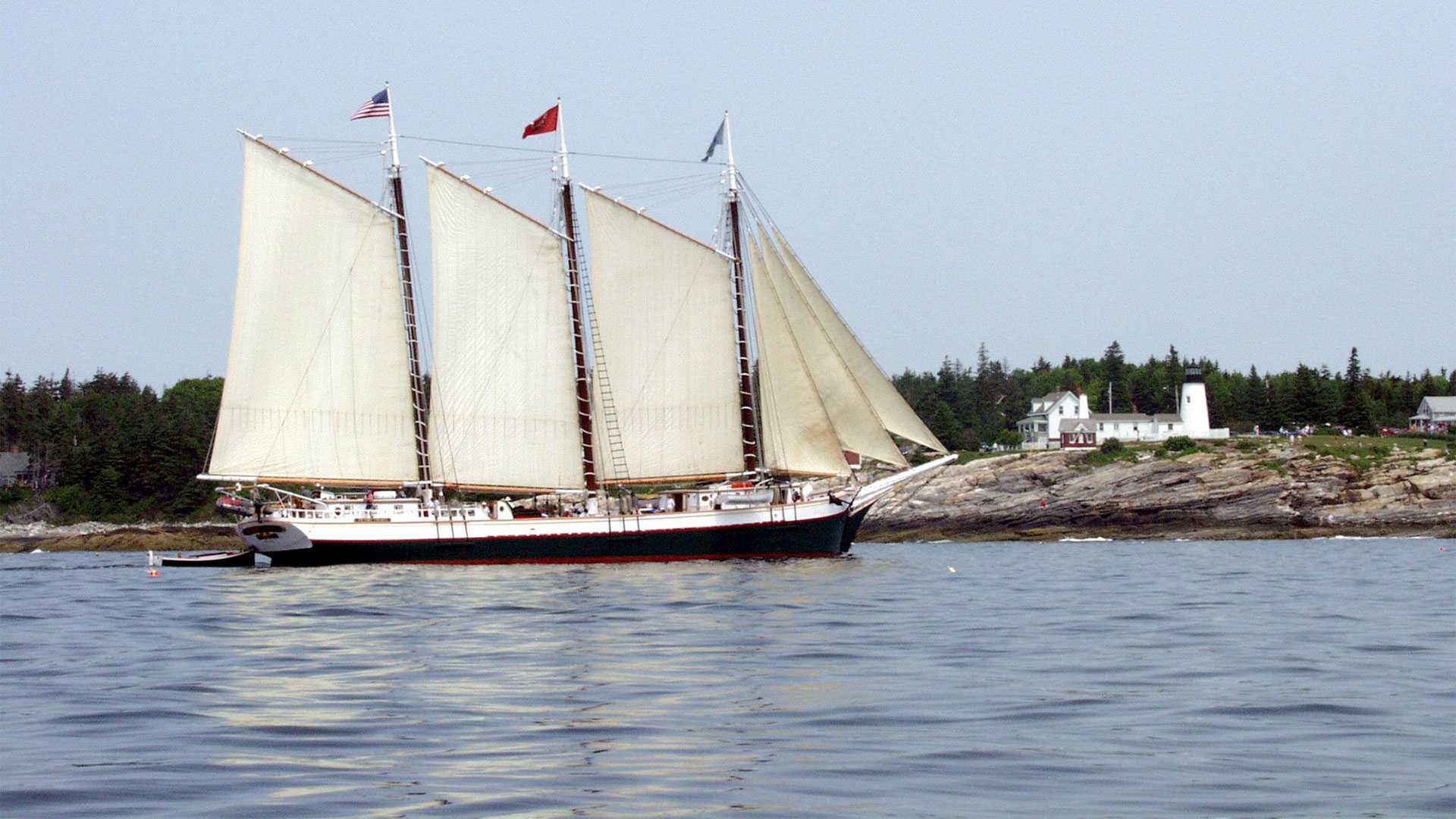
AP Photo/Annie Higbee
This file photo shows Schooner Victory Chimes sailing past the Pemaquid Point Light in Bristol, Maine, on June 24, 2003.
The schooners were docked at Brooklyn Bridge Park before being relocated to Henry Street Basin, just off the Gowanus Canal in Brooklyn’s Red Hook neighborhood. The canal is a federal Superfund site regarded as one of the most toxic waterways in the country, though a long-term cleanup is underway.
The Brooklyn Bridge Park Corporation, which manages the park, did not respond to a request for comment from The Associated Press. Coast Guard and New York City officials also didn’t respond to the AP’s questions about the sinking of the ships.
The loss of the boats is “sad, but not entirely unexpected,” because maintaining such historic schooners is very difficult, said Amanda Pleau, spokesperson for the Maine Maritime Museum. Pleau said most turn-of-the-century schooners lasted less than 20 years.
“That’s also why historic vessels are so special; it’s not uncommon in Maine to come across a home that’s more than 100 years old, but the remaining ships are few and far between,” she said.