
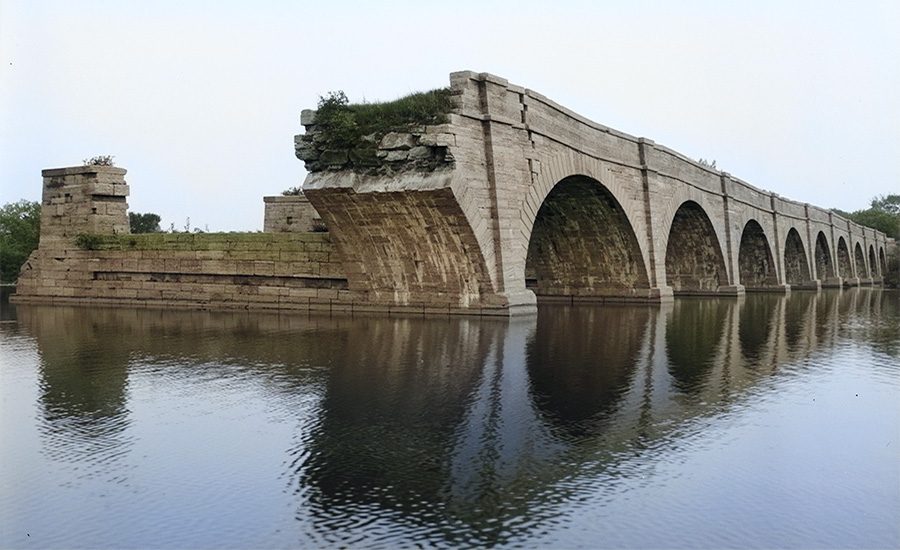
The revived 125-mile Constitution natural gas pipeline from Pennsylvania to New York moved closer to federal authorization Aug. 26, despite New York’s demand that regulators conduct a new environmental impact statement.
The Federal Energy Regulatory Agency formally published notice of an environmental assessment earlier in August, finding the estimaed $1-billion project would not significantly affect the environment. The review incorporates much of the project’s 2014 analysis while examining changed conditions along the route. The comment period runs through Sept. 21, with a federal authorization deadline set for Nov. 19.
Constitution Pipeline Co., partly owned by Williams Cos., is seeking renewed federal authorization for the 30-in.-dia pipeline through Susquehanna County, Pa., and four New York counties io the north and east . Designed to transport 650,000 dekatherms per day, the pipeline would connect in Schoharie County, N.Y., with the Iroquois Gas Transmission System and Tennessee Gas Pipeline. A related Iroquois project would add 22,000 hp of compression at the existing Wright Compressor Station there.
Williams confirmed to ENR in May 2025 that it was reviving Constitution after abandoning the project in 2020. The company said it had invested more than $350 million before stopping work.
Changed Conditions, Old Environmental Review
FERC completed the original environmental impact statement for Constitution and the Wright Interconnect 12 years ago. For the revived projects, staff incorporated that analysis by reference and examined where conditions or potential effects had changed enough to warrant additional review. Those areas included water resources, wetlands, protected species, land use, cultural resources, air quality, noise and safety.
The assessment identifies 330 waterbody crossings, revised classifications for many New York streams and nine additional potential landslide areas. FERC also found structures built within the proposed alignment that would require avoidance or other resolution before construction.
One of the largest conflicts is near milepost 120 in Schoharie County, where FERC identified an approximately 200,000-sq-ft Amazon distribution facility under construction along the planned route. About 2,000 linear ft of pipeline would cross its parking area and stormwater-retention pond. The agency said pipeline construction there may be feasible but would require “extensive coordination” with the facility’s owner or operator and could temporarily disrupt truck and vehicle movements.
]]>
Looking for quick answers on construction and engineering topics?
Try Ask ENR, our new smart AI search tool.
Ask ENR →
]]>
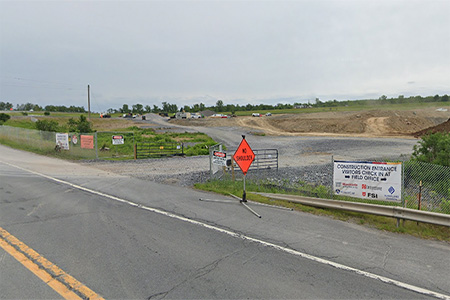
Construction was underway in June at a distribution facility along Route 30A in Schoharie County, N.Y. FERC says about 2,000 ft of the proposed Constitution Pipeline alignment would cross the site.
Image courtesy Google Earth
But the New York State Dept. of Environmental Conservation reached a different conclusion about what those changes require.
In Aug. 13 comments, the agency told FERC it “must prepare a new Environmental Impact Statement,” citing changes since 2014 in the project footprint and environmental conditions, along with changes in governing law and air-dispersion modeling guidance.
The agency estimates Constitution would affect more than 300 streams, including at least 87 that support trout or trout spawning, more than 80 acres of freshwater wetlands and about 500 acres of forest surrounding streams and wetlands. The state also criticized Constitution for deferring some updated environmental information FERC requested until after its certificate is reinstated. “Constitution has it backwards,” the department said, arguing the information is needed before FERC decides whether to authorize the project.
FERC staff concluded that the updated analysis, 2014 environmental impact statement and proposed mitigation support a finding of no significant environmental impact, saying another environmental impact statement is not required.
New York Authority Remains Contested
Constitution also wants FERC to reaffirm a previous determination that New York waived its Clean Water Act Section 401 authority by failing to act on the company’s original water-quality certification request within one year. The agency said in January that it “did not waive” that authority and would “explore all available options to vigorously defend our state rights.” FERC says the issue will be addressed in a later order.
]]>
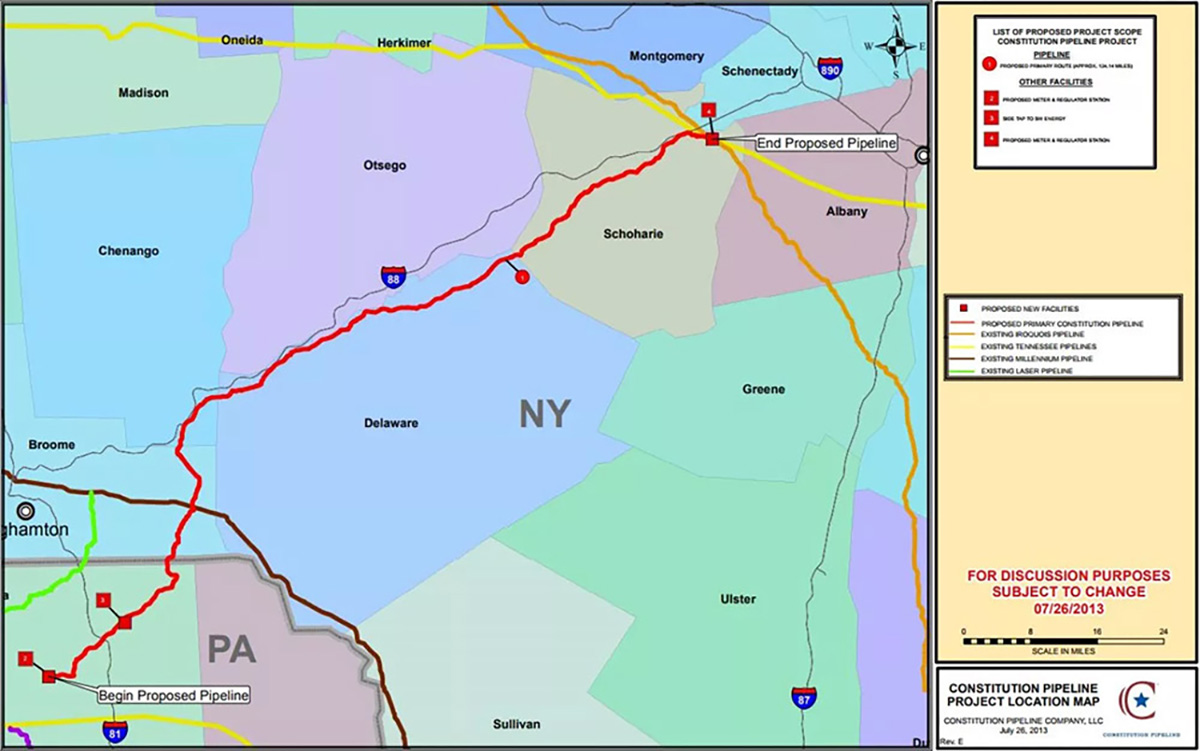
The revived Constitution Pipeline would run about 125 miles from northeastern Pennsylvania through four New York counties to Schoharie County, where it would connect with existing regional gas pipelines. Click to enlarge.
Map courtesy Constitution Pipeline Co.
That dispute dates to New York’s 2016 denial of Constitution’s water-quality certification. ENR reported at the time the agency said the developer had not adequately demonstrated construction would protect water-quality standards, citing potential effects on 251 streams and insufficient analysis of alternative routes. Constitution called the decision politically motivated and challenged it.
After reviving the project, Constitution applied again to New York in May 2025. The agency issued three notices finding the application incomplete, citing outstanding items including updated project plans, wetland delineations and a new federal environmental review. Constitution maintained that the project scope had not changed and that regulators could rely on the 2014 environmental impact statement.
Constitution withdrew its state application last November while preserving its claim that New York had already waived its Section 401 authority. The agency maintains that Constitution must submit a new water-quality certification application, a position it reiterated in comments to FERC.
The federal agency’s handling of the revival is already before the New York City-based federal appeals court
Stop the Pipeline, a landowner group opposing the project and challenging FERC’s handling of its revival, says the agency is “relying on all of the documents in the dockets it just ‘dismissed'” after the court ordered the proceedings dismissed in 2021. The federal regulator says challenges are premature, arguing petitioners have identified “no aggrievement, no injury, and no final merits issue” ready for judicial review.
RELATED
Controversial $1B Gas Pipeline Gains NJ-NY Approvals for Construction
Anne Marie Garti, an attorney representing Stop the Pipeline, told ENR by email she expects the challenge to ultimately stop the project, even if FERC reissues its certificate. That “does not mean FERC will not issue a new certificate to Constitution, but that the project will be halted (again) before it is built,” she said.
Constitution has estimated that initial clearing could begin in the fourth quarter of 2026 if it obtains required approvals and clearances. Constitution and Iroquois seek a May 2028 in-service date. The company did not immediately respond to ENR’s request for comment.