
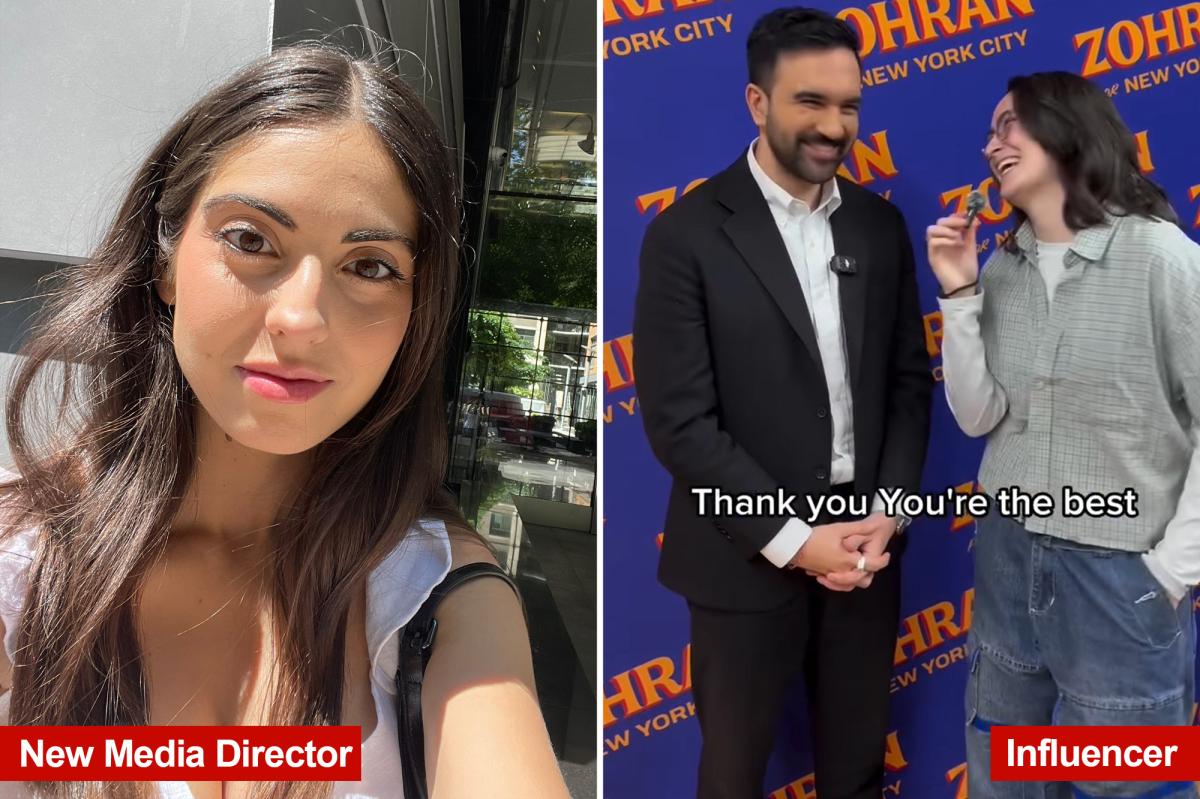
They’re under Zo’s influence.
Mayor Zohran Mamdani assembled an army of nearly 200 “influencers,” giving the social media stars VIP access to push the lefty administration’s talking points, a new bombshell report revealed.
The web of online personalities are being fed talking points by City Hall through an encrypted Signal group text, potentially running afoul of local record-keeping laws, according to the study by the Columbia Journalism Review.
Some influencers are even pocketing taxpayer funds “for work on particular messaging campaigns,” though not for their coverage, the report states.
Mamdani holds a news conference for “new media and content creators” during his campaign in 2025. X/@EmiliaWinterRo
The secret Signal chat – named “NYC Creators Announcements” – combined with murky money left many watchdogs aghast.
“City leaders must be deliberate about how they communicate,” said Citizens Union Executive Director Grace Rauh “Any discussion of official government business must occur in a manner that ensures records are preserved and accessible under the Freedom of Information Law. The rules exist to protect the public.”
While “there’s nothing inherently wrong with working with influencers,” Rauh said “the problem is that the city has been doing this privately.”
“We don’t know who is getting paid and who isn’t, and the public has no way to tell a paid supporter from an organic voice. There needs to be disclosure, and we need clear rules of the road.”
The official Mamdani cheerleaders chat spawned from Creators4Zohran, a motley crew of influencers convened during his social media-savvy mayoral campaign last year, according to the CJR report.
Influencer Allie O’Brien called Mamdani the “mayor of uncontrollable joy” in a post. TikTok/Allie OBrien
After Mamdani took office, his personal rah-rah troupe of terminally online cloutchasers was reconfigured to promote coverage and talking points directly from the mayor’s office, the researchers found.
“The group is run by the Director of New Media and Cultural Communications at the NYC Office of the Mayor, Emilia Rowland, and her staff, and members of the group receive daily updates, talking points and clips that they can use in their posts,” the study states.
Rowland pulls in $175,000 a year, while her supervisor city communications Director Anna Bhar is paid $260,000.
Emilia Rowland, Director of New Media and Cultural Communications at the NYC Office of the Mayor. X/EmiliaWinterRo
How much the influencers were paid, or if at all, was unclear.
A City Hall spokesperson said the mayor’s office “never paid a content creator for a collaboration or for content production.”
When asked if other city agencies paid influencers, City Hall reps didn’t answer.
CJR researchers found influencers on the list weren’t paid to cover Mamdani or his policies, but did so voluntarily because they personally supported him, wanted potentially lucrative access or to perform civic service.
Some influencers, however, have done paid advertisements for city agencies, the study noted.
City agencies going back to the COVID-19 pandemic have tapped third-party marketing firms for ad campaigns, usually paying between $5,000 and $20,000 a pop, the study found.
But a Post review of active contracts found Mamdani’s Department of Social Services shelled out more than $100,000 this year for an unknown social media campaign. That three-year contract was originally inked in 2025 during Mayor Eric Adams’ administration.
Regardless of whether they’re paid, the stable of influencers extends beyond New York City.
One out-of towner influencer, who goes by the handle @bananadotgov on Instagram, is from Columbus, Ohio, and has posted a number of lionizing videos about Mamdani.
“Strange things are happening, because I have literally not felt this way about a politician since Bernie Sanders,” she said, responding to the mayor saying he wouldn’t take a pay raise in July.
Whether the Buckeye State influencer is in the Signal group chat remained unclear Wednesday, but she was often featured on the Creators4Zohran page.
The use of Signal prompted controversy during former Mayor Bill de Blasio’s administration when it was revealed his aides were using the encrypted text app, which can be set to delete messages.
City Hall officials are required by law to keep records, including messages, related to government business to give the public and watchdogs a necessary window into how decisions are made.
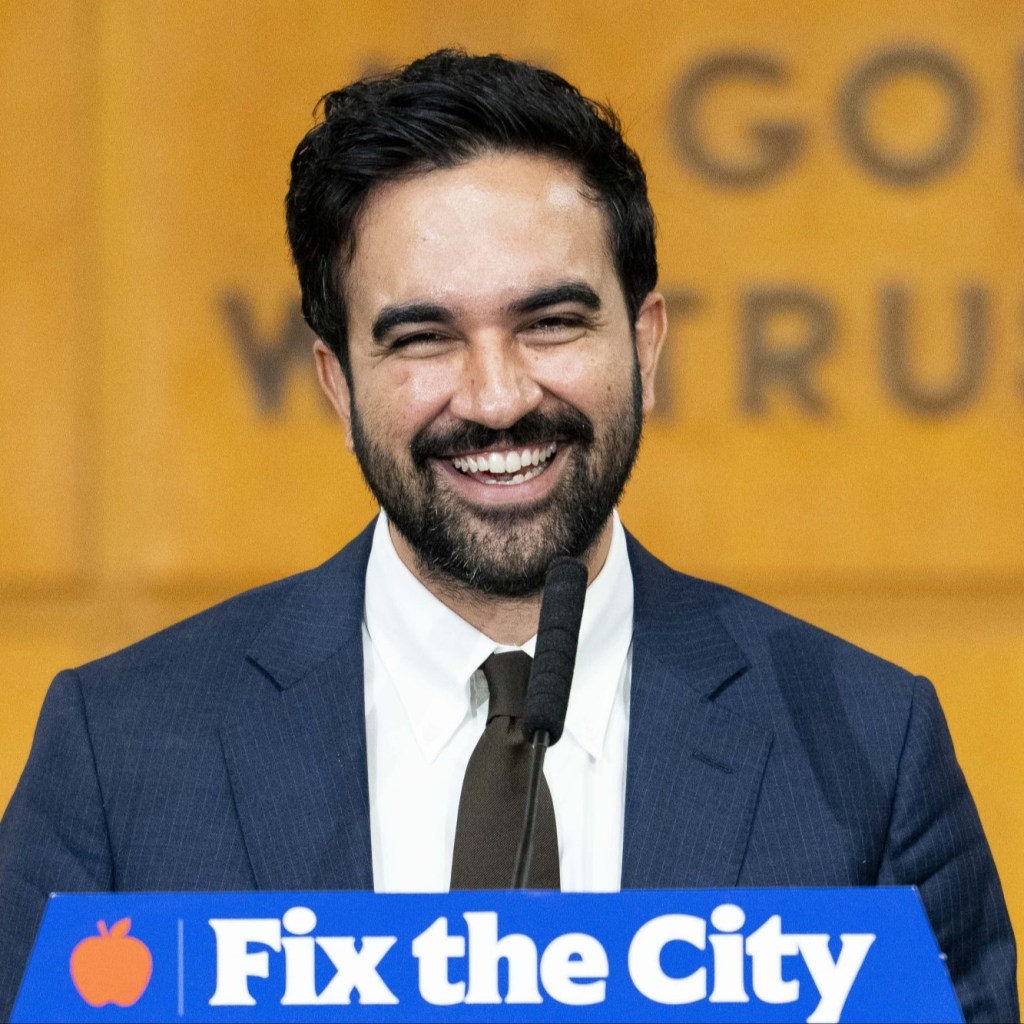 New York City Mayor Zohran Mamdani speaks at a press conference at Manhattan Housing Court in New York City on Tuesday, August 25, 2026. Michael Brochstein/ZUMA / SplashNews.com
“Government records do not stop being government records because an official uses Signal, a personal phone, or another non-government platform,” said Axel Ebermann of the New York Coalition for Open Government.
“The City’s own records policy is clear as well. Instant messages about City decisions, actions, or policies must be preserved, including those sent on personal devices or third-party platforms,” Ebermann said. “If messages about public business are disappearing because officials chose an app that allows them to disappear, that’s a serious open-government problem.
“Government officials should not be able to make public records disappear simply by choosing the right app.”
New York City Mayor Zorhan Mamdani with Tascha Van Auken by his side. Paul Martinka
Nile Berry, a city-based influencer on the Signal chat, said only six Mamdani administration officials can post and mostly share “pretty run-of-the-mill announcements.” He admitted, however, that their use of Signal could be seen as shady.
“I don’t know why exactly Signal was chosen,” he said.
“I know it has a sketchy cachet as what’s used to keep messages private. I don’t know why they’re choosing to use that. This could as easily be a WhatsApp group or a text thread.”
When asked about concerns the encrypted Signal chat violates the city’s record retention laws, Mamdani first deflected by arguing that tapping influencers is no different than engaging with radio, TV and other media to spread information.
He then broadly acknowledged the need to follow the law.
Tascha Van Auken speaks on January 2, 2026. She works for the Office of Mass Engagement. Paul Martinka
“My administration will always strive to fully provide all legal requirements, including those that relate to the presentation of city records,” he said Wednesday.
“If there are any departures from what is legally required, my administration will look into it immediately and take corrective action.”
City Hall officials originally directed The Post toward Mamdani’s comments and refused to answer specific questions.
They then produced a statement by Ramzi Kassem, chief counsel to the mayor, that gave the chat a legal all-clear.
Start your day with all you need to know
Morning Report delivers the latest news, videos, photos and more.
Thanks for signing up!
“There is no City policy against using Signal,” he said. “By default, the application is not downloaded on City employees’ devices, but like TikTok, WhatsApp, and other applications, it can be authorized for employees’ specific uses subject to compliance with applicable City record retention policies and the New York State Freedom of Information Law. Authorized use of Signal on City devices allows records to be retained consistent with record retention policies and laws.”
Whether the chat’s messages are set to auto-delete was unclear.
Emily Minster, who has been referred to as the “influencer whisperer,” was appointed to the Office of NYC Mayor Mamdani as Deputy Press Secretary for New Media and creative partnerships. Linkedin/Emily Minster
Mamdani’s administration has come under fire for allegedly blurring the lines between informing the public and outright politicking.
Critics slammed his $54 million “Office of Mass Engagement” as a propaganda organ. His City Hall also produced a taxpayer-funded documentary about tenants organizing against their do-nothing landlord.
“This new effort with influencers is a great example of why we have transparency rules,” Rachel Fauss, of good government group Reinvent Albany, said Wednesday. “Disclosure is the right thing to do here. It’s tax dollars so there’s a public interest.”
NYC Common Sense, a group headed by former mayoral candidate Jim Walden, called on the city’s Department of Investigation to probe the Signal chat.
“New Yorkers should not have to wonder whether the friendly video in their feed is independent commentary, undisclosed advertising, or government-funded political messaging,” he said in a letter Wednesday.
“A transparent investigation would protect legitimate public-service communications while ensuring that City Hall does not use public money and private channels to manufacture favorable coverage for the Mayor.”
— Additional reporting by Haley Brown and Matthew Fischetti