
Thomas Fahmy was not chasing a storm.
He was not hiking through the wilderness or standing in the middle of an open field. The 24-year-old Staten Island man was simply walking back to his car after leaving work for a dentist appointment, carrying a backpack, when a lightning-related incident changed an ordinary afternoon in seconds.
A Nest camera outside a nearby home captured the moment. Fahmy, wearing an orange shirt and carrying a backpack, walked along Todt Hill Road before bright flashes interrupted the footage and he suddenly disappeared from view.
Then came the part that surprised everyone watching.
He got back up.
“I didn’t even have a chance to step back,” Fahmy told SILive after the August 27 incident.
Fahmy, who works as a staffer in Rep. Nicole Malliotakis’ Staten Island district office, said he was walking in drizzly weather and was about 15 to 20 feet from his car when the lightning event happened. He said he believed he absorbed part of the electrical charge, although reports have not established the exact mechanism of what happened.
He remained conscious, did not hit his head, and managed to call for help. A woman at a nearby home responded and called 911.
Emergency responders took Fahmy to Northwell Staten Island University Hospital, where doctors kept him overnight for observation.
The Survival Statistic Surprises Many People
The footage looks like the kind of moment people assume has only one possible outcome.
But lightning strikes are not automatically fatal.
Nearly 90% of people struck by lightning survive, according to the Centers for Disease Control and Prevention and the National Weather Service. The number may sound surprising, but survival doesn’t mean someone walks away without consequences.
Some survivors experience burns, muscle injuries, hearing or vision problems, numbness, headaches, memory issues, and other neurological effects. Some lightning survivors live with long-term disabilities after the event.
The National Weather Service estimates lightning kills about 20 people in the United States each year and severely injures hundreds more. Around 25 million cloud-to-ground lightning strikes occur across the country annually.
The odds of being struck remain extremely low. The CDC estimates the chance of being struck in a given year is less than 1 in 1 million.
Related: Top 10 Unbelievable Weather Anomalies That Defy Explanation
Fahmy’s Injuries Were Not Obvious From the Outside
“I had multiple body exams, no burns at all,” he told SILive.
That surprised some viewers because many people picture lightning injuries as obvious burns or dramatic physical damage. But electrical injuries can be much harder to see.
Doctors monitored Fahmy’s creatine kinase levels during his hospital stay, a measure that can rise after muscle damage. His levels were reportedly stable by the time he was discharged.
Fahmy said he experienced severe pain along with numbness and tingling in both feet after the incident.
The absence of visible injuries does not always tell the full story after a lightning-related event.
The Storm Did Not Need to Look Extreme
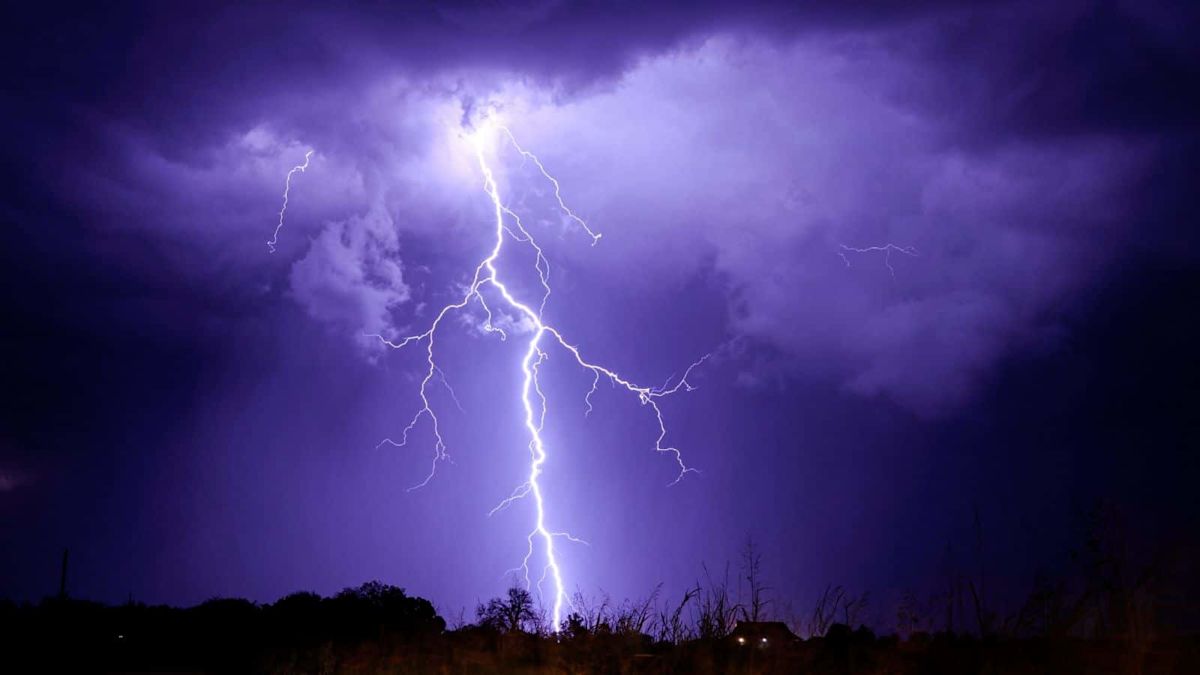
Image Credit: Gleive Marcio Rodrigues de Souza via Pexels
Fahmy’s experience also challenges a common idea about lightning: that danger only arrives during the worst part of a storm.
It does not.
Lightning can strike before heavy rain begins, after rainfall appears to stop, or when skies do not look especially threatening. The National Weather Service warns that if thunder can be heard, lightning is close enough to pose a risk.
That is why weather officials encourage people to seek shelter inside a substantial building or enclosed vehicle during thunderstorms.
In Fahmy’s case, reports describe a lightning-related incident during drizzly weather, but they do not confirm whether he experienced a direct strike, ground current, or another type of electrical exposure.
Fahmy Says the Experience Changed His Perspective
“It all goes down the drain once you see life literally flash in front of your eyes,” he told SILive.
He later spoke about faith and gratitude, saying the experience reminded him that some things are beyond his control.
“In politics, you kind of forget sometimes that there’s something bigger than you. There is a power greater than you,” Fahmy said.
He even bought a Mega Millions ticket afterward, joking that perhaps his unusual luck would continue. The report confirmed he bought the ticket, but it provides no information that he won any prize.
Fahmy’s story gained attention because the camera captured more than a lightning event. It captured the few seconds between an ordinary afternoon and a moment that could have ended very differently.
For most people, lightning remains a rare danger. But his experience shows why weather experts continue warning people not to underestimate a storm simply because it looks mild.
What is the closest you have ever come to a moment that changed your perspective on life?
More Articles You Might Be Interested In:
The post Doorbell Camera Captures Moment Staten Island Man Survives Lightning Incident appeared first on FODMAP Everyday.