
The city has switched sides in the long-running fight over who has access to Columbia University’s Morningside Heights campus. In a new court filing, the city’s Law Department told a judge that it supports reopening College Walk, a main thoroughfare that runs along 116th Street between Broadway and Amsterdam Avenue.
The letter, filed Wednesday, is brief and says simply that the city “supports reopening of the walkway through the Columbia University campus to the public.” The change came as a result of Corporation Counsel Steven Banks’ review of “all pending litigation,” according to the letter.
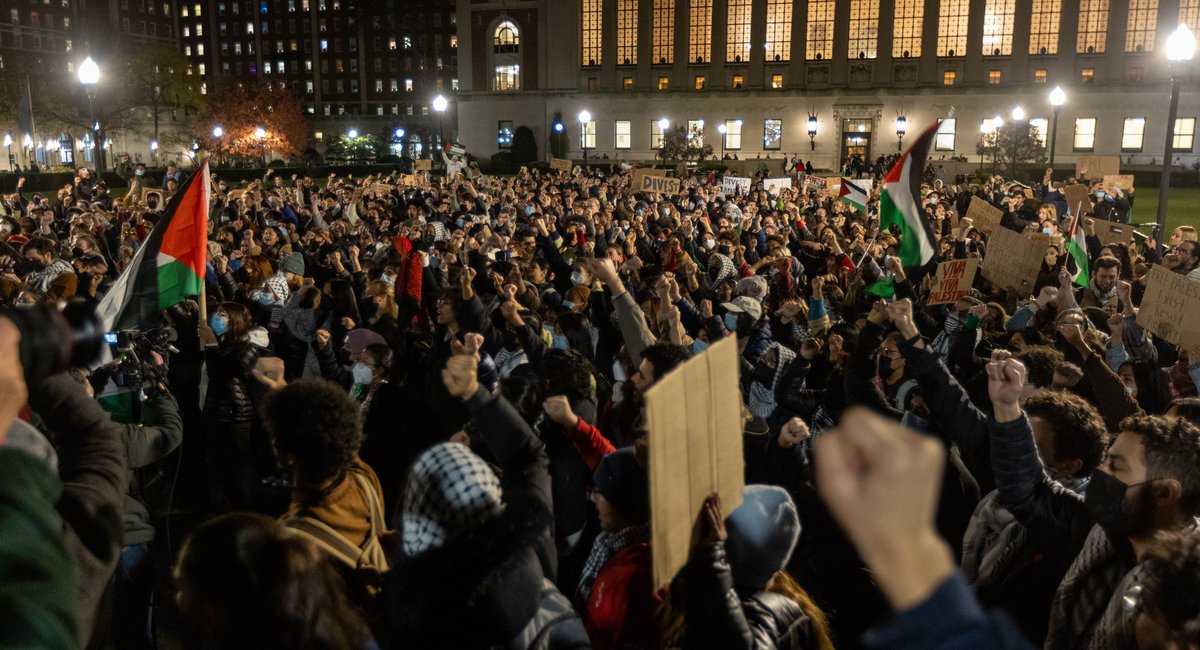
Columbia first locked the gates in October 2023, after the war in Gaza set off protests on campus. They opened and closed several times over the following months, but have stayed shut since the spring of 2024, when demonstrators set up an encampment on one of the university’s lawns and later occupied Hamilton Hall, leading to clashes with the NYPD.
But even as the protests ended, the gates remained closed.
The closure drew anger from nearby residents who had long used the walkway to cut through the campus, which runs six blocks from 114th Street to 120th Street. Neighbor Gussie Kappner told Gothamist in April that the closure was especially hard on older people and individuals with disabilities given that the campus sits squarely between the 1 train on Broadway and a medical center on Amsterdam Avenue.
In 2025, residents sued Columbia University and the city, arguing Columbia had violated a 1953 agreement that allowed the university to take ownership of that stretch of 116th Street in exchange for preserving a walkway through the campus.
The university has said that the walkway is private property and its closure was necessary for campus safety. Currently it allows limited access for local residents, but they must apply for permission to cross.
City Council Majority Leader Shaun Abreu has been pushing the university to change course. In a statement on Friday he said that Columbia “should be ashamed for how they have treated the community that has always accommodated them.” He and other officials praised Mayor Zohran Mamdani and his administration for the change of position.
Up until now, the city had taken no position on whether the walkway should reopen, but in earlier court filings it had argued that the 1953 agreement did not give the public a right to cross and urged the judge to dismiss the claims against the city. The Mayor’s Office and the Law Department did not immediately respond to a request for comment.
A spokesperson for Columbia University declined to comment on pending litigation. However, Columbia’s new president, Jennifer Mnookin, has signaled some openness to the issue, according to the Columbia Spectator. The paper reported that at a breakfast with West Harlem residents in July, days after taking office, she said reopening the gates was not something she could do “right this minute,” but that she was “committed to examining it” and understood the closure “is a loss for our community.”
Mary Alice Jouve, a history doctoral student and member of Student Workers of Columbia, said the city’s filing could help in their push to open the campus. The union has been bargaining over gate access since spring 2025. It argues that the closure keeps members from their own offices and classrooms — and that it has cut the university off from its neighbors. Jouve mentioned, for example, the community stargazing nights the astronomy department once held.
“I hope Columbia would not want to be out of alignment with our city government,” Jouve said.