
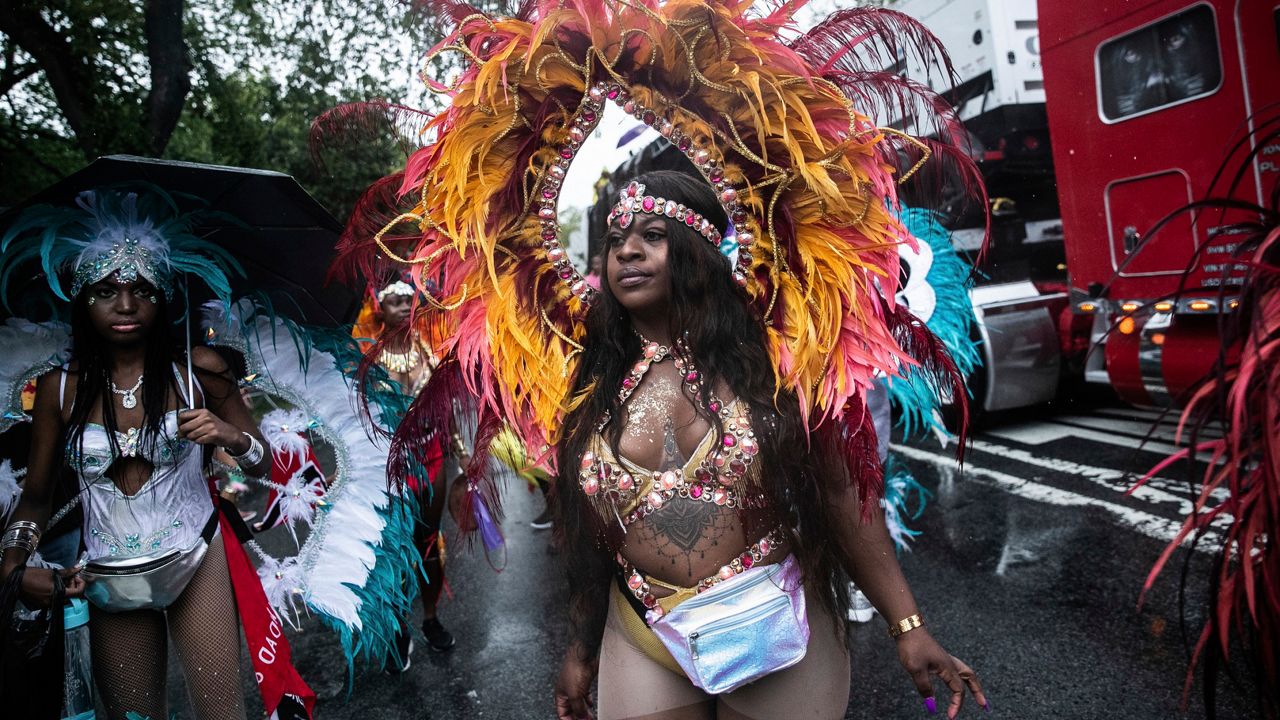
City officials say they’re prepared to keep safe the hundreds of thousands of people expected to turn out for the city’s annual celebration of Caribbean culture on Monday.
Festivities will kick off in Brooklyn with the early-morning street festival known as J’Ouvert, followed by the West Indian American Day Parade.
From start times and street closures to the security measures attendees can expect to see, here’s what to know.
Start times and route
J’Ouvert is set to take place between 6 a.m. and 11 a.m. on Monday, with spectator access opening at 2 a.m., NYPD Commissioner Jessica Tisch said at a news briefing Friday.
The celebration will traverse swaths of Empire Boulevard and Nostrand Avenue in Crown Heights, Brooklyn, stretching from Empire Boulevard and Flatbush Avenue to Nostrand Avenue and Rutland Road.
The West Indian American Day Parade, meanwhile, will step off at Eastern Parkway and Rochester Avenue at 11 a.m., with paradegoers set to march down Eastern Parkway to Grand Army Plaza.
This year, the parade will end promptly at 5:30 pm. Tisch said that end time is deliberate, “given the history of violence we have seen on and around the parade route at that hour and later.”
Last year, police said seven people were shot in four separate incidents following the parade. This year, Tisch said, there will be “zero tolerance for violence of any kind.”
Street closures
J’Ouvert-specific street closures will begin at 11:30 p.m. on Sunday and remain in effect until 11 a.m. on Monday, Tisch said.
Flatbush Avenue will be closed from Grand Army Plaza to Empire Boulevard; Empire Boulevard will be closed from Flatbush Avenue to Nostrand Avenue; and Nostrand Avenue will be closed from Empire Boulevard to Rutland Road, she said.
Additional street closures for the parade will roll out at 6 a.m. Monday, and closures expand around 10:30 a.m., with Eastern Parkway set to shut down from Utica Avenue to Grand Army Plaza.
The full list is below:
Grand Army Plaza (Entire Circle)
Butler Place between Grand Army Plaza and Sterling Place
St. Johns Place between Underhill Avenue and Grand Army Plaza
Flatbush Avenue between Grand Army Plaza and Caton Avenue
Washington Avenue between Sterling Place and Lincoln Road
Bedford Avenue between Eastern Parkway and Empire Boulevard
Rochester Avenue between East New York Avenue and Sterling Place
Buffalo Avenue between Eastern Parkway and East New York Avenue
Ralph Avenue between Eastern Parkway and East New York Avenue
Ocean Avenue between Empire Boulevard and Parkside Avenue
Nostrand Avenue between Empire Boulevard and Linden Boulevard
Eastern Parkway (Main & Service Roads) between Plaza Street East and Howard Avenue
Lincoln Place between Eastern Parkway and East New York Avenue
Rockaway Parkway between East New York Avenue and Kings Highway
East New York Avenue between Howard Avenue and Utica Avenue
Parkside Avenue between Park Circle and Flatbush AvenueGrand Army Plaza (Entire Circle)
Butler Place between Grand Army Plaza and Sterling Place
St. Johns Place between Underhill Avenue and Grand Army Plaza
Flatbush Avenue between Grand Army Plaza and Caton Avenue
Washington Avenue between Sterling Place and Lincoln Road
Bedford Avenue between Eastern Parkway and Empire Boulevard
Rochester Avenue between East New York Avenue and Sterling Place
Buffalo Avenue between Eastern Parkway and East New York Avenue
Ralph Avenue between Eastern Parkway and East New York Avenue
Ocean Avenue between Empire Boulevard and Parkside Avenue
Nostrand Avenue between Empire Boulevard and Linden Boulevard
Eastern Parkway (Main & Service Roads) between Plaza Street East and Howard Avenue
Lincoln Place between Eastern Parkway and East New York Avenue
Rockaway Parkway between East New York Avenue and Kings Highway
East New York Avenue between Howard Avenue and Utica Avenue
Parkside Avenue between Park Circle and Flatbush Avenue
Officials urge New Yorkers planning to travel in the area to take public transit.
Parade security
At Friday’s briefing, Mayor Zohran Mamdani said the Office of Community Safety, the NYPD and partners in the Crisis Management System have “developed a comprehensive security plan” to ensure this year’s event runs smoothly and safely.
The mayor said that as of Thursday, teams of hundreds of CMS staff members and community safety volunteers have been deployed to hotspots around the parade route, and will continue operations in a safety plan that covers “five days, five precincts and 20 zones — seven more than last year.”
These crisis management teams will inform New Yorkers about their role over the next few days, and provide support during Monday’s festivities, he said.
The mayor added there have been no “known specific or credible threats” to any of the planned festivities, but added that officials will “continue to coordinate closely across government in order to ensure that New Yorkers can celebrate and be safe while doing so.”
Thousands of NYPD officers will be patrolling streets and subways in what Tisch said will be one of the police department’s biggest deployments of the year.
Tisch said a buffer zone will be created between spectators and marchers, as is common for all large-scale parades to allow for unfettered movement of safety officials.
The NYPD will also be using helicopters and drones to monitor the event.
There will be 13 entry points along the route for spectators, who will then be screened by NYPD personnel with magnetometers, Tisch said.
Items including drones, alcohol, weapons, large bags, backpacks and blankets — plus any item that could obstruct views, such as large banners or flags — will not be permitted. Bicycles, scooters and skateboards are also not allowed within the entry points.