
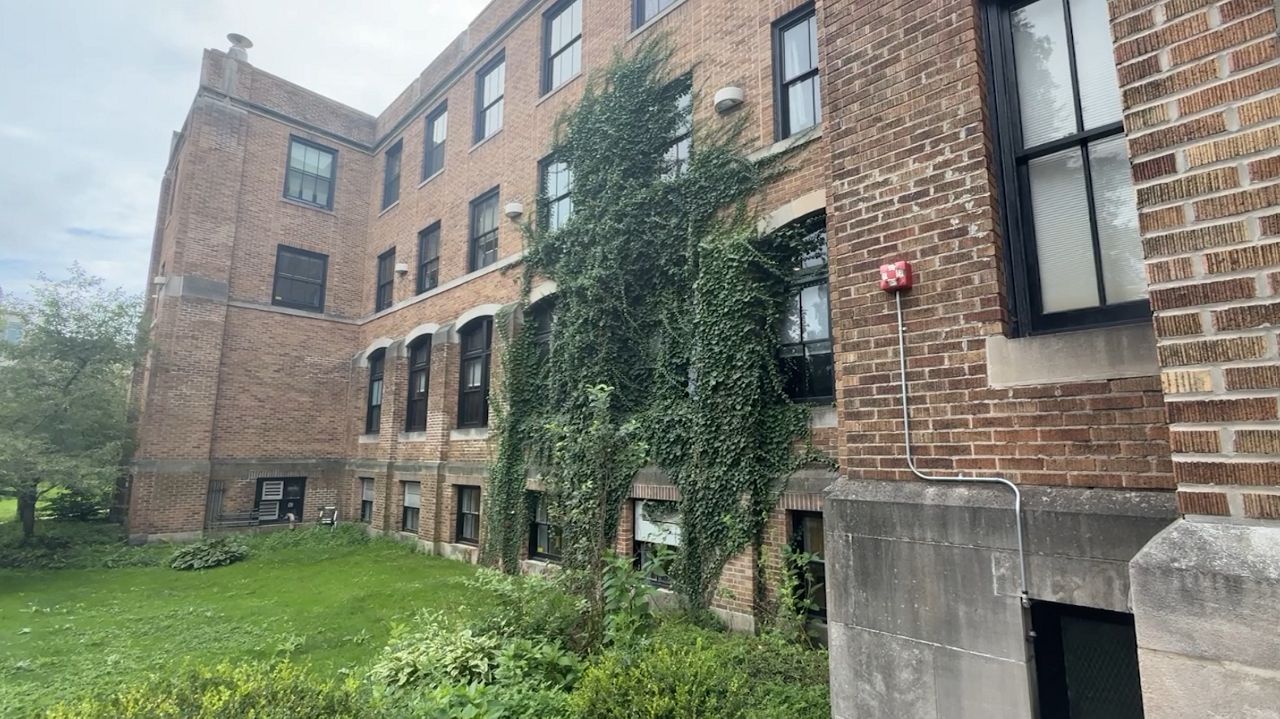
September is synonymous with the start of autumn and students returning to school. But sinking enrollment and financial difficulties are closing colleges and universities across New York and the U.S., leaving anxious host communities that depend on them tasked with reinventing the campuses.
At least seven colleges and universities in New York have shut down over the last three years. Upstate, the College of Saint Rose, Medaille University, Cazenovia College and Wells College closed their doors. Public officials and developers are working to breathe new life into the properties.
The closing of the longtime schools has not only jolted communities, it’s also taken a human toll. It leaves residents worried about the future of their neighborhoods, uproots employees and confronts students and alumni with logistical and administrative hurdles.
Colleges across upstate New York are disappearing. In just the past few years, at least four schools have shut down for good, leaving behind empty campuses and communities searching for answers. From Cazenovia to Wells to Saint Rose to Medaille, the list of closed upstate New York colleges keeps growing. Researcher Ryan Allen has visited more than 50 shuttered campuses across the country trying to understand why. While community colleges have seen enrollment increases in some cases, Allen said part of the decline in four-year education comes down to what students want. Watch More.
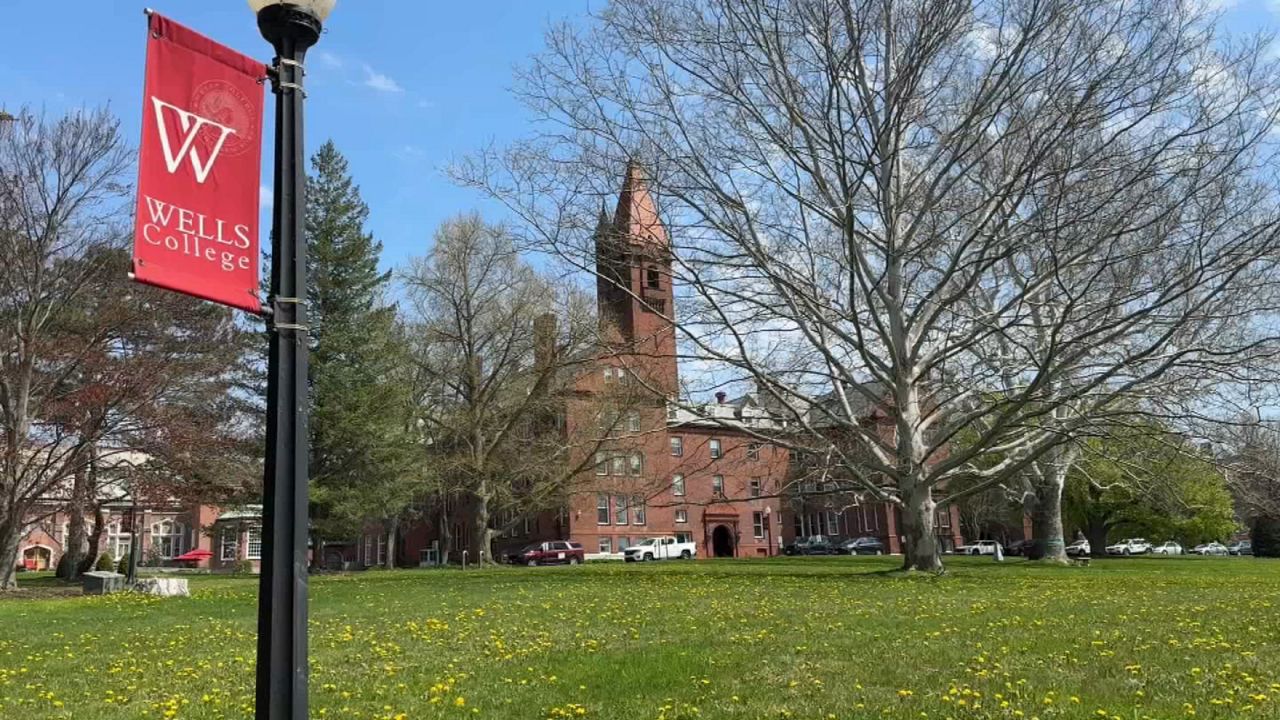
The sale of the former Wells College property has fallen through. (Spectrum News 1)
Founded in 1920, Saint Rose anchored the Pine Hills neighborhood of Albany until 2024, when it declared bankruptcy. That left a cloudy future for the 26.5-acre campus and its dozens of educational facilities, office buildings, dormitories and homes located in the heart of the city.
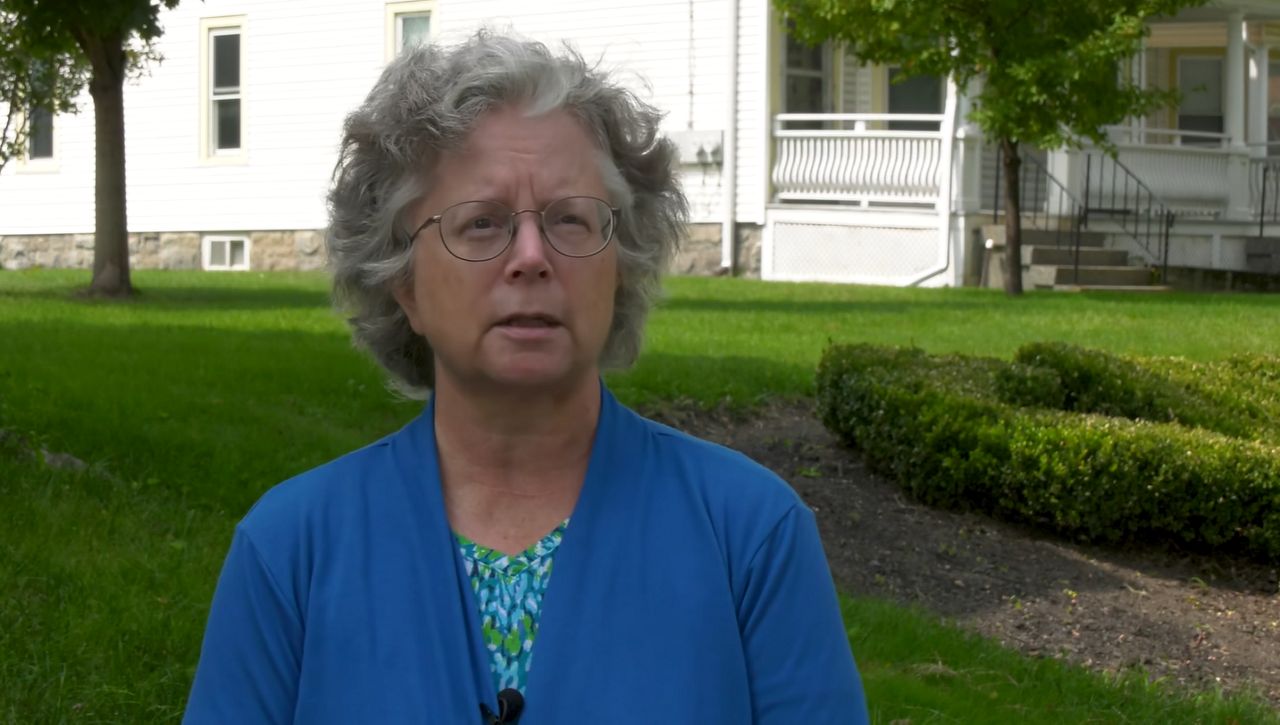
Carolyn Keefe, who lives near the former College of Saint Rose, discussed its closure. (Spectrum News 1/Corey James)
“It was shocking and it was sad, it was frustrating and it was quite scary,” said Carolyn Keefe, a 32-year resident of the area. “People were very anxious and concerned. What was going to happen to the campus? What was going to happen to the neighborhood? There was a lot of discomfort.”
That scenario has played out nationwide, where at least 46 nonprofit colleges announced closures between 2023-2025, according to Inside Higher Ed.
The process of trying to find new life for “dead” colleges carry opportunities but also pitfalls, said Ryan Allen, a college professor who tours defunct colleges across the U.S. to research what happens after they close.
“It’s really hard to sell and repurpose a campus,” said Allen, who has visited 55 former colleges and universities. “It really takes a lot of resources, a lot institutional backing, a lot of relations with the community to make this a success, and it might not eventually work if you have all that stuff.”
His recent journeys brought him to the Empire State, where he visited the recently closed upstate colleges.
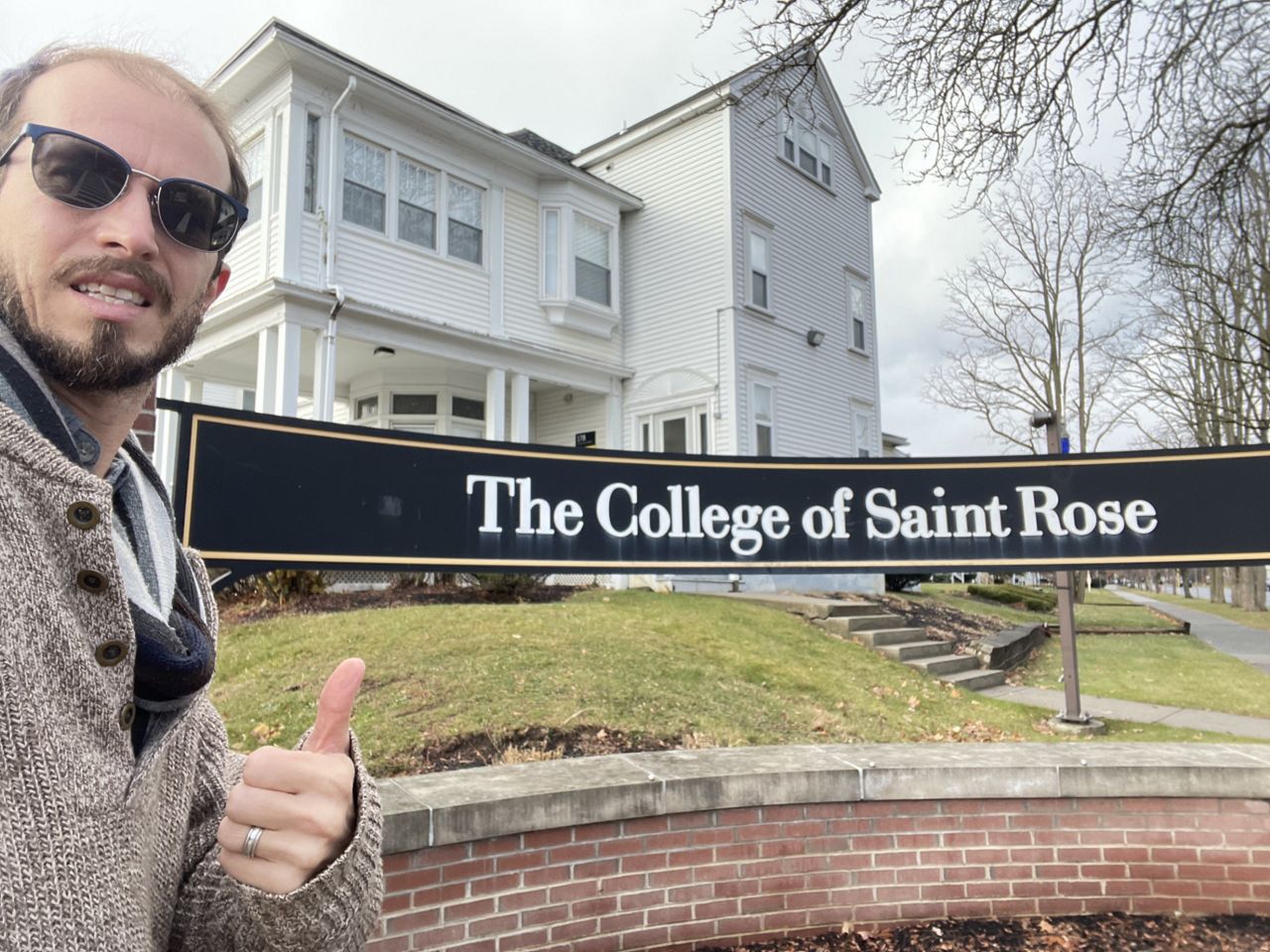
College professor Ryan Allen stopped at the former College of Saint Rose during his tour of defunct colleges. (Courtesy of Ryan Allen)
Allen said it’s not easy to find adaptive reuses for college campuses because they often contain older structures that suffer from deferred maintenance, which can scare away prospective buyers. Zoning restrictions may also limit uses at the sites, which can require enormous upkeep. Many new buyers aren’t prepared for such commitments.
He said demographics have played a role in the recent spike of closures. Student populations have declined as colleges have increased programs and costs, while online programs have grown. That spells trouble for institutions without large endowments.
At the direction of Albany County Executive Dan McCoy, a county land authority acquired the Saint Rose campus for $35 million at auction with the goal of “reimagining” it.
McCoy says he’s taken some heat over the reuse plans, but no one else stepped forward to buy the campus. He said his approach has brought stabiliity to the campus and prevented it from falling into disrepair.
The land authority has so far sold eight buildings to Albany County for $11.7 million, one to the state University at Albany and one to Hudson Valley Community College. McCoy, the sheriff, county legislature chair and multiple departments have moved operations onto the campus. The county is converting the former college’s library into a senior center and its athletics center into a public recreation/community center.
McCoy said some of the biggest challenges have been fixing the campus infrastructure and managing the thousands of computers, phones, library books, pieces of artwork and more that were left behind, much of which the county authority is trying to sell.
“It wasn’t just coming in here and selling the buildings, not only just maintaining the heat and air conditioning, or maintenance of the buildings. It was what was inside that building and then figuring out eventually what to do with all the artwork, and all the stuff that we collected, he said. “It’s things like that that has taken time.”
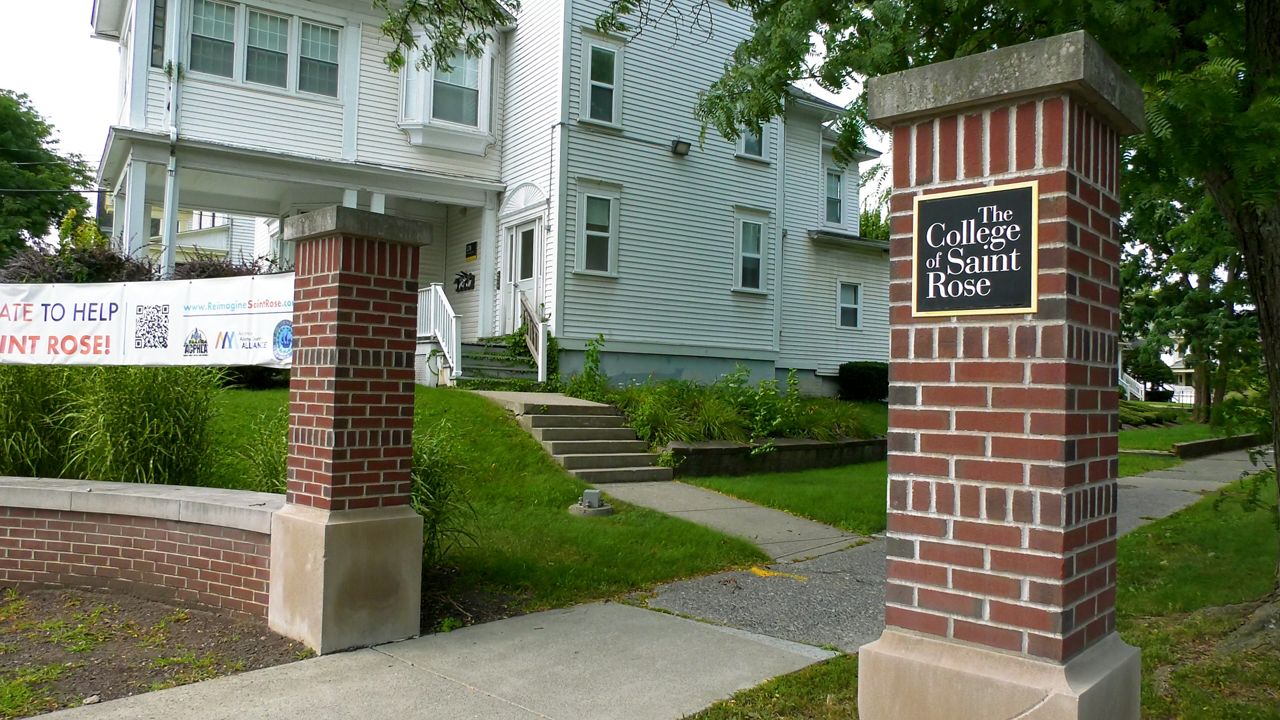
Albany County and the Pine Hills Land Authority have described a mixed-use future for the Saint Rose campus that could include housing, commercial activity, education, workforce development and community space. The authority was created with the power to issue up to $80 million in bonds for acquisition, maintenance and redevelopment. The county’s use of former Saint Rose buildings, however, has raised questions about downtown Albany, where some county operations have moved from State Street to Pine Hills. Watch more.
Founded in 1937, Medaille University in Buffalo held its final commencement in 2023. After initially leasing the 14-acre campus, the Buffalo Academy of Science Charter School recently acquired it for $11 million for use as its high school.
The conversion to BuffSci required levels of review and building improvements to meet requirements, Superintendent Joseph Polat said. Some properties tied to the site remain vacant or subject to separate sales.
“I think that the closing of these colleges and universities in New York state is a wake-up call to everyone that is in, quote-unquote, our business of higher education,” said Lori Quigley, who served as interim president of Medaille and is now a professor at Niagara University. “It was not easy saying goodbye … I still think to this day I have a little bit of PTSD from it.”
Kortni Ferrari, a graduate of Medaille’s Class of 2017, recalled hearing the news it was closing.
“Honestly, I was kind of shocked because this has been a college campus for years,” said Ferrari, who now works on the campus helping to recruit Buffalo Academy of Science students.
“I feel like with one door closing, it’s so cliche to say, but there’s always another one that’s going to open,” she said.
Allen said the easiest transitions involve when another school or university takes over a campus or its spaces. Retrofitting dorms, classrooms and educational facilities into private businesses that generate taxes can be tough, and there isn’t always an appetite for knocking down and replacing the buildings, he said.
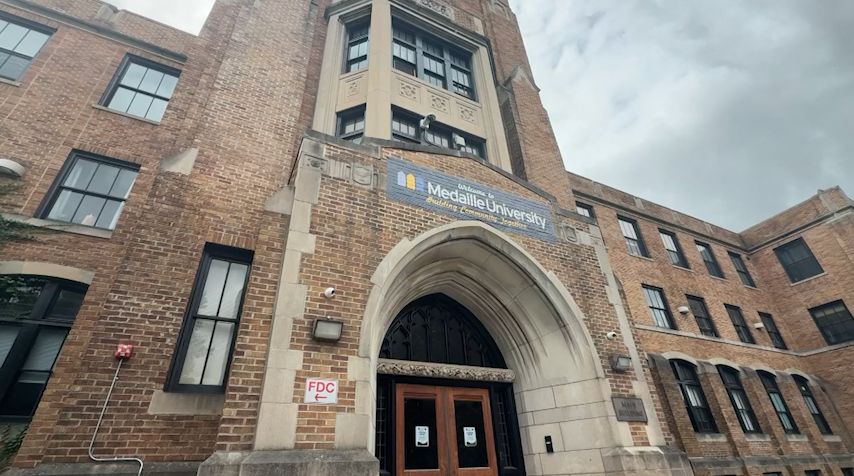
Medaille’s story isn’t just about one Buffalo campus. Former interim president Lori Quigley said the university’s closure reflects a much larger challenge facing private colleges across New York. Watch More.
For former Medaille students, the university’s closure was an emotional goodbye. Today, one former student is back on campus, helping a new generation of students make memories there. (Spectrum News 1/Hunter Caparelli)
Located outside of Syracuse, Cazenovia College closed in June 2023 after holding its 198th commencement ceremony, blaming accelerating financial concerns. A month after it closed, the State Police leased a large portion of the campus for its new State Police Auxiliary Academy, but decided not to renew its lease.
A mix of buyers bought parts of the campus.
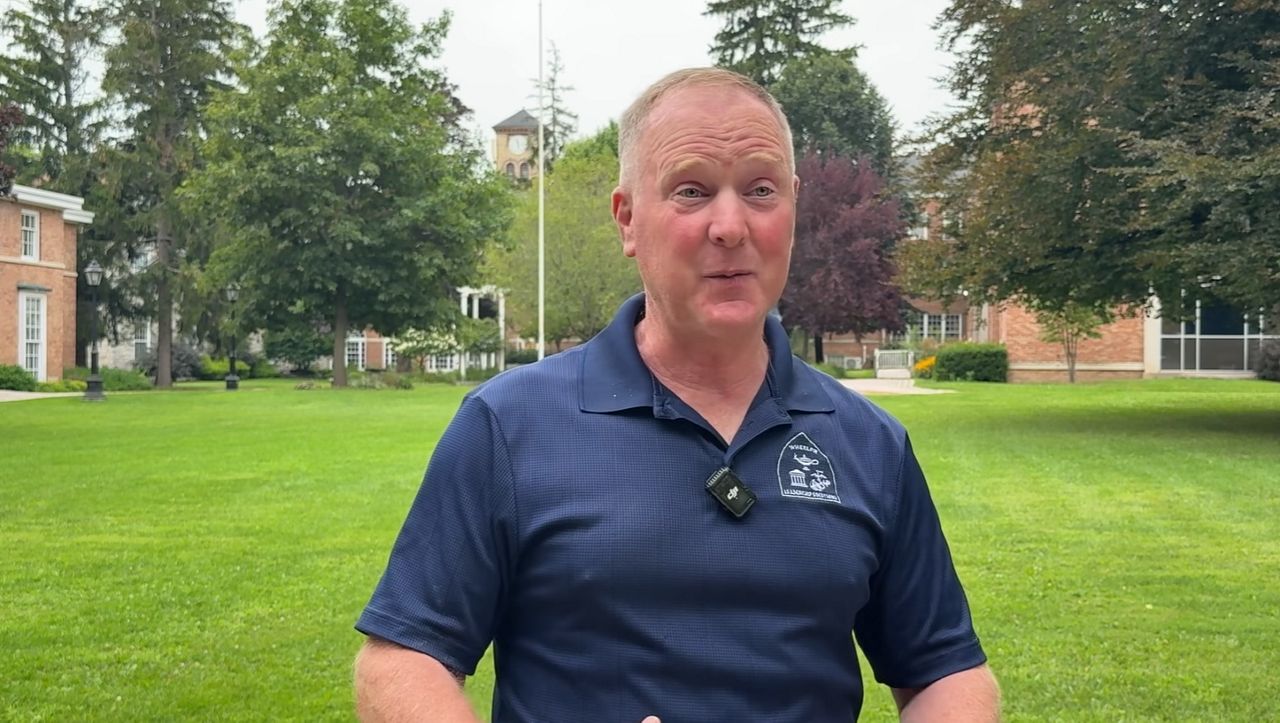
Cazenovia Mayor Kurt Wheeler speaks on the former Cazenovia College campus. (Spectrum News 1)
Madison County is moving its sheriff’s office into the former Reisman Hall, while Sigety Hall will be demolished for parking spaces, County Administrator Mark Scimone said. The town of Cazenovia now owns two of the campus’s 27 buildings, which will be used for a new town office complex and an applied arts center, according to Mayor Kurt Wheeler.
The Central New York-based investment and development group 9Fresh paid $9.5 million for the main portion of the campus and plans to redevelop it over three phases. Adam O’Neil and his wife own the site’s athletic facility and theater.
“It’s very unlikely you’re just going to have one institution come in and just rescue you,” Wheeler said.
Community is the central theme at the former campus of Cazenovia College with several groups either already operating or looking to utilize the area. Watch More.
More recently, the 156-year-old Wells College closed. The former campus located on the shore of Cayuga Lake represents a significant portion of land and historic resources within Aurora in the Finger Lakes region, according to a recent village survey, which states “its future use has important implications for community character, economic activity, housing, and environmental stewardship.”
In June, two years after its closing, a $12.5 million bid for the 127-acre campus by the Hiawatha Institute for Indigenous Knowledge fell through following court challenges by the Cayuga Nation and Minerva Institute.
Rachel Snyder, a 2011 Wells graduate, said the closure blindsided alumni.
“From an alumni perspective, to a lot of us, it looked like mismanagement,” Snyder said.
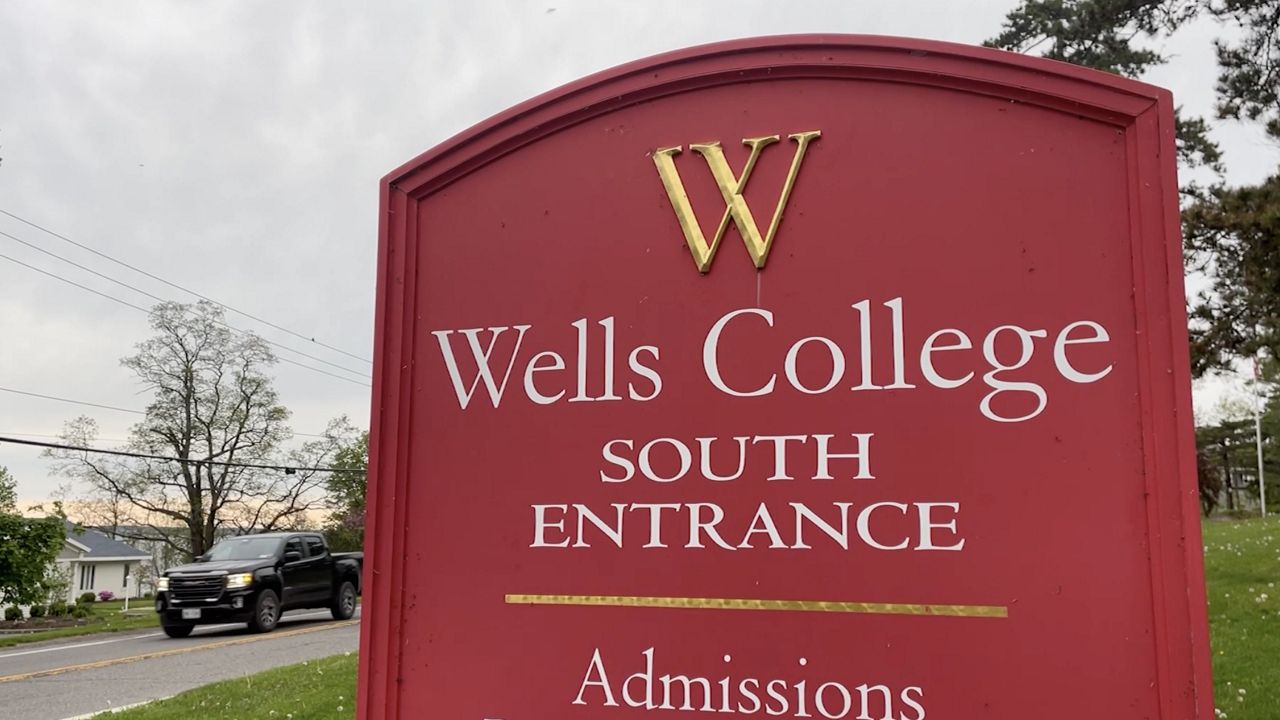
When Wells College closed its doors two years ago, it didn’t just abandon buildings — it broke a bond of shared memories. Watch More.
Over the last couple of years, three downstate colleges also ceased operations – Nyack College, which became Alliance University; The King’s College and ASA College.
Allen, author of College Towns, says he’s “seen places struggle, sit in limbo for years and create a lot of problems.”
One cautionary tale, he said, is the former Dowling College, located on Long Island and home to a William Vanderbilt Jr. hunting estate. It closed in 2016 and was purchased for $26.1 million by a Chinese company with the goal of turning it into an international school. But the plan never got off the ground, leading to a mostly abandoned and distressed site that struggles with with vandalism and trespassing, Allen said.
He called it a “worst-case scenario” involving a buyer that wasn’t ready. The former campus recently went up for sale again.
Another former Long Island campus, however, found new life. Briarcliffe College, which closed in 2018, was turned into a 68,000-square-foot production facility and Blue Point Brewing Company brewery, tasting room and restaurant.
“I think New York seems to be on the forefront of demographic challenges – why it’s so hard hit by these things,” Ryan observed. “If New York is successful in repurposing these, then maybe they can provide the playbook. Someone has to take that step.”
Hunter Caparelli, Corey James and Melissa Krull contributed reporting.