
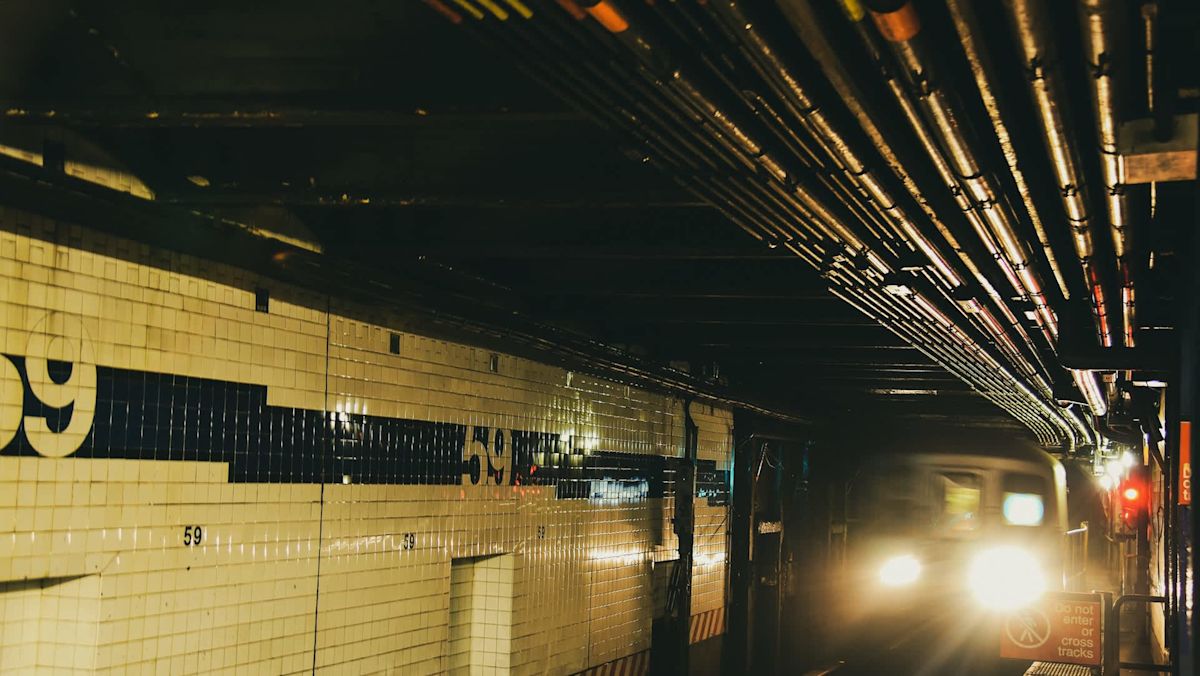
New York is exploring an inventive way to make its notoriously hot subway platforms more tolerable: capturing the heat underground and putting it to use aboveground.
Success would make it the first thermal energy network tied to a U.S. train system.
According to The Ticker, Gov. Kathy Hochul, New York City Mayor Zohran Mamdani, and the Metropolitan Transportation Authority have agreed to pursue a thermal energy network. The idea is to redirect heat from the Brooklyn Bridge-City Hall 4, 5, and 6 train stations and the Chambers Street J and Z stations to nearby municipal buildings for winter heating.
Here’s what to know
At the heart of the proposal are the Brooklyn Bridge-City Hall 4, 5, and 6 stations and the Chambers Street J and Z stations. Instead of letting underground heat keep worsening platform conditions, officials want to capture it and put it to use.
A large share of that heat comes from normal train braking. As trains slow down, friction between brake pads and discs turns motion into heat that is released into the surrounding air. The subway system dates to 1904 and was not built with modern heat waves in mind, so limited ventilation can make stations feel stagnant and oppressive.
State Sen. Brian Kavanagh said the idea could address both commuter comfort and climate concerns.
“Every summer, I hear from my constituents about how brutal the heat on subway platforms across my district and the City can be,” he said, per The Ticker. “As we face the growing dangers of climate change and prolonged extreme heat, exploring sustainable solutions to the high temperatures in our transit system is a critical task. I’m thrilled that the MTA is working to turn this harmful summer heat into a resource, joining SUNY campuses across the state and innovators across the world working with thermal energy networks to cut costs, provide effective heating and cooling, and reduce emissions.”
More background
The project would tackle two problems at once: cooling subway platforms for riders and using the recovered heat to warm nearby public buildings once the weather turns cold.
The plan calls for radiant cooling panels and for using deep bedrock as long-term heat storage. Instead of letting subway heat go to waste, officials want to fold it into a heating and cooling network.
Cooler platforms could ease heat stress for commuters during long stretches of hot weather. Recovered energy used in municipal buildings could also lower operating costs and cut reliance on polluting heating systems.
What’s being done?
Officials want proof the plan is practical and worth the investment before going further. An $800,000 feasibility study will look at whether the technology can run efficiently enough to justify the cost and construction effort.
Yume Kitasei, commissioner of the New York City Department of Citywide Administrative Services, called the study an “investigation of both sides of the equation — the actual mechanics of doing it, how big a lift that would be, and how much we would get out of it in terms of efficiency.”
She added that the question is whether it’s going to work efficiently enough that it’s worth the cost.
Testing is set to begin at Chambers Street, where construction may cause less disruption because the station is abandoned. Officials also see a chance to fix up one of the city’s oldest stations. Manhattan Borough President Brad Hoylman-Sigal said Chambers Street needs “serious work.”
Where can I learn more?
New York isn’t alone in looking for ways to reuse wasted heat and upgrade aging infrastructure. Other cities are tapping unusual energy sources and building systems that can better handle rising heat.
• In Canada, utilities are using heat from sewage to warm nearby buildings year-round.
• Urban planners are testing digital twin tools to design smarter district heating networks.
• In Barcelona, metro stations were turned into EV charging hubs that support cleaner transportation.
• In New York, broader EV adoption could cut health-harming pollution across the city’s neighborhoods.
• Also in the Big Apple, officials are deploying tree-mapping technology to target cooling where heat hits hardest.
Each example tackles a different piece of the same challenge: making city systems work better in a hotter world.
Get TCD’s free newsletters for easy tips, smart advice, and a chance to earn $5,000 toward home upgrades. To see more stories like this one, change your Google preferences here.