
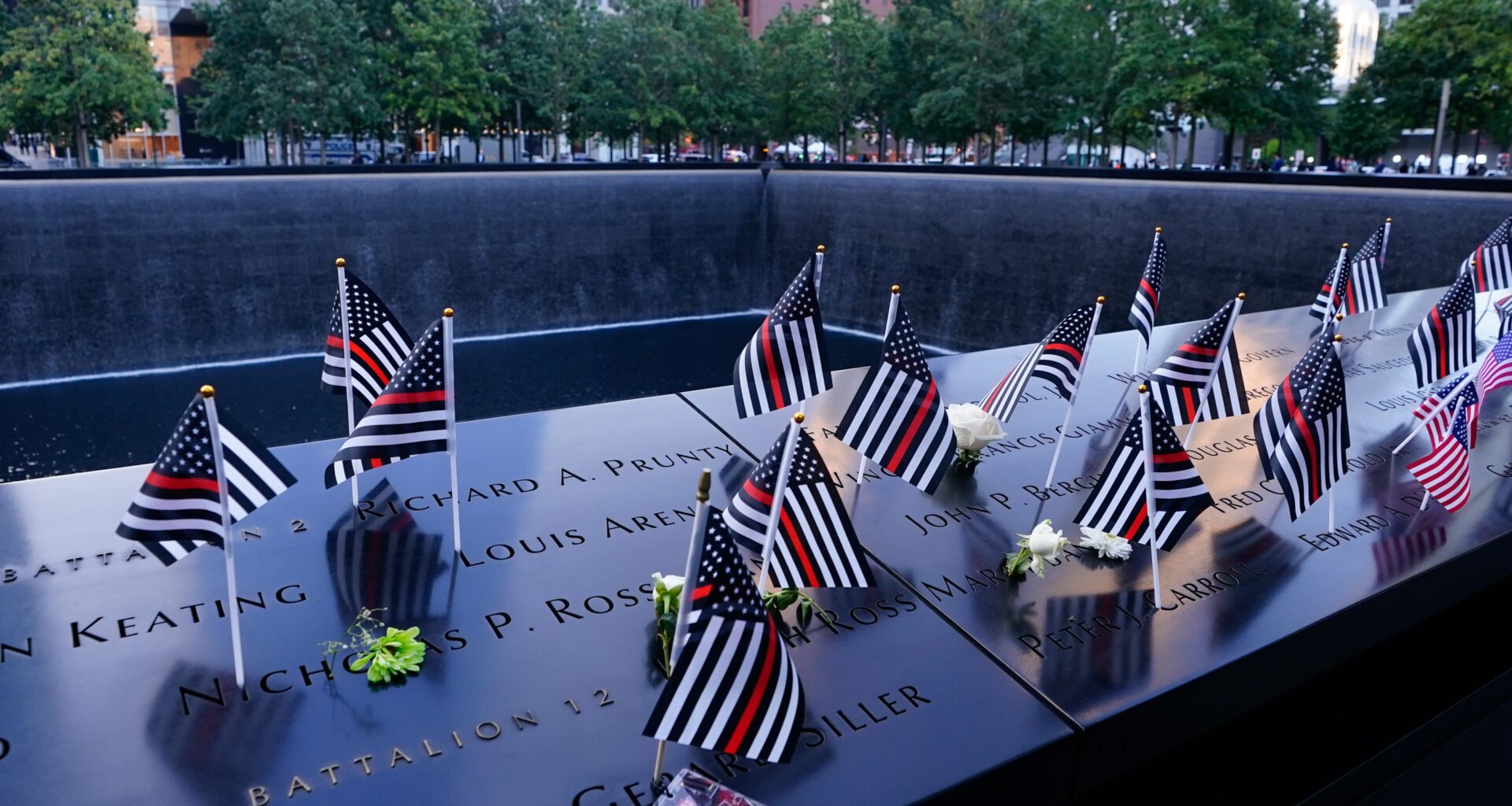
The rubble of the World Trade Center was still smoldering 25 years ago when New Yorkers went to work creating memorials to the dead. In parks and on streetcorners, impromptu shrines gave faces and names to almost 3,000 lives lost.
Over time, these hasty constructions gave way to sites that still define New York, like the vast Reflecting Absence memorial at the World Trade Center site, a garden in northern Manhattan, and a memorial on the shores of Staten Island.
Visits to these locations helps us remember our losses, honor the people who died trying to save lives, and share the burdens of grief. Alone or together, we can balance individual losses against the massive weight of history, expand our range of attention, and remember our obligations to one another. Our public mourning at these sites has healed wounds, built empathy, and strengthened solidarity in a battered populace.
The COVID-19 pandemic, which killed more than 47,000 New Yorkers, has inspired no such response. Due to lockdown orders, funerals in the pandemic were shrunken events. No wave of memorial making followed. Unlike the bereaved of 9/11, pandemic survivors who lost loved ones have no public place where they can share their griefs, receive recognition, and carry on with their lives. They deserve better.
But the dead of the pandemic will be recognized only if we overcome the tendency to forget deaths in epidemics and build on the best commemorative practices of 9/11.
Memorials to epidemics are rare. Prior to COVID-19, the only epidemic to stagger modern New York was the global flu of 1918, which claimed 30,000 deaths here. Yet the city has no monument to its flu victims or to the doctors and nurses who cared for them.
In the same era, some 7,400 New Yorkers died in World War I. Their deaths are commemorated in more than 100 memorials that mourn losses, praise courage, and extol wartime deaths as sacrifices sanctified by the national good. Soldiers who died of the flu, however, are ignored. Perhaps this is because it is difficult to valorize the death of soldiers who die coughing and choking in hospital beds.
We also forget deaths by disease in marginalized populations. Since AIDS appeared in New York in the 1980s, it has taken more than 100,000 lives. The movement to seek a cure for the disease and justice for its victims was a strong presence in the city as early as the 1980s. Activists fused mourning and militance, fighting against indifference to the lives of gay men and, later, people of color and intravenous drug users. Yet the city’s deaths by AIDS did not receive immediate recognition. The opening of the New York City AIDS Memorial in 2016 is a reminder that it takes long-term activism to recognize deaths by disease.
The tragedy of Sept. 11, however, received immediate commemoration. Before the terrible day was over firehouses, street corners and parks became mourning places. Overnight, homemade posters seeking survivors became rough drafts of obituaries. With the large death toll among uniformed first responders, funerals for firefighters and police officers — long a staple of television news — became focal points of regional grief. Local newspapers, foremost among them the New York Times, opened up their obituary pages to cover, in humanizing detail, the lives of ordinary people who died in the attacks.
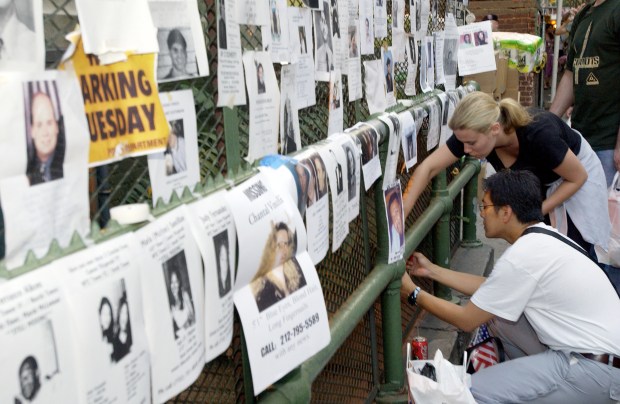 Friends and family of missing people post signs with photos and descriptions to help locate them outside the armory on Lexington Ave. in New York City on Sept. 13, 2001, after the attacks on the World Trade Center. (Gabe Palacio/Getty Images)
The COVID-19 pandemic, however, was different in ways that diminished shared expressions of sorrow. Public mourning was delayed for months by lockdown orders. The victims of COVID-19 were disproportionately people of color in low-income communities that are routinely ignored by mainstream media.
Certainly there was much to be recognized during the pandemic. Daily cheers for health care professionals and essential workers honored the people who sustained the city and strengthened the bonds between residents. At Montefiore Medical Center in the Bronx, the staff played Alicia Keys’ “Empire State of Mind” to celebrate whenever a patient was discharged or taken off intubation. In May 2020, Naming the Lost, a public art project, created temporary memorials to casualties in all five boroughs.
Yet these important practices were short-lived. The closest New York has come to a permanent pandemic tribute is Travels Far, a memorial mounted by the Metropolitan Transportation Authority to the more than 100 transit workers who died. Appropriately for a pandemic where so much of life was conducted online, Travels Far exists at mta.info/covid-memorial. Travels Far is a graceful and moving, but it embraces only a slice of the New Yorkers lost to COVID-19.
To cope adequately with the aftermath of the pandemic, people need to do what they did after 9/11 and could not do in the darkest days of COVID: gather in public to remember their common ordeal, share their griefs, and support each other. Heeding the lessons of 9/11, New Yorkers can create public memorials all around the city that recognize both the full scale of loss and the specific casualties in distinct communities.
In New York, the Reflecting Absence memorial records the names of all who died there on Sept. 11, 2001, and the six names of people who died in the 1993 bombing of the World Trade Center. Smaller memorials recognize smaller communities: the firefighters of a specific firehouse, the residents of a particular neighborhood, or residents of a particular borough.
COVID-19 memorials can do similar work if one main site is complemented by others all around the city. These could reflect suffering in distinct neighborhoods, like hard-hit East Elmhurst in Queens, or recognize distinct occupational groups, like health care professionals and delivery workers.
Better ways of remembering will not create a consensus about COVID or write a happy ending to the tragedy of the pandemic, but they might help ease our griefs and increase our stock of empathy. COVID memorials that build on the best commemorative work after 9/11 can name COVID’s casualties, honor the essential workers who kept the city running, and recall a tragic loss of lives that we all can mourn.
Snyder, professor emeritus of journalism and American studies at Rutgers University, is the author of “When the City Stopped: Stories from New York’s Essential Workers,” winner of the Fiorello LaGuardia Book Prize. From 2019 to 2025, he was Manhattan borough historian.