
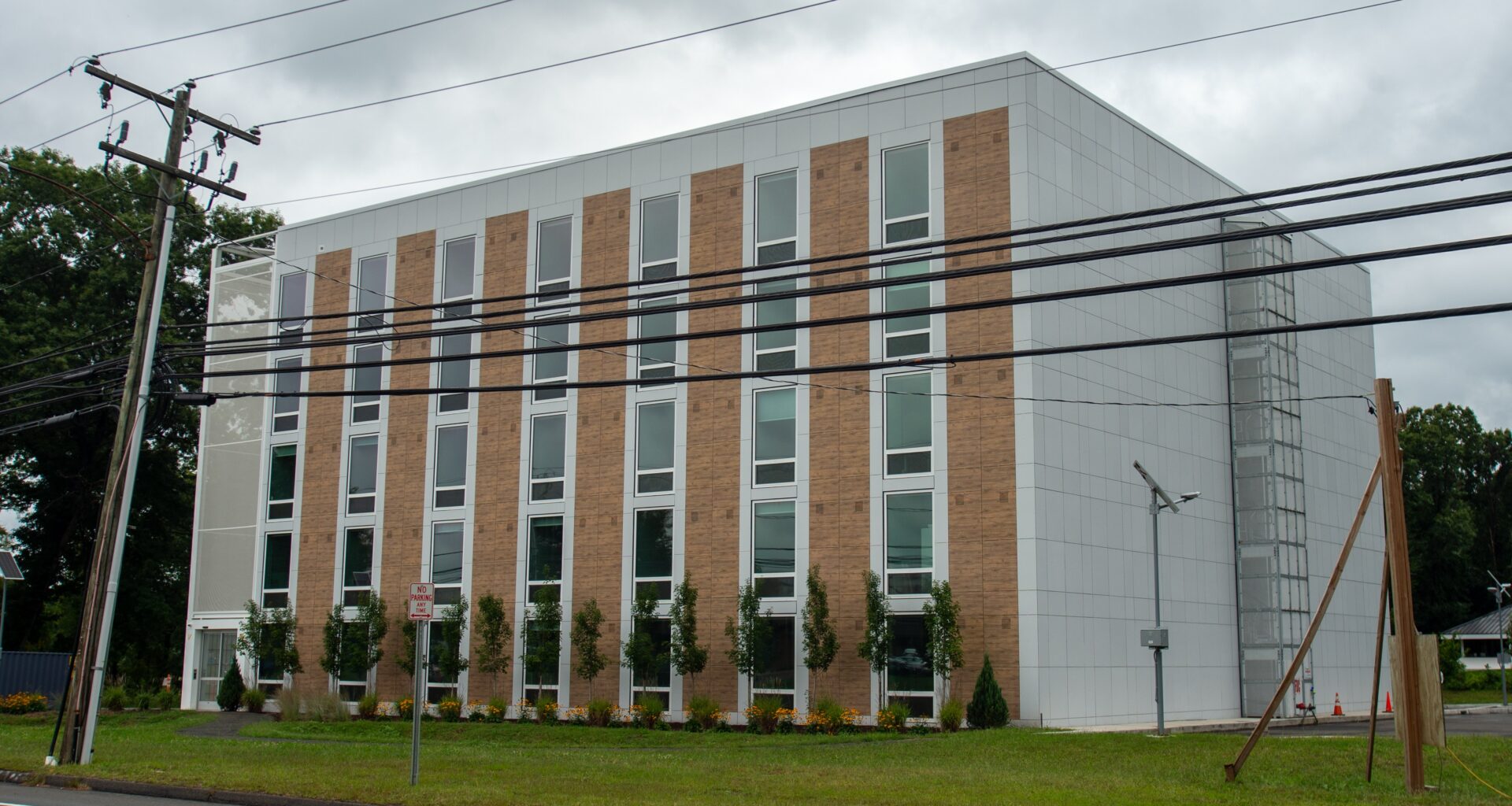
Five years after debuting a deeply unconventional strategy to put up affordable apartment buildings across Connecticut, New York-based Vessel Technologies is looking to have tenants move into its Avon and Rocky Hill locations this winter and possibly open its long-delayed Cheshire project.
The company has spent heavily to bring its controversial vision of small but tech-intensive, sleek steel buildings to about a dozen communities, with a wide range of results.
Bitterly contested lawsuits and community outrage have arisen in Glastonbury, West Hartford and Trumbull, but in New London and Avon there were relatively quick approvals, applause from housing advocates — and a stunningly long line of prospective tenants.
To detractors, Vessel is an out-of-state predator, wielding Connecticut’s 8-30g law to force its way into communities where its high-density, all-steel, pre-fabricated buildings aren’t welcome.
Supporters contend that change-resistant property owners in the Land of Steady Habits are simply trying to ignore the statewide shortage of new housing that isn’t McMansions or high-amenity, high-rent luxury apartments.
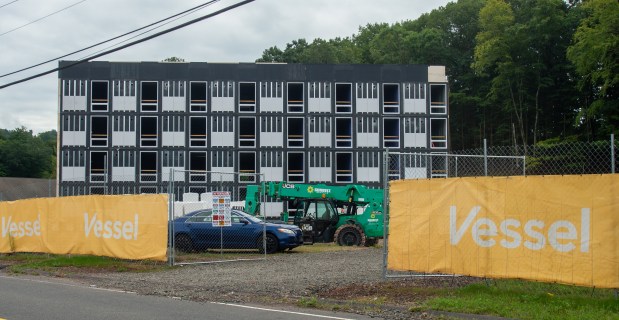 Construction continues at Vessel at 25 Avonwood Road in Avon on Wednesday, Sept. 2, 2026. (Aaron Flaum/Hartford Courant)
In some cases, they say, homeowners who dislike the prospect of affordable housing nearby trump up concerns about wetlands or wildlife habitats to keep Vessel out.
Vessel executives avoid the phrase “affordable housing” and prefer “achievable” or “attainable,” and emphasize that they’re not putting up subsidized housing for low-income or no-income tenants. Instead, they argue, Vessel apartments are aimed for entry-level teachers, police, nurses, restaurant managers, public works employees and others who are priced out of the high-end new-construction market.
Either way, 2027 shapes up as a pivotal year for the company.
The company needs to prove that its promise of super-accelerated, low-cost modular construction can produce fully leased buildings on schedule, especially as it branches into Florida and potentially more East Coast markets.
It has spent millions securing purchase options on land, going through protracted regulatory reviews, repeatedly modifying designs and blueprints, pursuing litigation and in several cases erecting multi-story buildings — but so far only its 30-unit New London location is occupied and producing rents.
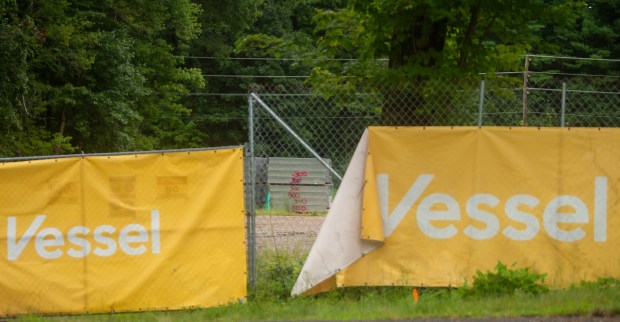 The property for Vessel is fenced off at 446 Hopmeadow St. in Simsbury on Wednesday, Sept. 2, 2026. (Aaron Flaum/Hartford Courant)
To Neil Rubler, Vessel’s chief executive officer, all of the controversy, court cases and delays in Connecticut aren’t reasons for pessimism. He sees the freshly built Avon project as a highlight of the year: It was assembled in five months, a month quicker than even the company’s most optimistic projections.
And if the state next year can settle on a centralized plan review process, the extensive delays of local permitting could be sharply reduced, he said.
Vessel’s nearly identical buildings should be held to a review by state Department of Administrative Services building and fire code officials, he suggested, with local reviews chiefly restricted to ensuring that the company uses the materials and follows the construction techniques that those officials approve.
“The delays have been significant and costly. The medicine didn’t taste great, but at the end of the day we’ll have a road map that will let us go into future communities and be able to build,” Rubler told The Courant. “The design of our buildings is highly unconventional because you’re not going to revolutionize the housing industry by doing what you’ve always been doing.
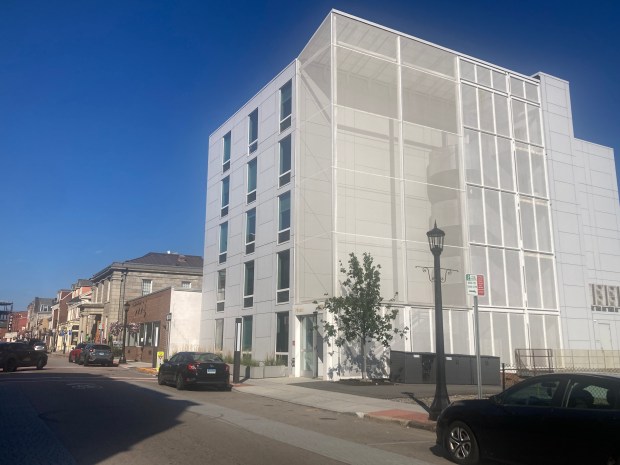 The Vessel building in New London this summer. (Don Stacom/The Hartford Courant)
“We’ve spent years and millions of dollars with life safety officials designing for enhanced safety. But to local officials, they’ve never seen anything like this,” Rubler said. “We can dial in the production process very specifically, but the cooperation and collaboration of municipal partners can be variable like the weather.”
Local safety officials in several towns have urged caution, saying that complex technical questions about assembly techniques and fire safety must be fully answered. Vessel’s plans drew a sharp rebuke from state inspectors earlier this year, although those concerns have receded.
State lawmakers wrestled during the past session with a proposal to expedite review of modular multifamily housing like Vessel’s, which allows a small work crew to assemble premanufactured steel panels for floors, walls and ceilings. Skeptics warn that fast-tracking unconventional technology through safety reviews is an unwise risk.
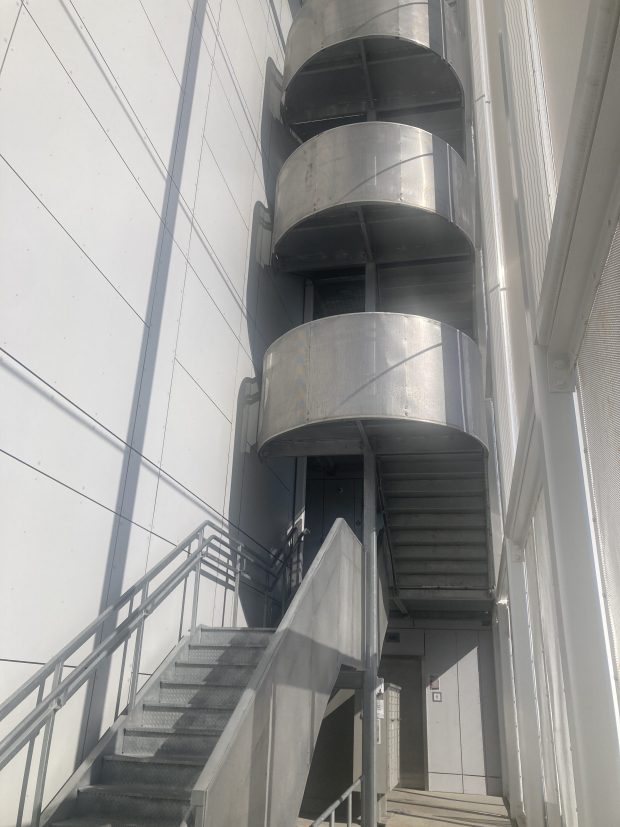 A stairwell at the Vessel building in New London. (Don Stacom/The Hartford Courant)
Vessel focuses chiefly on small one-bedroom units, and its buildings are meant for assembly more similar to a Lego style than individually designed, stick-built construction.
In theory, that reduces costs dramatically by eliminating the need for a large crew of carpenters and laborers working for a year or more. But those savings erode in a case like Cheshire, where workers completed a five-story, 70-unit building more than a year ago — but local building review has held up certificates of occupancy.
“Cheshire is a wild card,” Rubler acknowledged. “I’ve been wrong a lot about how long it would take. We’re working every day to get the permits reactivated, but the process has been much more laborious than in other places. I think we’re very close to moving it forward.”
Of Vessel’s 12 other Connecticut proposals since 2021, the Manchester, Granby and New Haven ones are dead. The five-story building on New London’s waterfront has been open about a year, and appears to be fully rented. Apartments.com has no immediate listings, and suggests a single one-bedroom unit will be “available soon.”
Vessel’s two biggest initiatives are stalled in court. In West Hartford, the company hopes to build two five-story buildings with a total of 120 apartments. The town has rejected the company twice, and a lawsuit is pending.
Trumbull, too, is defending a lawsuit by the company after rejecting plans for two five-story buildings with 150 units. Glastonbury approved a 48-apartment project in June after extensive litigation, but has suggested that further legal action could take place before construction begins.
In Simsbury, Vessel has had building materials on site since the winter for a 48-unit project.
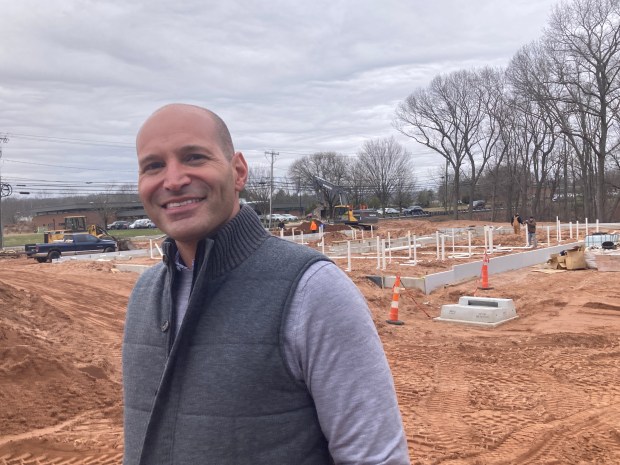 Josh Levy of Vessel Technologies at the site of the Cheshire apartment building under construction in the late winter of 2024. Two and a half years later, it is essentially complete but vacant. (Don Stacom/The Hartford Courant)
“Currently, the foundation and underground plumbing permits have been issued. Others permit applications are in the review process,” Building Official Danny Sousa said. “The building permit is under review for compliance with state building code. Once completed it will be issued. They original filing was Dec. 4, 2024.
“Basically, without the building permit being issued, no building construction can start,” Sousa said. “We have been working closely with Vessel’s design team to address concerns from our latest building code review. And currently are awaiting resubmittals so that a re-review could be completed.”
Two Fairfield County towns initially refused proposals, but reached settlements: Newtown will allow 120 apartments and Bethel 72. As of now, Vessel hasn’t applied for construction permits.
Rocky Hill officials didn’t respond to emails about the status of Vessel’s twin five-story buildings, which have a total of 96 apartments. The buildings have appeared complete for many months.
Rubler said permitting is complete there, and he hopes to have tenants moving into the Rocky Hill and Avon buildings before the end of January. He suggested the Simsbury building could be completed within a half-year of permitting.
In all, the company has 788 new apartments in the pipeline, expecting to open at least 160 of them this winter. But its long-term goals are vastly more ambitious — and national in scale.
Vessel last week announced it’s working with Blake Investment Partners to put up a five-story, 60-unit apartment building in St. Petersburg, its first venture into the state. Rubler said the company could be proposing four or five more in Florida next year.
“We’re actively looking at locations up and down the East Coast and now in the Midwest,” he said. “Everybody realizes zoning and redlining went too far.
“But we’re not folding up our tents in Connecticut,” Rubler added, saying Vessel is looking at additional towns for 2027. “Connecticut has a profound housing crisis, and the governor is very aware of it. In Cheshire we’ll have 70 units: We already have 400 people on a waiting list. That’s an indication of the dire need for housing.”