
 4 min read
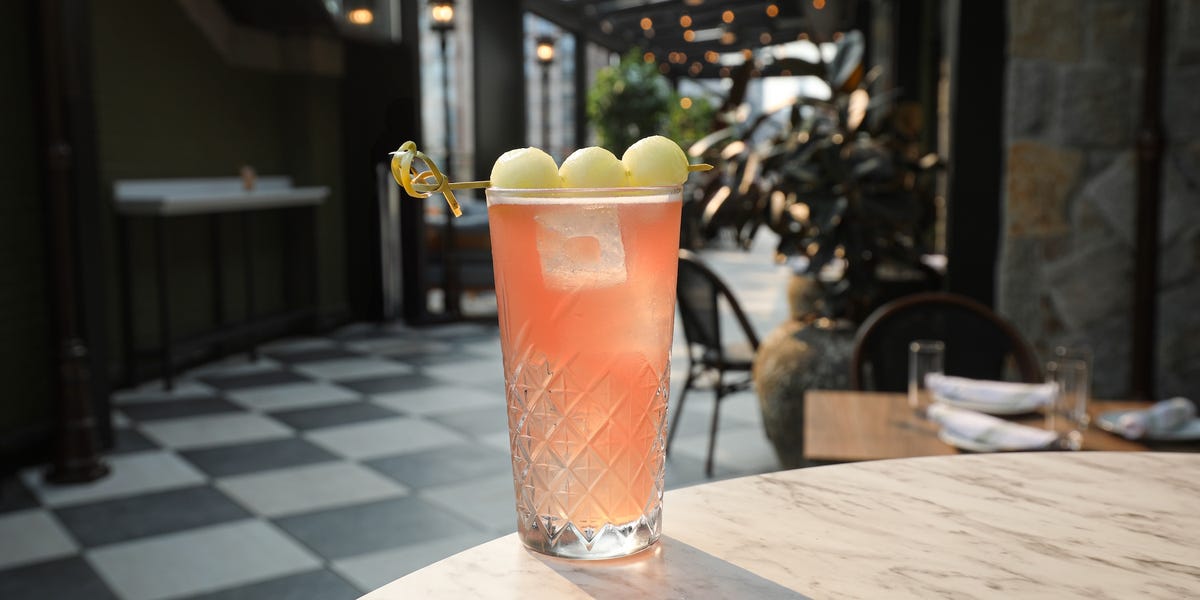
Every August, the U.S. Open transforms Flushing Meadows into one of the city’s most festive destinations, and for years, the cocktails that defined the tournament experience—namely the Honey Deuce and a more recent newcomer, the Ace Paloma—stayed largely within the grounds of the USTA Billie Jean King National Tennis Center. If you wanted one, you had to be there.
That’s changing as the tournament’s signature cocktails are being served at bars, restaurants, and hotels across New York City in a deliberate push to extend the U.S. Open experience beyond the stadium gates. The cocktail has even made its way to the city’s airports, with the Honey Deuce available at several restaurants and bars across JFK and LaGuardia, meaning you can extend the U.S. Open experience right until boarding. For cocktail lovers who would rather watch the matches from a rooftop bar in Meatpacking or a biergarten in Williamsburg with a Honey Deuce in hand, the options have never been better.
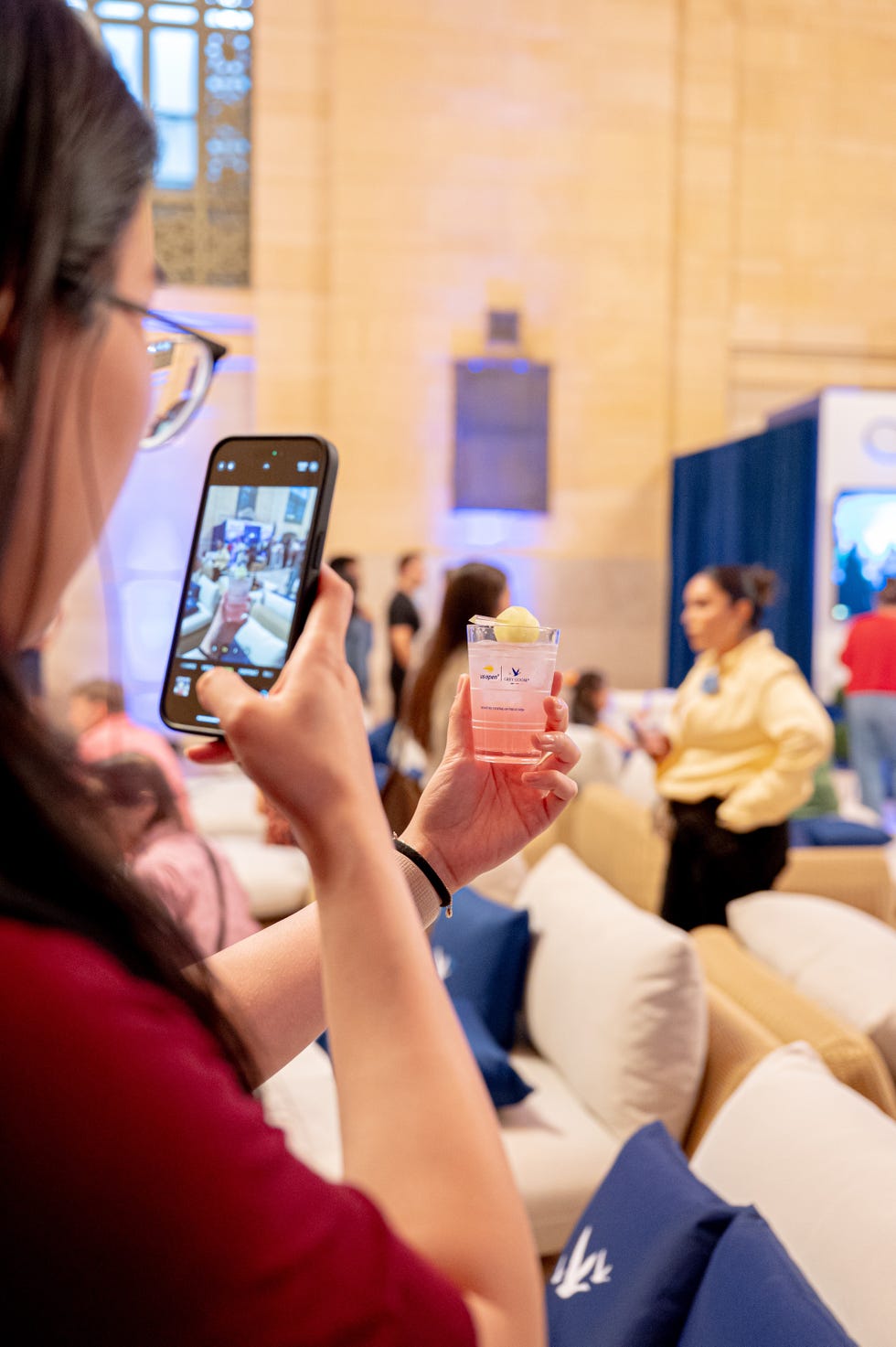
“I think social media really helped push [the Honey Deuce] beyond being just a cocktail you order at the U.S. Open,” says Nancy Santiago, beverage director at IGC Hospitality, which oversees several popular New York hotspots, such as Refinery Rooftop and Vintage Green. “Once people started associating that instantly recognizable cup and melon garnish with being at the tournament, the drink became part of the overall experience. You see it in photos, on social media, and in people’s hands throughout the stands—it almost becomes an accessory to the event.”
 Grey Goose
A patron takes a photo of the Honey Deuce at Grey Goose’s pop-up Grand Central.
Stacy Saltiel, senior brand director at Grey Goose, points out that the Honey Deuce was created nearly 20 years ago, long before Instagram and TikTok became ubiquitous. So the drink wasn’t designed to be social content. “That organic enthusiasm is really what transformed it from a tournament cocktail into a recognizable symbol of tennis and late summer in New York,” Saltiel tells T&C.
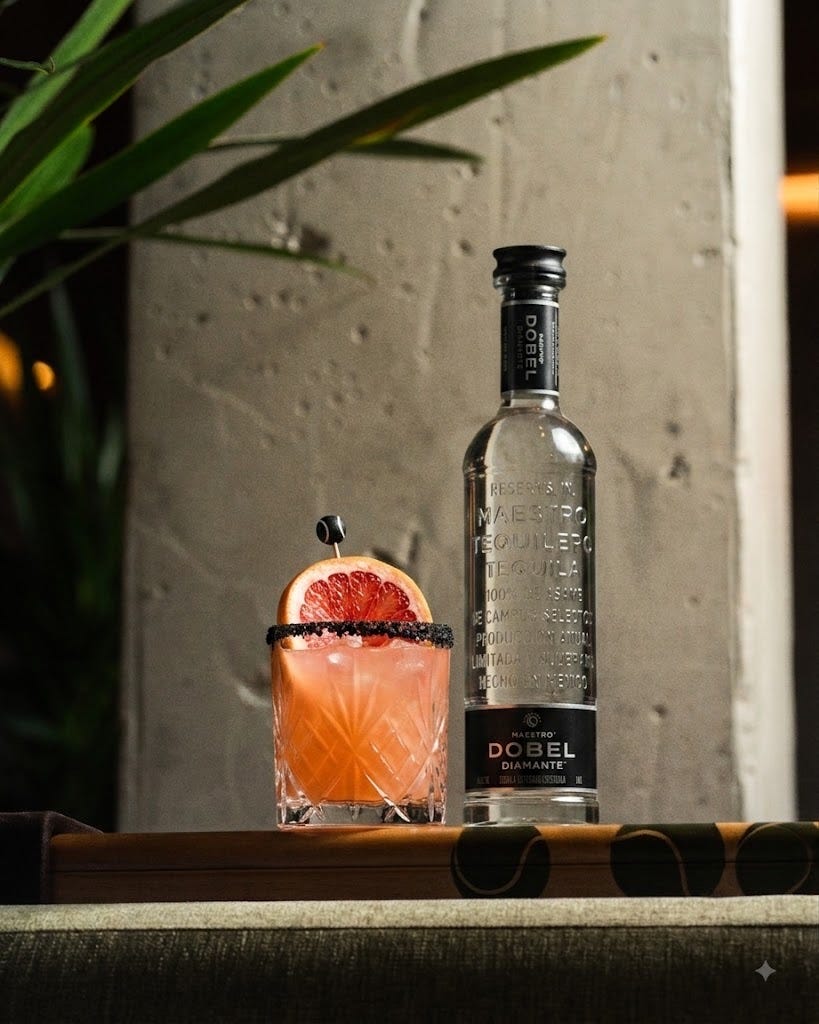
The Honey Deuce, the tournament’s original signature drink, has been served at the Open since 2007 and has become one of the most photographed cocktails in the country during tournament season. The Ace Paloma, made with Maestro Dobel Tequila, the Open’s first-ever official tequila partner, debuted in 2023. “Just as the U.S. Open has evolved into a cultural destination with its food scene, we saw, and continue to see, an opportunity to evolve the cocktail culture at the tournament,” says Lander Otegui, executive vice president of marketing and innovation at Proximo Spirits, the beverage conglomerate that includes Dobel Tequila.
He adds that as “New York’s biggest sporting event,” the experience should be able to be enjoyed by all New Yorkers, whether they have tickets or not. “We like that Dobel Tequila can bring a piece of the U.S. Open experience to fans who can’t make it to the grounds across bars and restaurants in New York City”
 Moët & Chandon
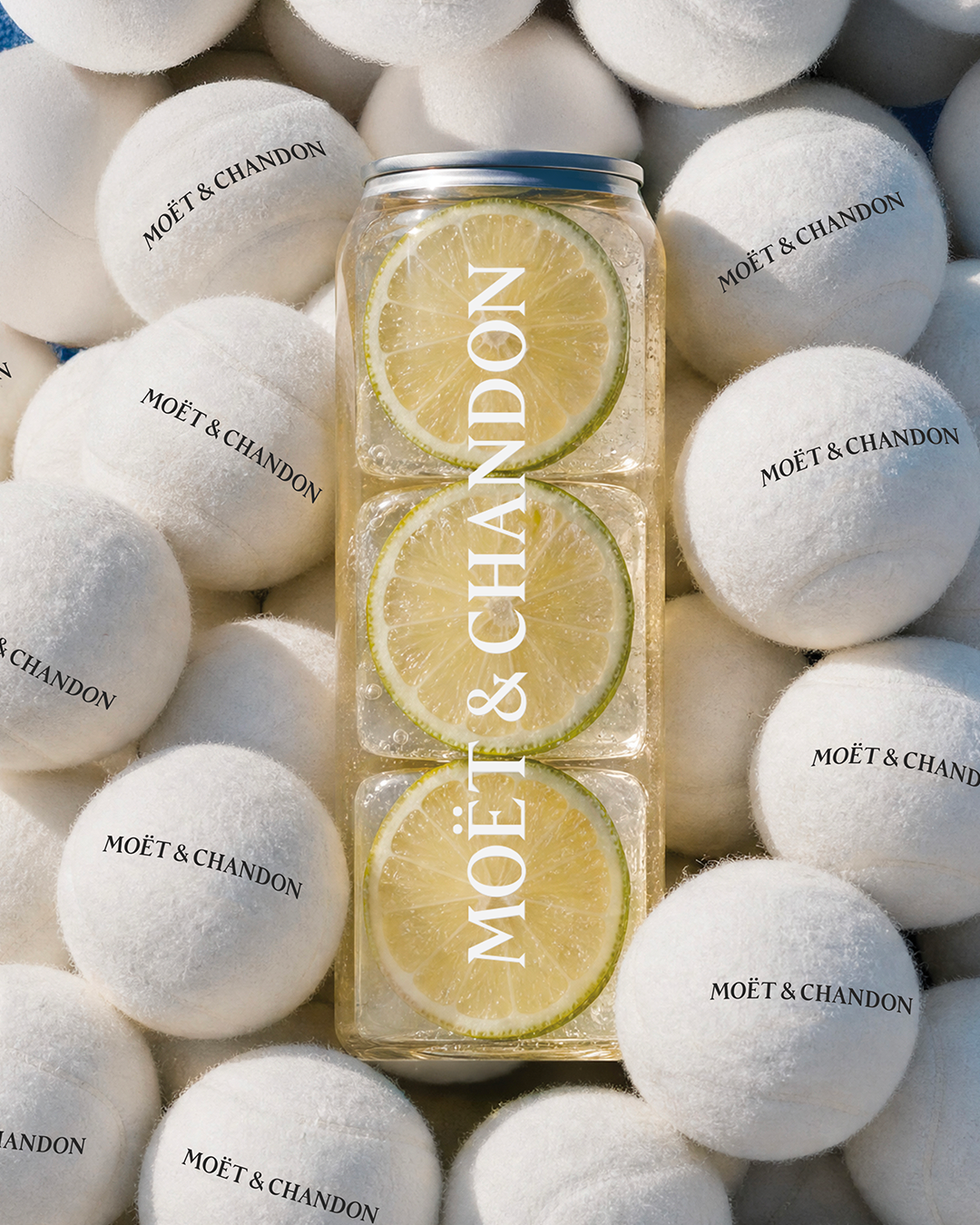
The new Moët Serve cocktail.
This year, a third specialty cocktail is joining the lineup: the Moët Serve, a new drink debuting simultaneously at Arthur Ashe Stadium and at a select number of New York City venues, marking the first time the champagne house has had a signature tournament cocktail of its own. The debut reflects a broader strategy by the tournament’s liquor brand partners to extend the U.S. Open’s footprint across the city, rather than keeping it contained to Flushing Meadows.
“Our ultimate goal was to create a refreshed, innovative, yet approachable drink that could live seamlessly both on the tournament grounds and at well-loved destinations throughout New York City,” Daniela Curiel, head of Moët & Chandon USA, tells T&C. Putting a new spin on canned cocktails, the Moët Serve is made with Moët Ice Impérial, the house’s champagne specifically created to be served over ice, with fresh lime and served in a container inspired by the look of a tennis ball canister. “The U.S. Open has established rituals that fans know and love, but part of the excitement of the tournament is discovering what’s new.”
 Park Lane New York
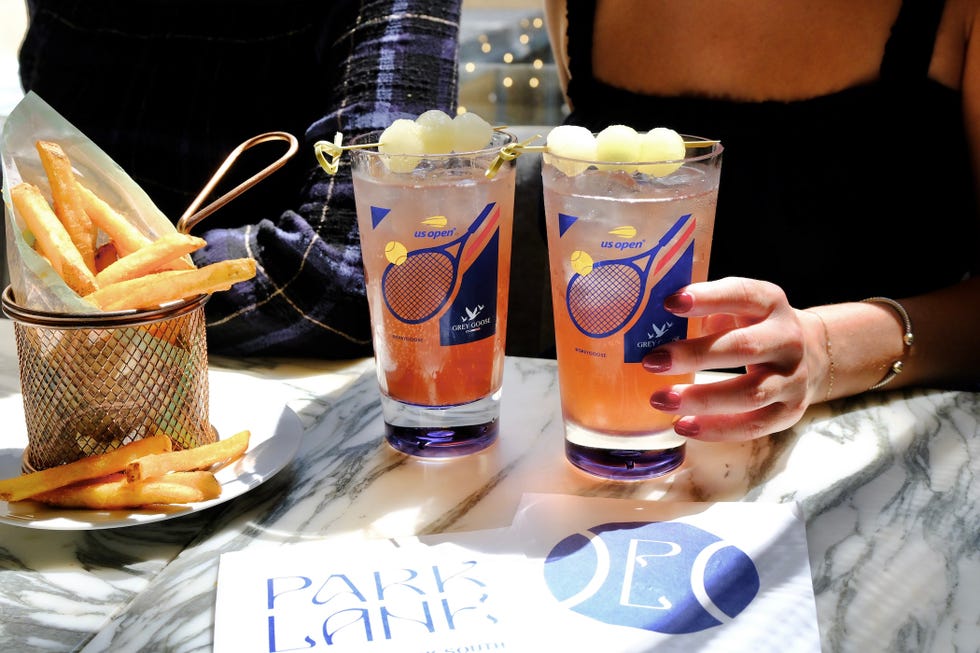
An order of Honey Deuces and fries at the Park Lane Hotel in Manhattan.
While the Moët Serve arrives pre-packaged and the Ace Paloma is straightforward enough to mix anywhere, the Honey Deuce has one non-negotiable: those three melon balls. That garnish requires real labor, so it’s not just something you can stroll up and request from any bartender. For those who do have it on the menu, Santiago says the melon ball prep is treated like any other high-volume garnish challenge.
“Establish the expected sales, prep to those projections, and make sure there’s enough ready for service without over-prepping and creating unnecessary waste,” she explains. The timing also helps. “In New York, the last few weeks of summer tend to be a little slower for restaurants and bars, so our teams have the bandwidth to build that prep into their routine.”
 Daintree LES
An Ace Paloma served at Daintree’s rooftop bar on Manhattan’s Lower East Side.
At Dante, which first developed its own riff on the drink in 2021 when the U.S. Open was played without spectators and the restaurant served as the only bar inside the quarantined tournament bubble, the solution is to prep three different melon varieties, watermelon, cantaloupe, and honeydew, and flash-freeze them before service. “At all of our locations, locals and regulars now come in asking for it—often before the first match is played and well after the finals have ended,” Linden Pride, co-owner of Dante, tells T&C. “It has become a seasonal Dante tradition that our guests have come to expect.”
There could be a fine line between exclusivity and accessibility, making it so ubiquitous that it loses the association that made it worth seeking out in the first place. But both Santiago and Pride push back on the idea that wider availability cheapens the experience of these specific cocktails. “I actually think it does the opposite,” Santiago says. “Tickets can be expensive and difficult to get, so not everyone who loves the tournament or the atmosphere surrounding it can attend in person. Being able to go to your neighborhood bar, watch the match with friends, and sip the same cocktail people are drinking at the tournament gives you a little piece of that experience.”


Rachel King (she/her) is a news writer at Town & Country. Before joining T&C, she spent nearly a decade as an editor at Fortune. Her work covering travel and lifestyle has appeared in Forbes, Observer, Robb Report, Cruise Critic, and Cool Hunting, among others. Originally from San Francisco, she lives in New York with her wife, their daughter, and a precocious labradoodle. Follow her on Instagram at @rk.passport.