
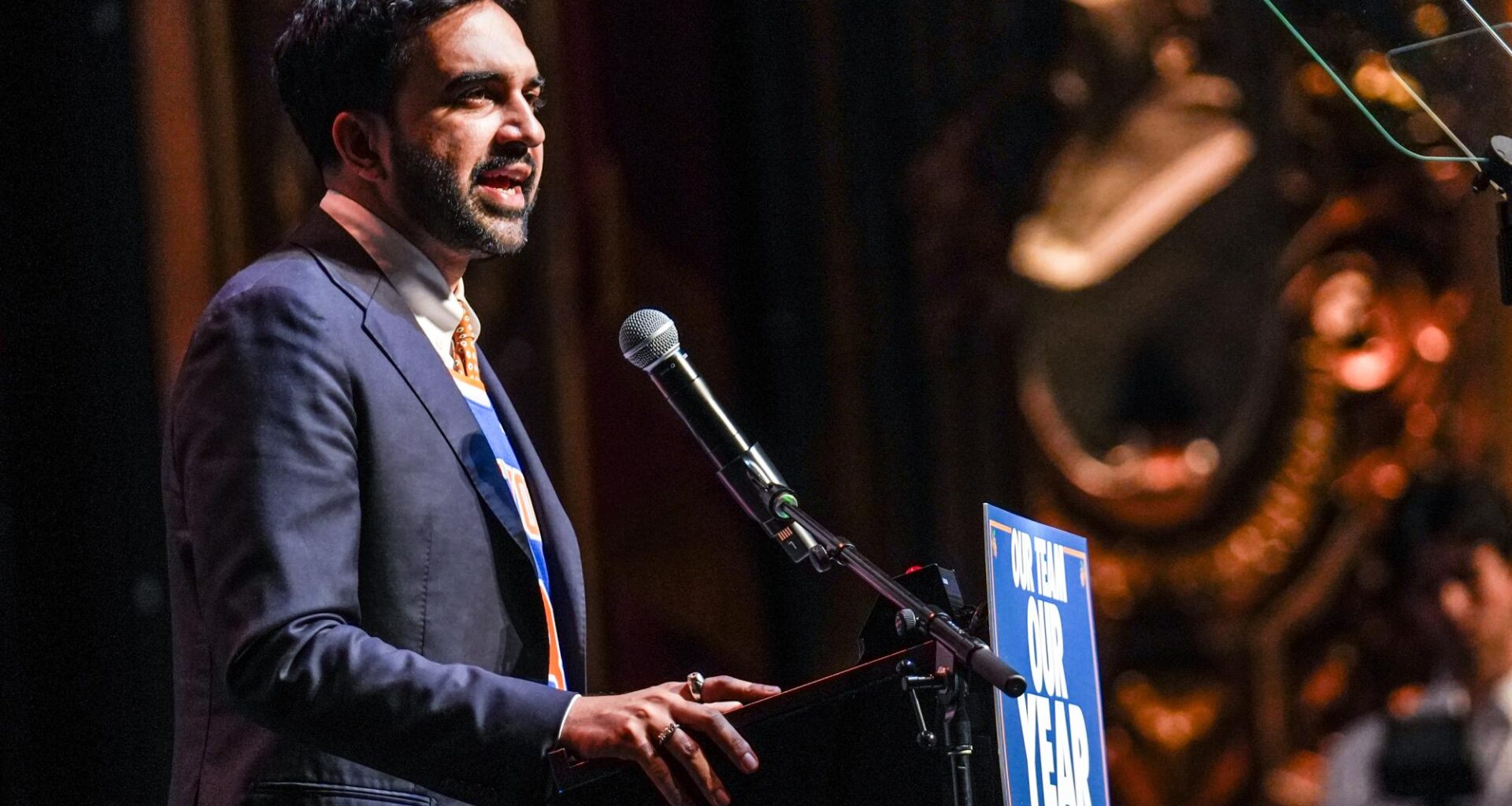
New York City Mayor Zohran Mamdani announced that Artificial Intelligence use will be prohibited for all students in grades 2-K through eighth grade in New York City for the 2026-2027 school year. The stated reason for the removal of AI in the classroom is to refocus children’s learning experience back to what it used to be: human connection and learning from teachers to students. We believe that this is a positive development for NYC schools and should set a precedent for schools around the country.
New York City’s decision to place a one-year moratorium on student-facing generative AI for students through eighth grade is a smart recognition that technology should support education, not replace the process of learning. Younger students are still developing foundational skills in writing, reading comprehension, problem-solving and critical thinking, all of which require them to struggle through problems and arrive at answers themselves.
This is the first governmental AI restriction of its kind. Since the release of OpenAI’s chatbot in Nov. 2022, schools have been grappling with how to handle the new technological advancements. Finally, after almost four years, there are set regulations on how to handle the seemingly ever-evolving technology in schools.
Children growing up in households that contain AI robots like Google Home or Alexa have ingrained in kids that AI is normal and can be used for any purpose. Since children can be told a bedtime story or ask knock-knock jokes to a faceless object in their living room or bedroom, kids see these conversations as genuine, as if they are chatting with a friend or family member. These children are too young to make the distinction between what is real and fake.
Students will be allowed to use five limited AI pilots such as Quill, Edia, Brisk Teaching, Playlab and Intel AI-Ready Schools. In high school, all students will take a biannual AI literacy class to help them create an understanding of how AI can and should be used going forward, specifically in relation to education.
One main goal of the one-year moratorium is to allow officials time to research the impacts AI has on students and their learning. Along with providing AI literacy classes for high school students, there will also be pilot programs used to test the impacts AI educational tools have on high schoolers in controlled environments. Parents have had mixed opinions on the use of AI in schools, but New York City’s policy intends to find a middle ground while ensuring that studies have been properly done.
The city’s ban on AI does not apply to teachers and educators, who will be allowed to use AI tools for making lesson plans and completing their administrative tasks.
The new policy also limits individual screen time, with no personal device use for students in preschool through second grade, 30 minutes per day for grades 3-5 and 45 minutes for grades 6-8. These restrictions encourage younger students to spend more time reading, writing, interacting with classmates and developing essential skills. At an age when learning habits are still being formed, reducing dependence on devices can help students become more engaged and independent learners.
Other school districts have already started to follow suit. The Los Angeles Unified School District announced its plans to remove access to generative AI on district-owned devices across all schools. Between these two districts, around 1 million students will be affected by these policies.
While some parents feel that their children should be exposed to AI and learn how to responsibly use the tool, the policy was designed for flexibility and to allow for changes needed depending on how city officials wish to move forward.
There is substantial evidence that technology in schools poses a deficit to learning, but big tech, referring to Amazon, Apple, Google and Microsoft, pours millions into K-12 schools. This gives tech companies an in with the upcoming generations, ingraining themselves into the lives of students early on. This policy stops big tech from using children to secure future profits.
In order to create a sustainable future society, we need to nurture students’ innate curiosity and build their critical thinking skills. AI destroys curiosity and erodes cognitive abilities. Save the children, keep big tech out of schools.