
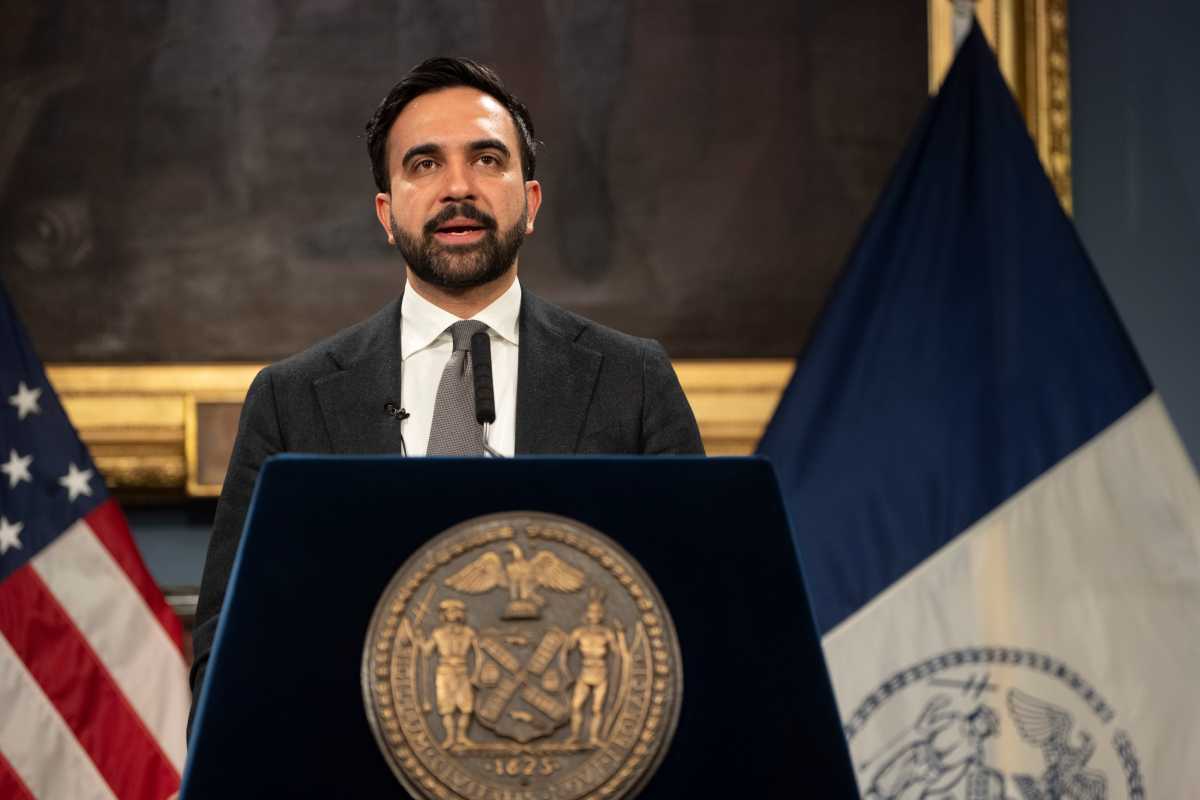
Mayor Zohran Mamdani signed an executive order Monday establishing the Mayor’s Office of Worker Power, a new City Hall office intended to help workers learn about their rights, connect with worker organizations and have a greater role in shaping city policies.
The administration said the office, known as the MOWP, will focus on outreach, education, research, policy and partnerships involving workers who lack adequate wages, benefits or a meaningful voice in the workplace.
MOWP will be supervised by Deputy Mayor for Economic Justice Julie Su and led by Tony Perlstein, a former longshoreman and United Auto Workers organizing director.
“This office allows us to get ahead of exploitation instead of simply responding to it,” said Su. “By building relationships with workers, unions and worker centers, we can understand what is happening on the ground and act before problems become crises. That is how we build an economy that delivers for working people.”
The office is being created as Mamdani’s administration emphasizes worker protections and economic justice. The administration cited a recent analysis showing that chief executives at the 100 largest low-wage companies earned an average of 614 times the pay of their companies’ typical workers last year.
“Every day, working New Yorkers show up, do their jobs, and keep this city running. Too often, they have no say in the conditions they work under,” said Mamdani. “The Mayor’s Office of Worker Power will make sure workers have a seat at the table before exploitation becomes a crisis and violations become routine. We’re connecting workers to their rights, to each other and to the organizations ready to stand with them. Because when workers have power, this city works better for everyone.”
Mamdani said the new office would help connect workers with information about their rights and organizations that can provide support.
MOWP plans to convene rank-and-file workers, union leaders, worker centers, immigrant workers, gig workers an platform workers. It will also hold public hearings on major workplace issues and coordinate with city agencies on research and policy proposals.
The office will address emerging workplace challenges, including worker misclassification, immigration-related exploitation, new technologies and climate-related safety risks.