
As a New England WASP, I probably have a hereditary fondness for grand old rooms. My Boston Brahmin forebears, after trading religious zeal for mercantile ambition, liked nothing better than sipping claret, playing whist, and smoking cigars in their clubhouses on Beacon Hill. In private quarters adorned with mahogany paneling, maritime paintings, and marble fireplaces, my flinty ancestors chortled deep into the night—safely removed from wives, papists, and, God forbid, Yale men.
Since moving to New York City, I’ve delighted in finding bars that feel like clubhouses frozen in the Gilded Age. The Campbell in Grand Central comes to mind. The Rose Club at the Plaza. Although much newer, the Polo Bar gussies up the blue-blood clubhouse aesthetic with fabulous fare, a trophy-laden wine cellar, and an ultra-exclusive mystique. But the apotheosis of robber-baron extravagance is The Gold Room at Lotte New York Palace.
“Gold? Yellow, glittering, precious gold?” — Timon of Athens, William Shakespeare
Johnny Motley / Johnny Motley
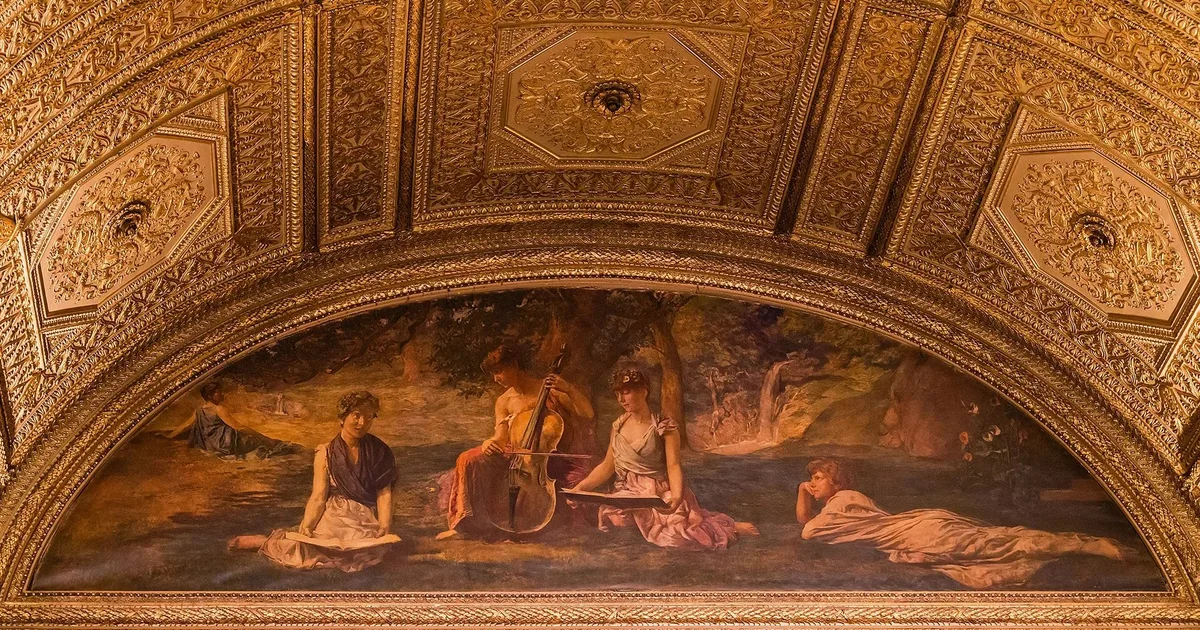
The Gold Room dates to 1882, when railroad tycoon Henry Villard commissioned the Villard Houses, a Renaissance Revival palazzo in the heart of Midtown. After Villard’s fortune collapsed, newspaper magnate Whitelaw Reid acquired the property and transformed the unfinished Gold Room into a two-story music room worthy of a Medici prince. His architect swathed the room in gilt, added a stately musicians’ balcony, and adorned every surface with art and architectural marzipan. When the last layer of golden paint dried, the salon resembled a joint artistic venture between a Renaissance pope, a New York plutocrat, and King Midas.
As tempted as I was to invite Tinderella to such an opulent venue, I wanted company who would appreciate the history, architecture, and art. My college buddy James studied history at Harvard, lived in Italy, and is an aesthete of rare distinction. Better yet, he’s a gin connoisseur, and the Gold Room stocked an impressive collection of rare juniper spirits.
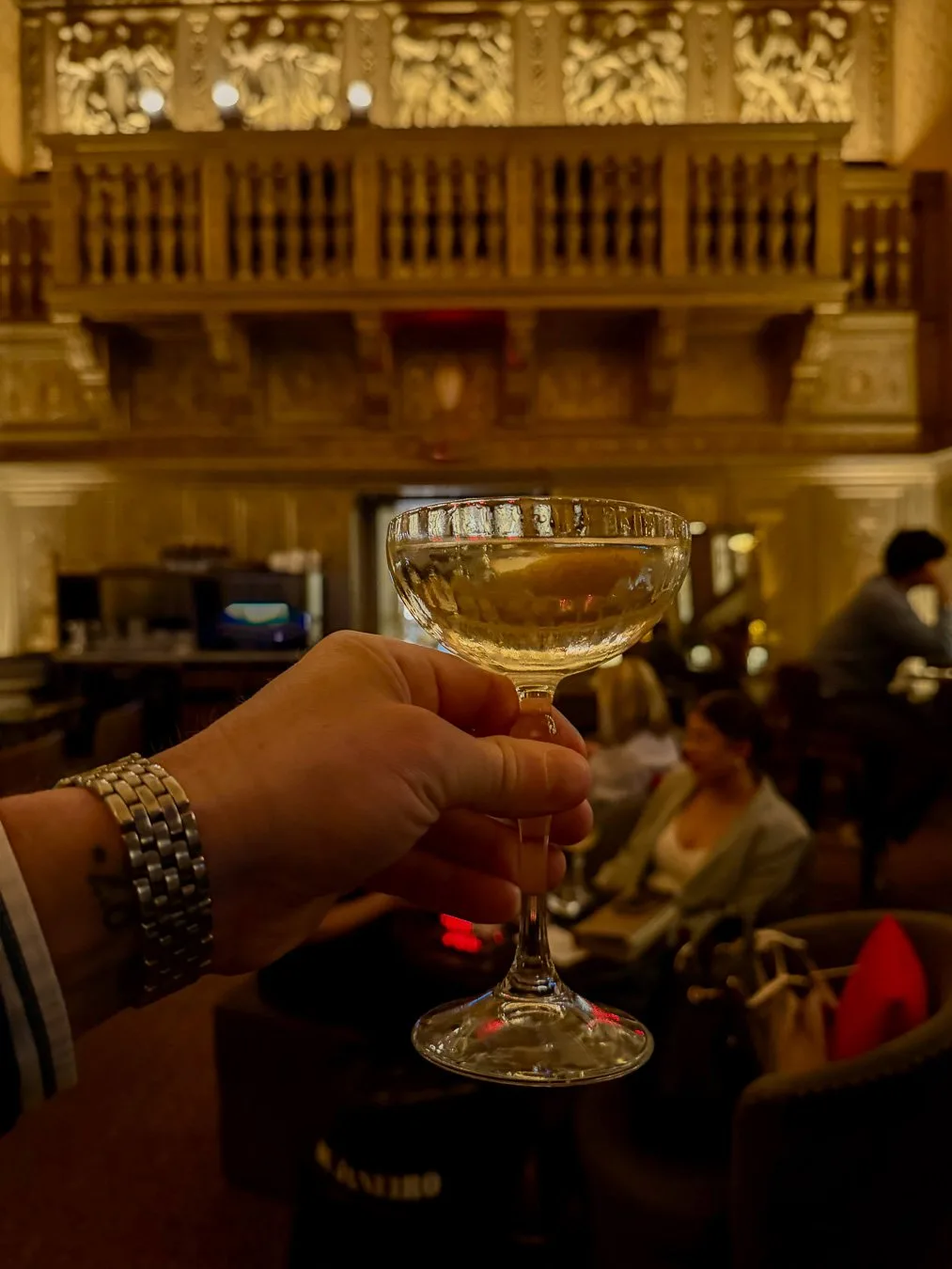
We snagged a corner of the bar that afforded us a panoramic view of the room. I eyeballed the famous $250 Martini, made with a special release of Nolet’s Gin, but remembered I was a freelance writer rather than a railroad tycoon. We settled instead on dueling martinis made with two exotic gins the bartender recommended.
Lost in conversation and enchanted by the surroundings, I was almost reluctant to order food. But gin martinis are a helluva drug, and by the third round I realized ballast would be necessary unless I planned to sleep on a couch in the Lotte’s lobby. I am, after all, a professional. We shared steak tartare, a platter of fresh oysters, and lobster mac and cheese—dishes luxurious enough to match the ambiance.
We both had early starts the next morning but ordered a nightcap anyway. I hadn’t caught up with James in a while, and the room was simply too beautiful not to linger. Besides, we owed it to the ghost of old Mr. Villard, the railroad baron who never lived to see his Gilded Age fever dream come to fruition.