
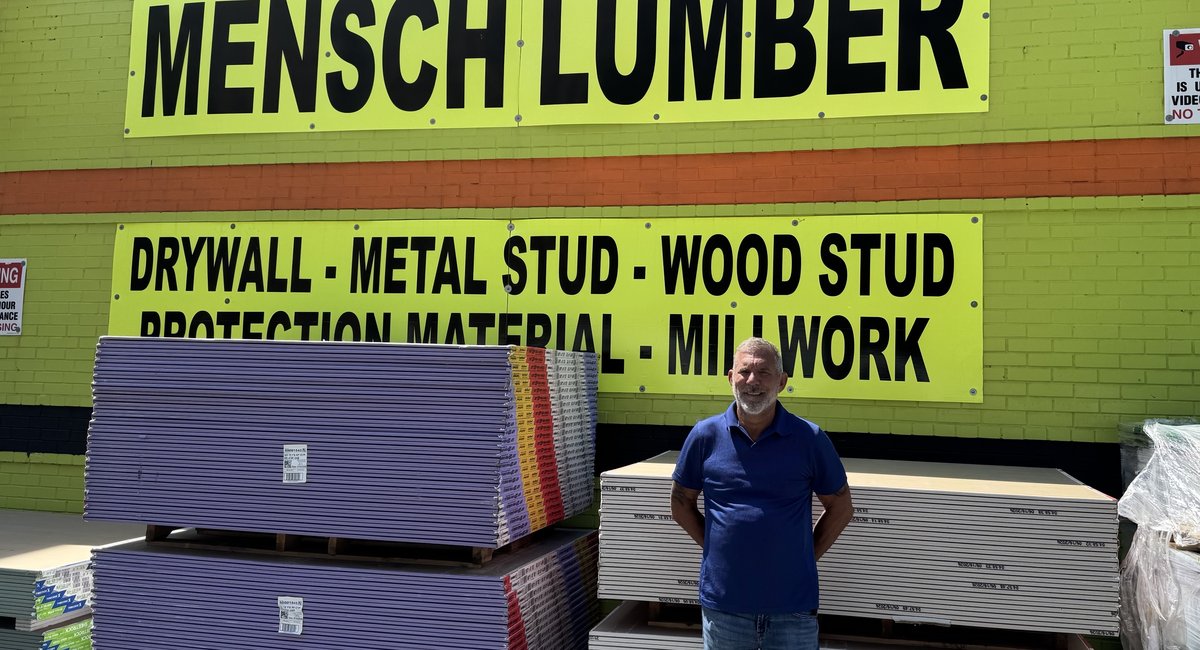
When construction workers building the Second Avenue subway first began digging through the Upper East Side in 2007, lumber and construction outlet Mensch Supply had to pack up shop.
The MTA had seized the land where Mensch operated through eminent domain to make way for the new train line. Mensch Supply’s owner, Howard Kahn, relocated the 10,000 square-foot business nine blocks uptown, to 106th St. in East Harlem.
Nearly 20 years later, it almost happened again as the MTA began construction on the second phase of the Second Avenue subway project to extend the Q line to 125th Street.
Kahn’s new location sits just around the corner from the future site of a new subway station. A preliminary environmental impact statement from the MTA in 2018 listed Mensch Supply’s address at E. 106th St. as a “potential property” for “full acquisition.”
This time, Kahn had a plan. He reached out to the MTA, which hadn’t yet made a final decision on which properties were in the way of the new train line.
“We then approached [the MTA] and said, ‘Hey, this already happened to us on 97th St.’ They remembered who I was. They were like, ‘Okay, let’s see what we can do,’” Kahn said outside his store with a large brick facade painted in neon-green and orange near Second Avenue.
The major project to extend the subway line will affect the lives of more than 130,000 residents in East Harlem whose lives will be disrupted by construction in the neighborhood. But Mensch’s experience highlights how the MTA is willing to work with the community to find a compromise when possible.
The transit agency opted to only take 15 feet of Mensch Supply’s roughly 10,000-square-foot space. The MTA will, however, need to seize an adjacent space — a retail store off of Second Avenue where Mensch has been selling paints and other goods.
“They felt the fairness of it was not to put me out of business for a second time,” Khan said. “So they really got back and did what they could to see how much they could accommodate.”
MTA spokesperson Michael Cortez said that allowing Mensch Supply to stay put was a result of “strong community engagement and knowing the neighborhood.”
“We understood the impact of asking a business to relocate a second time, and our engineers found a way to keep the project moving while allowing this company to remain in place,” Cortez said in a statement. “When the Second Avenue subway is extended, it will bring even more customers to support businesses throughout East Harlem.”
Kahn said the loss of the retail space isn’t a big deal for his business.
“I don’t think I really need another location for that,” Kahn said.
Eminent domain gives the government the right to purchase private property if it’s in the greater interest of the public, like a major subway expansion. For business owners like Kahn, who rent their space, the MTA will generally help them relocate.
The second phase of the Second Avenue subway has been years in the making. East Harlem residents will get a new subway line in an area considered a transit desert, where neighbors often walk long distances to the Lexington line for the nearest train.