
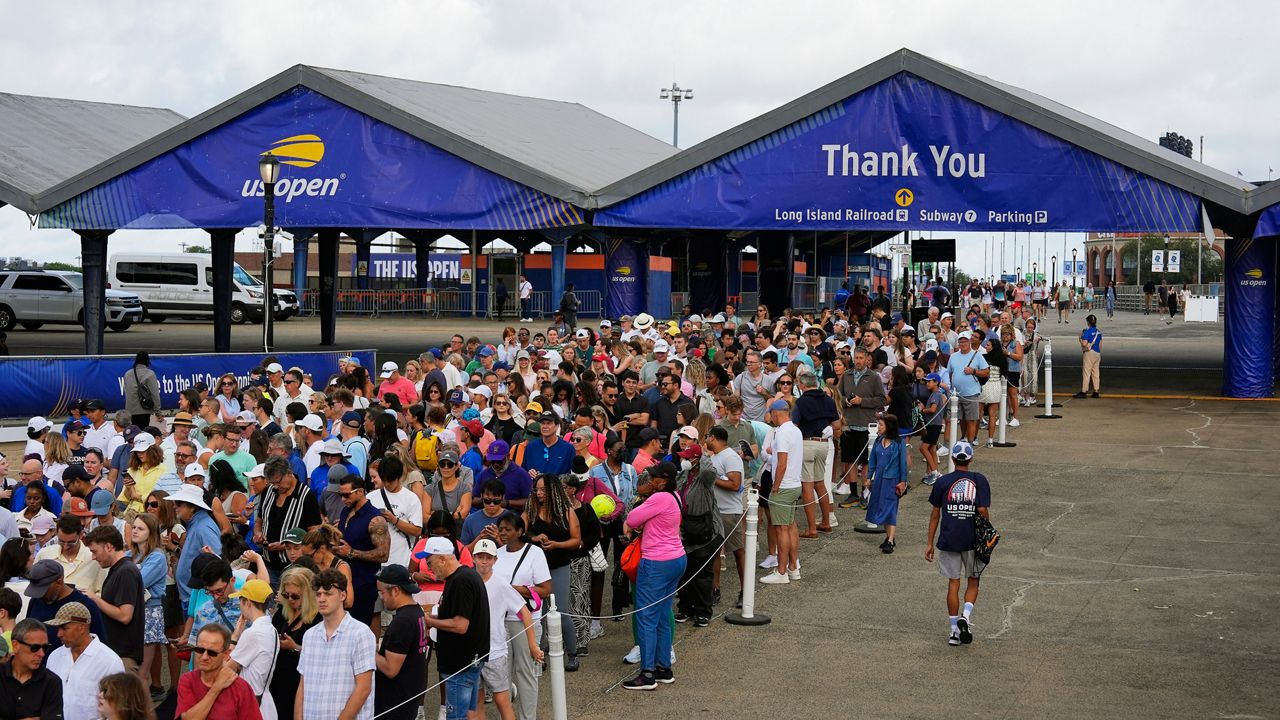
Long before it became one of the biggest sporting events in the world, the US Open was known as the U.S. National Championships.
The tournament began in 1881 on the grass courts of the Newport Casino in Rhode Island. At the time, tennis was largely considered a sport for the elite.
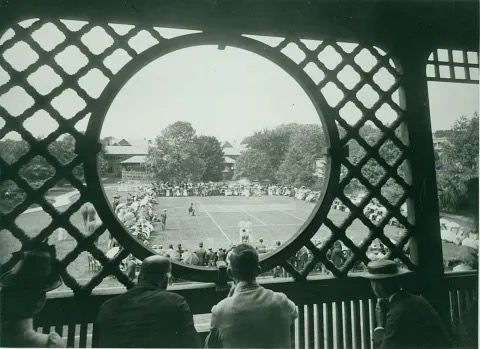
(Courtesy International Tennis Hall of Fame)
“It was lawn tennis. And there is no accident it was taking place in Newport, which has long been one of the favorite haunts of the blue bloods and the American elite,” said Matthew Futterman, a senior tennis writer at The Athletic.
In 1915, the tournament moved to the West Side Tennis Club in Forest Hills, Queens.
Futterman said the move reflected broader changes in tennis, as clubs began popping up around the country and New York City emerged as a major destination for big-time sports.
“New York is obviously emerging as a world capital at that point, a true world capital and a true center of commerce in the world,” Futterman said.

(Courtesy International Tennis Hall of Fame)
Then came 1968, a pivotal year for the tournament and the sport.
The U.S. National Championships became the US Open, marking the beginning of the open era in tennis, when professional players were allowed to compete alongside amateurs for the first time.
From 1975 to 1977, the tournament switched from grass to clay courts. Futterman said grass was difficult to maintain, but the tournament was not yet ready to make the inevitable move to hard courts.
In 1978, after outgrowing the West Side Tennis Club, the US Open moved to its current home in Flushing Meadows Corona Park and switched to hard courts.
Tennis historian and author Steve Flink said the move reflected another major shift in the sport: Tennis was increasingly moving beyond private clubs and into public parks across the country.
“This was a chance to expand the sport and to get through to general sports fans and the general public,” Flink said. “And get them interested in tennis and the US Open in a way maybe they never had before.”
Another major milestone came in 1997, when Arthur Ashe Stadium opened.
With more than 23,000 seats, it remains the largest tennis stadium in the world. Flink said the stadium helped elevate the US Open beyond tennis.
“Now suddenly it attracted a wider range of fans and some of these people maybe only casually interested in tennis, but they wanted to be at a major sporting event,” Flink said. “It was an entertainment capital.”
The stadium was named after Arthur Ashe, the first Black man to win a tennis Grand Slam. Ashe won the U.S. Open in 1968, the first year of the open era.
The US Open has been the site of other historic milestones, including becoming the first Grand Slam tournament to offer equal prize money to men and women in 1973.
Today, after nearly 50 years in Flushing Meadows Corona Park, the US Open attracts more than 1 million people over three weeks.
What began as an elite tennis tournament on grass courts in Rhode Island has grown into one of the largest sporting events in the world — and a major cultural, social and entertainment attraction in New York City.