
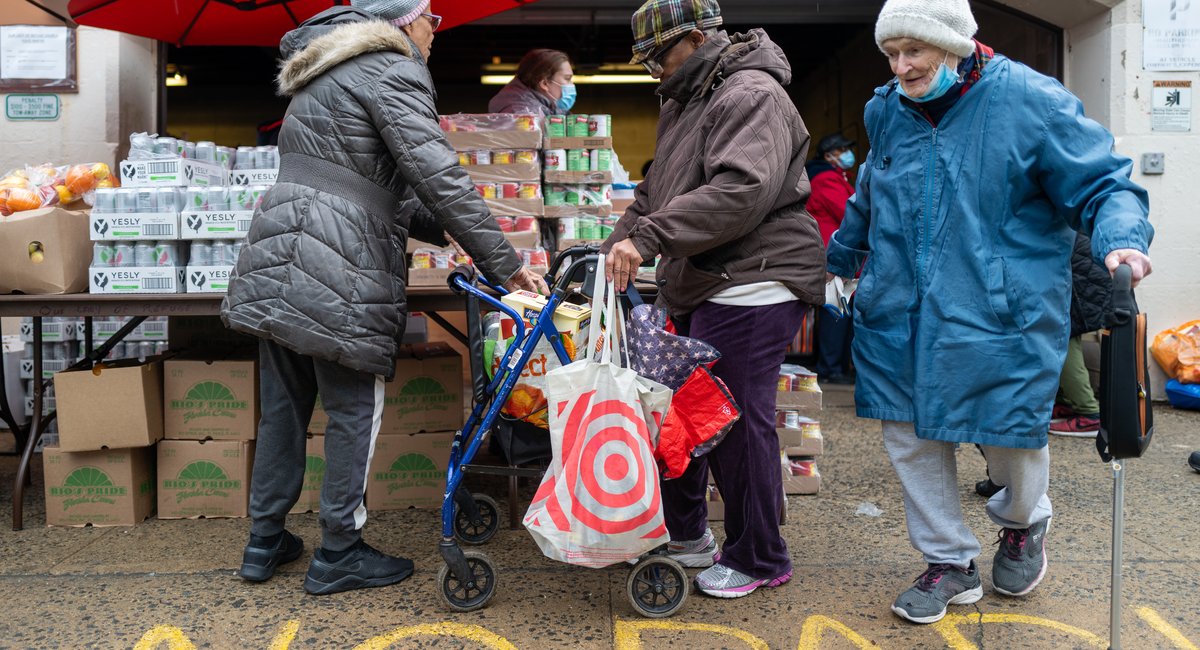
With rising numbers of New Yorkers struggling to afford food and thousands losing their SNAP benefits under new federal work rules, food advocates are highlighting three existing city-funded programs that help people afford healthy foods — that few know about.
The programs help bring groceries to people’s homes, afford local fruits and vegetables from the farmer’s market and double up their stash of fresh produce.
“They’re intended to be preventative of providing access to food before an emergency hits, before someone is resorting to the last possible effort to keep themselves fed,” said Abby de Riel, communications and development manager for Equity Advocates, a food policy organization.
De Riel said the city should invest more in these programs amid cuts to federal food assistance.
“As grocery prices increase and federal funding for food access is gutted, the importance of programs like these have grown in need. Fortunately, the Mamdani Administration is committed to supporting New Yorkers experiencing food insecurity with more than $850 million in the budget this year for free meals, food programs, and assistance to support low-income New Yorkers,” said William Fowler, a spokesperson for the Department of Health and Mental Hygiene.
He said the city increased funding for food pantries in this year’s budget and built in permanent funding for other healthy food programs.
At least 22,000 New Yorkers have lost their Supplemental Nutrition Assistance Program benefits since the Trump administration expanded work requirements for participants. Another 15,000 refugees, asylees or victims of human trafficking are also no longer eligible for SNAP under federal changes.
Meanwhile, food pantries are reporting surging demand as the costs of housing, food and childcare remain high. The anti-poverty group Robin Hood found 40% of families with children in the city are short on money every week to buy enough food.
Run by the city’s health department, Groceries to go, Health Bucks and Get the Good Stuff offer access to healthy foods. Some require recipients to have a medical condition to qualify or already be enrolled in SNAP.
Health Bucks
Health Bucks are $2 coupons that can be used at farmer’s markets by New Yorkers whether or not they are receiving SNAP.
SNAP recipients who spend $2 at a farmer’s market can get $2 in Health Bucks, up to $10 per day. Those who don’t have SNAP can get Health Bucks from nonprofit groups or faith-based organizations to spend at a farmer’s market.
There are more than 100 farm stands or farmer’s markets in the city that run through summer and fall. Residents can search the city’s map or text “so good” to 55676 or “muy rico” for Spanish to find the nearest farmer’s market.
Nonprofit groups that aren’t currently receiving Health Bucks to distribute to their community can sign up for the program here.
Get the Good Stuff
The matching program is for SNAP recipients and helps households increase what they’re able to bring home from the store. For every SNAP dollar spent at participating grocery stores on fruits, vegetables or beans, recipients get another dollar to use next time, up to $10 a day.
The $3 million program operates at about two dozen participating stores, though none on Staten Island.
Food advocates say the program can help SNAP households that have had their monthly benefits reduced due to not meeting the new work requirements.
Groceries to go
The $10 million program offers free grocery delivery, including tip and tax for New Yorkers who are experiencing food insecurity and are managing medical conditions such as diabetes or hypertension.
To qualify, recipients need to be a member of the NYC Health + Hospital Care Program, which offers low cost or no cost care to New Yorkers who can’t afford health insurance.
The program gives monthly credits of $110 for 1-2 person households and $270 for households of 3 people or more. Recipients use their credits on an app to either pick up or get their groceries delivered.
Groceries to go helped more than 3,000 residents last year.
City officials said the program is temporarily paused due to an administrative contract delay.
This story was updated with a quote from the city Department of Health and Mental Hygiene.