
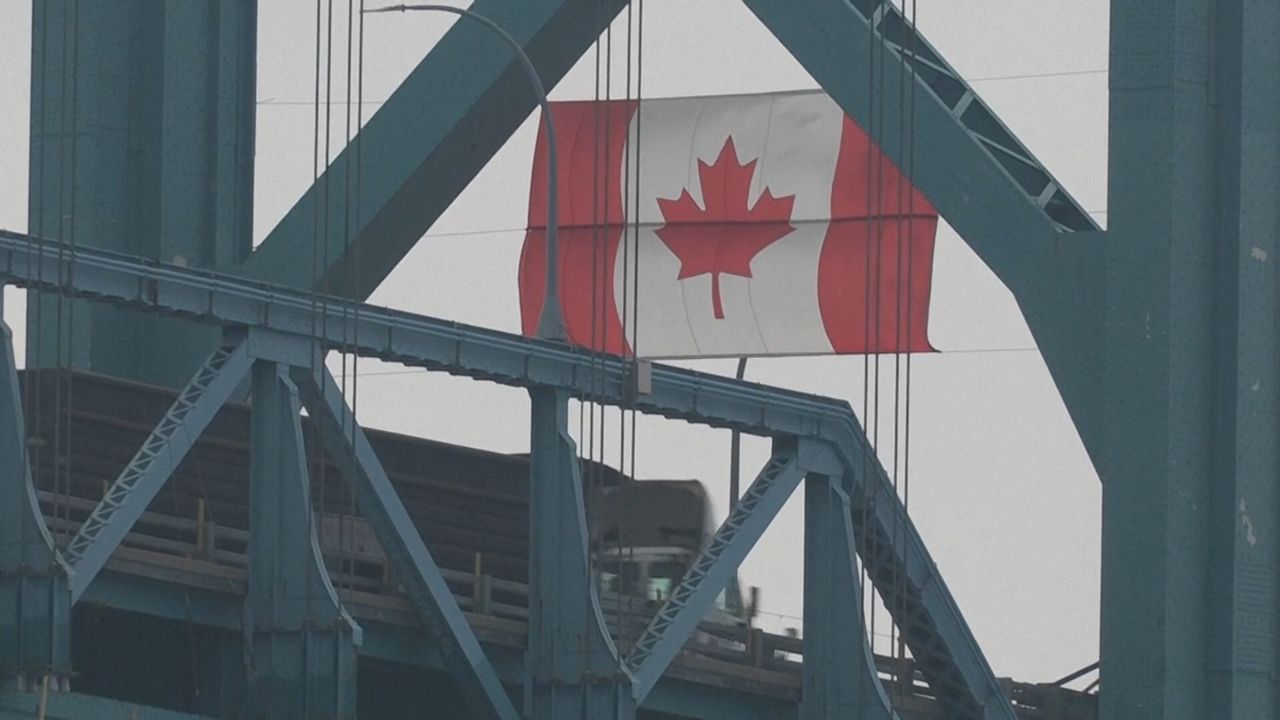
Canada implemented sweeping retaliatory tariffs Tuesday as the trade war between the U.S. and its northern neighbor continues to have ripple effects in New York state.
When the Trump administration announced 50% tariffs in July, it was clear more shoes would drop if negotiations failed. Canada has now implemented retaliatory tariffs that impact goods including steel, aluminum, lumber and other building materials, with the Canadian government saying the new tariffs will push back “dollar for dollar” against tariffs imposed by the Trump administration.
Trump has said the tariffs are intended to press the U.S.’s northern neighbor on what he describes as decades of unfair trade policies.
As the issue becomes a flashpoint in the November midterm elections on one hand, the real day-to-day economic impact is playing out on the other.
“Remember how he promised to lower costs on day one? It’s not exactly happening,” Gov. Kathy Hochul said Tuesday, hitting at President Donald Trump over the latest developments in the trade war.
“Once again New York’s small farmers and businesses and working families are caught in the crossfire and it’s insane,” Hochul said.
Alex Jacquez, of the left-leaning economic think tank Groundwork Collaborative, told Spectrum News 1 that the impact of the Trump administration’s 50 percent tariffs imposed on Canadian goods last month is just coming into focus.
Now, the dollar-for-dollar Canadian retaliation is set to impact a host of additional products and industries with potential widespread effects.
“Up to a thousand products worth $27.6 billion, including steel and aluminum, furniture, clothing, dairy and cheese, appliances and seafood,” Jacquez said.
But Jacquez points out that Canada appears to be specifically taking aim at the dairy industry.
“That is going to hit New York hard and dairy farmers who are already being hit hard with increased cost, you look at diesel, you look at fertilizer, you look at the input cost for machinery it is only going to make it harder to keep things above board,” Jacquez said.
New York’s construction industry was just assessing the realities of tariffs on Canadian cement imposed last month. With Canada striking back — and goods from lumber to steel and aluminum in the crossfire — Mike Elmendorf, president and CEO of the Associated General Contractors of New York stressed the uncertainty alone hurts industries where planning and contracts are the name of the game.
“When you get into these tit-for-tat trade wars at the end of the day, one thing you can be sure of is everyone is going to lose,” he said. “In many cases contractors may not have an ability to recover when all of a sudden they’re facing significantly higher material costs because tariffs land after they have bid or started a project.”
The tariffs are expected to have repercussions that are especially pronounced across upstate New York’s rural areas. Assemblyman Michael S. Cashman, chair of the Assembly’s U.S.-Canada Relations Taskforce Tuesday asked Congress to do more.
“This is not abstract. These tariffs and retaliatory tariffs are going to be felt by New York families, farmers, workers and businesses and ultimately by Americans across the country. I continue to call on Congress to intervene, protect New York and protect America, and get us back to normal trade relations with our closest ally before this trade war causes even more damage.”
But Republican state Sen. George Borrello of Western New York takes a different position.
As Democrats warn of the potential impacts across New York’s rural communities and even some Republicans stay silent, Borrello insisted that tariffs are the only way to level the playing field for New York’s dairy farmers.
“They want to have access to the American market, the largest market in the world for things like steel, dairy products, wood, lumber, and they don’t want us to have the same access to their market,” Borrello said.
Hochul’s opponent, Republican Bruce Blakeman, has frequently deflected when asked about the impact of tariffs here in New York as the trade dispute promises to be an issue in races across the state.