
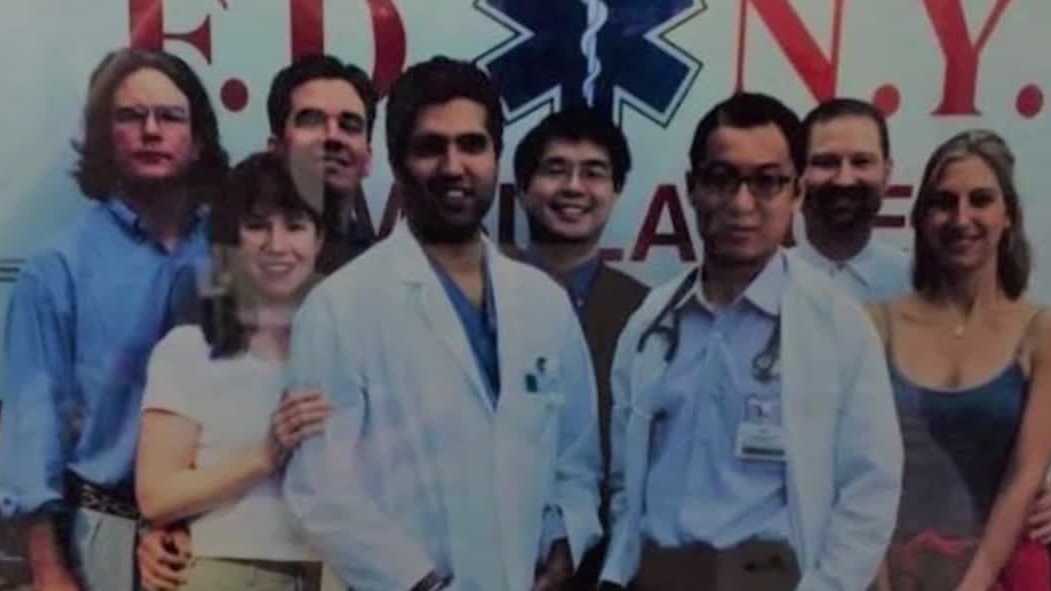
Salinas doctor recalls working NYC emergency room during 9/11
 SALINAS, Calif. —
Dr. Rakesh Singh, a Salinas Valley Health physician, is reflecting on his experience as an emergency medicine resident in Brooklyn during the September 11 attacks, marking 25 years since the tragic day.
“Nothing you had read about, nothing you could prepare for,” Singh said.
On September 11, 2001, Singh was working at New York Methodist Hospital, located just a few miles from the World Trade Center. When the second plane hit, Singh and his colleagues quickly realized they were facing an unprecedented situation.
“We had a quick huddle and said, we have to assume we’re going to get large numbers of patients,” Singh said.
Doctors cleared the emergency room to prepare for trauma patients, checked blood and ventilator supplies, and called in additional staff. But when the towers collapsed, the expected surge of patients never arrived.
“What was clear was people weren’t really coming,” Singh said. “By this time, we had cleared out the emergency room and like a lot of hospitals in the area, we were ready for large numbers of patients.”
After his shift ended, Singh headed toward Ground Zero with medical supplies, again expecting a flood of patients. Instead, he treated mostly firefighters with eye injuries, debris to the face, and other relatively minor injuries.
“Of course, what later came out about 9/11 was that you had relatively minor injuries or you did not make it,” Singh said.
The emotional toll of the day came later for Singh, who knew firefighters and police officers who died in the attacks. Over the years, he also witnessed people he knew suffer illnesses connected to 9/11.
“When you work in an emergency room you very much know your local police, your local fire department, and there was a number of people, of course, that we lost,” Singh said. “If you lived in New York City and worked there, you knew people who were involved. And you would hear, as time went on, you would hear of other people who had just been lost. And I don’t think you ever fully recovered from that aspect of it.”
Now, 25 years later, Singh carries the lessons he learned that day into his work at Salinas Valley Health. He said the experience taught him that disaster preparation is not just about having a plan but also about being ready to adapt to unexpected realities.
“You learn that preparation is key. Doing drills, having disaster plans, you have to have those. And you have to bear in mind that the actual disaster is not going to follow any textbook,” Singh said.