
285 Lafayette St. at Jersey St.
Photo: Jovani Demetrie
It is a very good time to be a bread head. The city is swarming with all manner of bakeries and we are already looking forward to the pending arrival of Tartine co-founder and dough demigod Chad Robertson’s Altbau in Williamsburg. Starting tomorrow, Martin Auer — who runs a series of cafés and bakeries in his native Austria — is daring to present New Yorkers with a singular (and single) proposition: His new bakery, Rye, on the eastern edge of Soho, offers only one thing, done very well, but just that one thing. It is rye sourdough, and it costs $60 per loaf. And, Before you flip out, be advised, I have tried it and I can report that it is actually worth that price.
Auer’s naturally fermented rye contains four ingredients: rye flour, water, salt, and, because he insists it qualifies, time. There are no additives, no commercial yeast, no blend of grains. This is nothing like the seeded Danish rye of outfits like Ole & Steen, Smør, or Frø, or the caraway-flecked slices you get with your pastrami at New York’s Jewish delicatessens.
“The idea was to be humble as well as proud of the chance to deliver something we are so mad about,” Auer says. No stranger to this line of work, he inherited a successful bakery business from his father, who inherited it from his. Back in his hometown of Graz, Auer’s namesake company currently oversees a full-range bakery production site that includes a roastery for coffee and a flour mill for the bakeries and cafés he’s opened throughout Austria. There, he offers baguettes, coffee, and croissants, but “there are places around the world, especially in the big cities where — not that often — you can find some great baguettes and croissants and coffee,” he says. This is why he did not want to open a bakery with those things here. “Our origin, that’s sourdough rye bread — that’s our staple,” he explains.
The pandemic emboldened amateurs to believe that anyone can make sourdough, but Auer’s is a centuries-old, regional specialty that’s not easily mastered. “Why should you try to handle this difficult stuff of rye and rye flour?” Auer asks rhetorically. “Because you just can’t mix flour and water like wheat.” His bread is a descendant of his grandfather’s and is a study in precision; the same 57-year-old sourdough culture must be used for every loaf, which is made with a carefully calibrated blend of fresh-milled rye flour that Auer ships from Austria.
Even still. The people who loved his bakeries in Austria and encouraged him to set up shop in other countries became less enthusiastic when he announced his single-product agenda. “I lost every potential partner,” he says. He realized if he wanted to make this happen, he’d have to do it himself, and because his grandmother had always dreamed of immigrating here, he set his sights on New York City.
That caused its own problems. “Which landlord wants to give their premium spot to this no-name from Austria with no track record in the U.S. who wants to put in a two-ton oven instead of giving it to Chanel?” asks Auer’s 23-year-old son, Tim, who’s gone to work with his father.
So much for Chanel. The House of Auer spans 3,000 square feet, and the build-out was a major undertaking, what with that custom multi-deck oven designed to fit ten loaves per shelf (and don’t forget the refrigeration and the fermentation cabin).
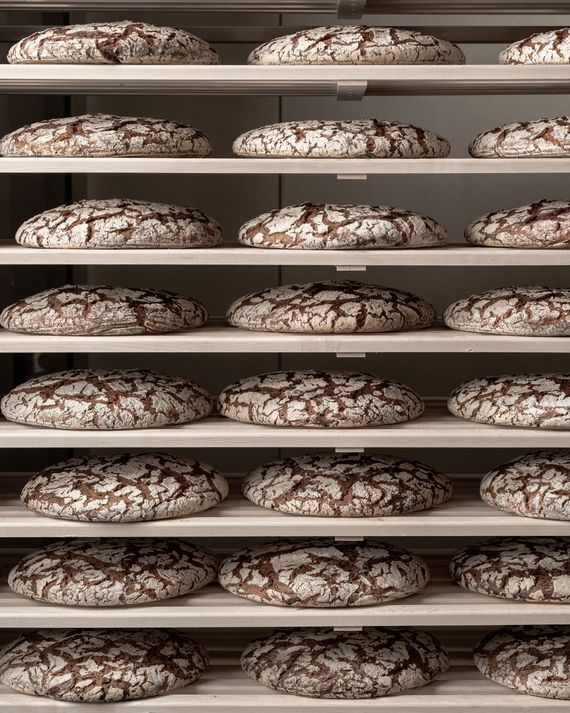
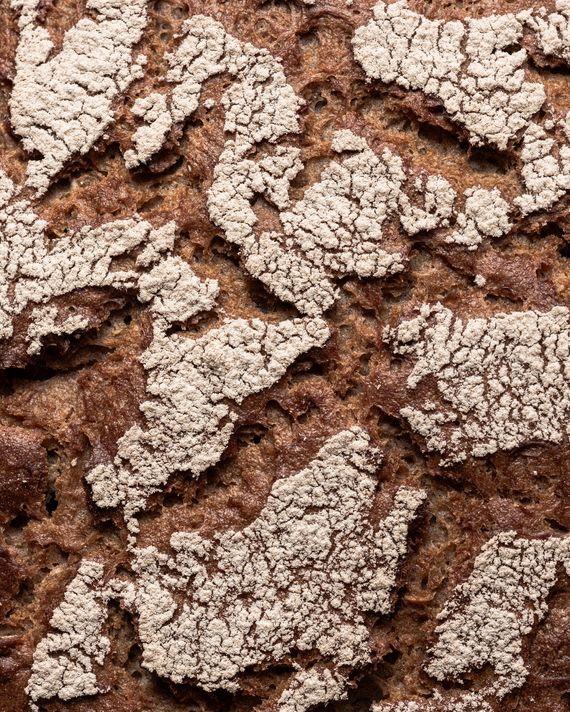
The loaves appear flatter than typical American sourdough; the crust offers a satisfying crunch. Jovani Demetrie.
The loaves appear flatter than typical American sourdough; the crust offers a satisfying crunch. Jovani Demetrie.
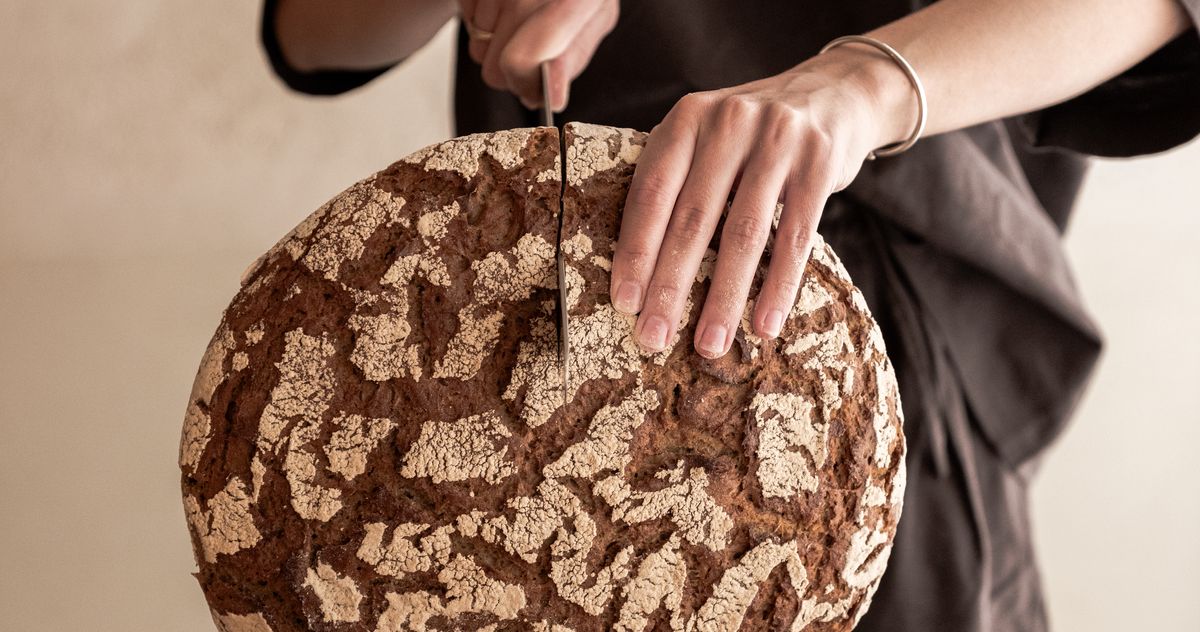
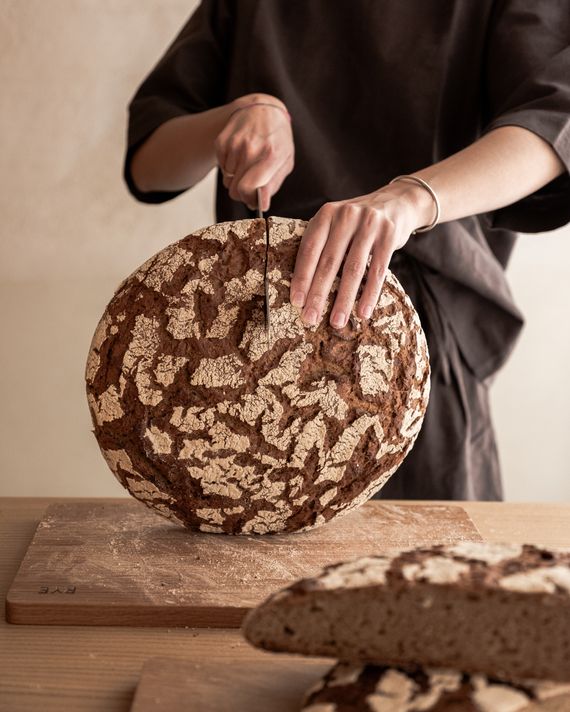
All this for a loaf of sourdough? Obviously, Auer thinks it’s worth it and whatever your preferences as an eater, you can’t deny the bread is beautiful. Less domed than your average miche, this flatter disc looks like a giant gingersnap. The crumb provides a deeply enjoyable chew, while the crust is satisfyingly crunchy, substantial without being too thick. The flavor is surprisingly complex, with measured sourness and the distinct maltiness of rye.
Now, the Auers have to convince New Yorkers to try it. Although they know they’ve designed an alluring, sophisticated space to complement their product (the minimalist interior has the warm, earthy palette of any modern European luxury boutique), they’re aware that getting customers in the door isn’t the same as selling them on a $60 round of bread. A whole loaf is 3.3 pounds, it stays fresh for days on end, and it can certainly feed a lot of people, but quarter loaves are also available for $15 (Tim says they can provide breakfast and lunch for two people for two days), and half-loaves are $30.
“It’s our task to inspire people, to make them feel and taste, to hear the story about it, the advantages, but first of all, taste it,” Auer says. He wants New Yorkers to try it on its own, of course, and he wants them to try it spread with various sweet or savory combinations. To that end, a dozen “spread breads” are available on the bakery’s “On Rye” menu; the application of toppings is appropriately restrained to highlight their leavened canvas. Early standouts are one with salmon roe and another with butter and chive (15 butters were tested, only Finlandia was approved). On the sweet end, early front-runners are slices lavished with Staud’s apricot jam from Vienna or with seeded honey.
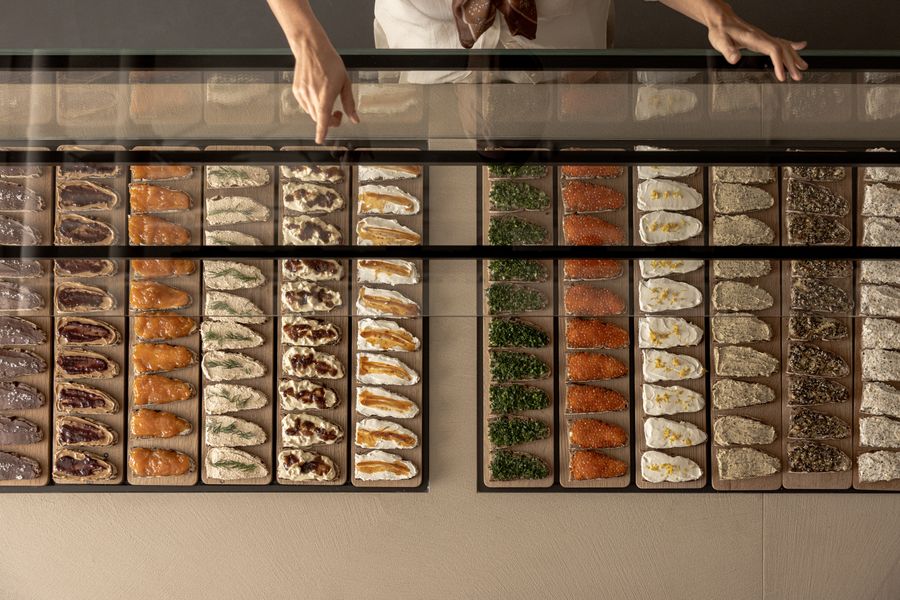
Slices of rye with assorted toppings.
Photo: Jovani Demetrie
EAT LIKE THE EXPERTS.
Sign up for the Grub Street newsletter.
Vox Media, LLC Terms and Privacy Notice