
The Interborough Express (IBX) — a new light rail line between Brooklyn and Queens — will take at least five years to complete, MTA Chair and CEO Janno Lieber said this week.
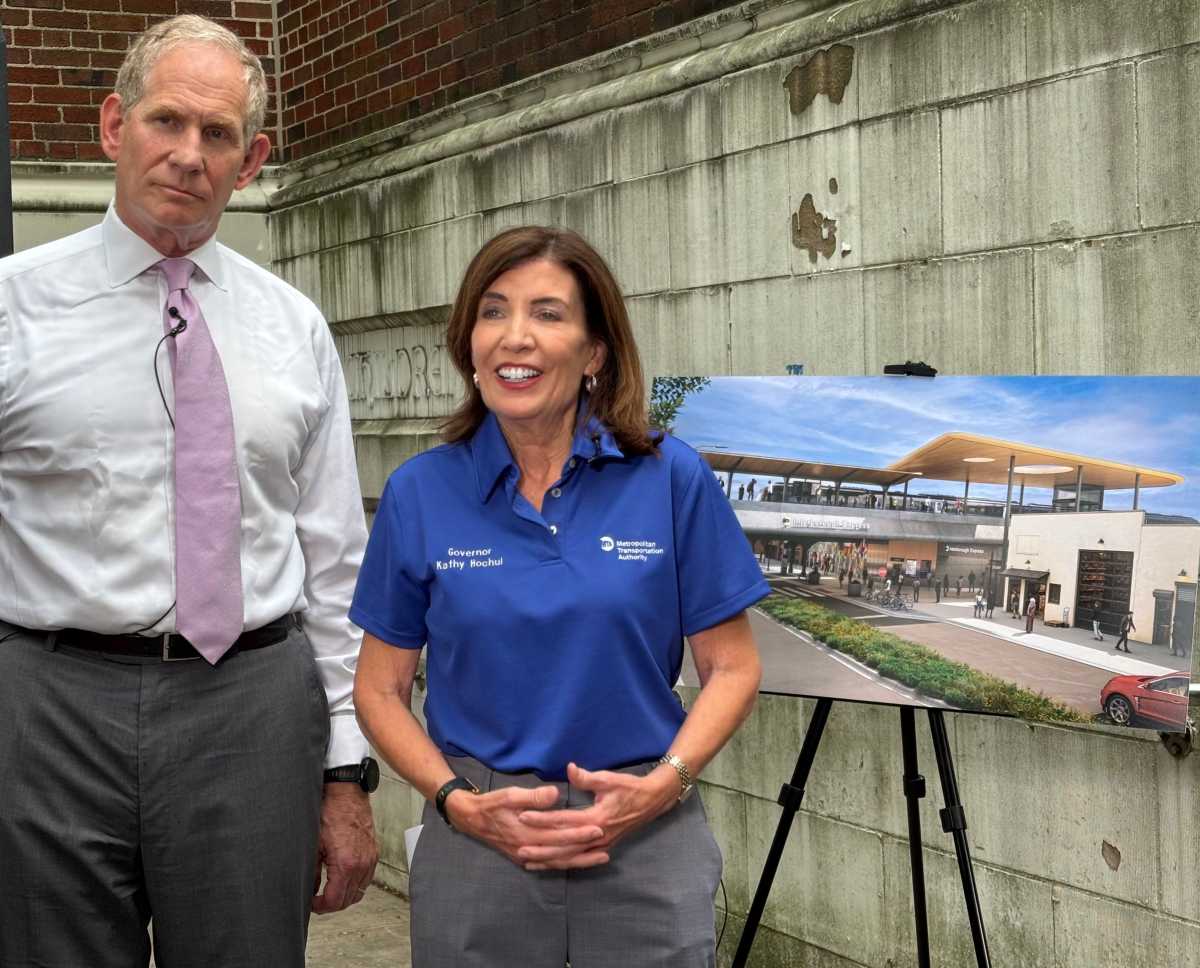
The transit boss floated the rough timeline for building the IBX to reporters while dropping by a Wednesday evening pop-up event at the Queens Public Library’s Ridgewood Branch with Gov. Kathy Hochul. The event was just one of dozens the MTA has held over the summer to educate riders about the IBX, while collecting their feedback on the undertaking.
Lieber emphasized that while riders will not be able to actually travel on the IBX for a number of years, the project’s design phase, which began last summer, is moving faster than expected.
“The main thing is that we have incredible speed on the design, which is half of the challenge is figuring out how to make everything fit, and to do the technology, and to make sure it impacts on people’s lives and real estate as little as possible,” Lieber said. “And we’re really ahead of schedule on that.”
The $5.5 billion project includes the construction of 18 new stations, 17 of which will connect to existing subway stations, along 14 miles of barely-used freight tracks. It will also link riders to 50 bus routes and the Long Island Rail Road.
Once it is completed, the IBX promises to move a projected 160,000 daily riders end-to-end, between Bay Ridge in Brooklyn and Jackson Heights in Queens, in just 32 minutes.
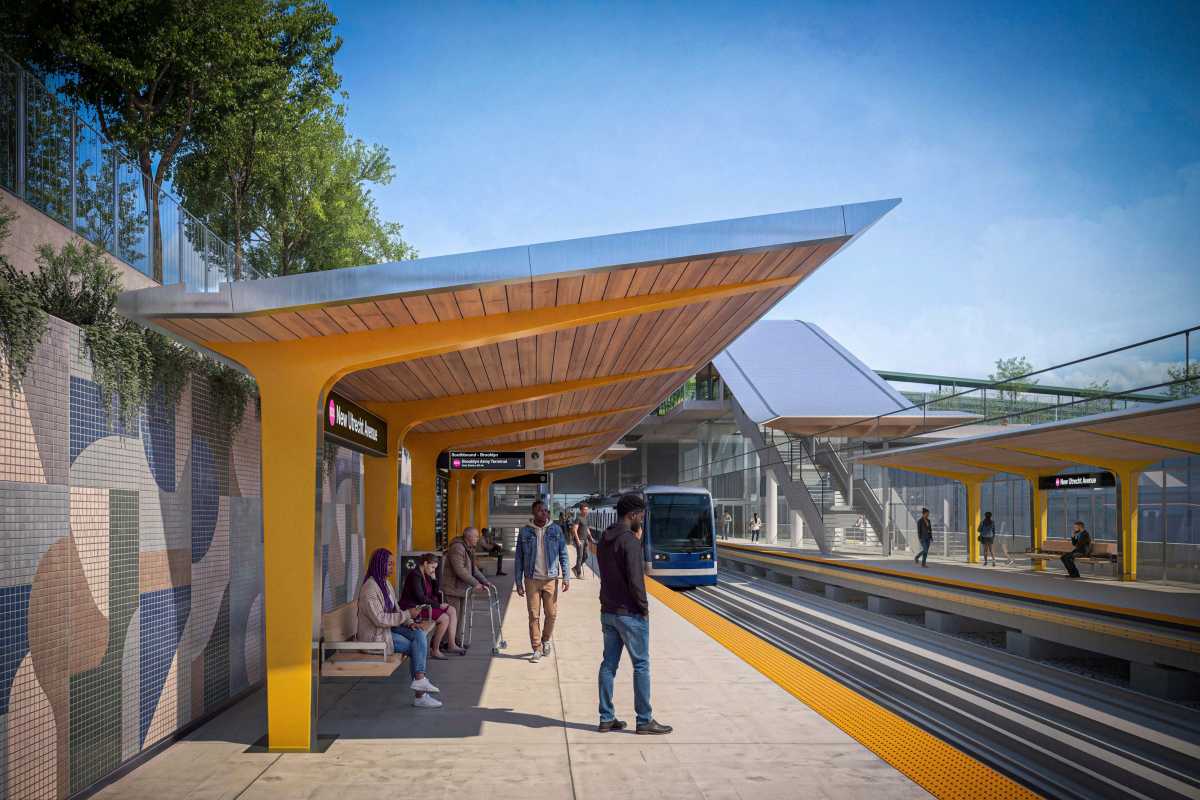 A rendering of how one of the new stations along the proposed Interborough Express (IBX) light rail line will look.Image courtesy of Gov. Kathy Hochul’s office
The light rail line would be the MTA’s first and is intended to bring service to areas that have long been underserved by public transit, such as East Flatbush, Flatlands, and Maspeth.
Danny Pearlstein, director of communications and policy for the rider advocacy group Riders Alliance, said it is understandable that such a potentially transformative project could take many years to complete.
“What’s important is to understand what is happening at each step of the process,” he said. “Five years, in the abstract, is a long time to wait, but what we want to know is that each day within those five years, the project is moving forward in a reasonable way.”
Questions remain for IBX project
Lieber’s comments came as the state-run MTA and the governor’s office released a fresh batch of renderings visualizing how IBX stations at New Utrecht and Remsen Avenues in Brooklyn could look. The images show sleek modern stations outfitted with multiple elevators, digital displays, and easy connections to the subway system.
The state also said it would be releasing the draft environmental impact statement for the project, which aims to show how it will affect surrounding communities, before the end of this year — sooner than it originally planned to unveil the document.
However, while the project is already halfway funded through the MTA’s current $68 billion 2025-2029 Capital Plan — to the tune of $2.75 billion — it is not yet clear where the remaining dollars will come from.
Hochul said she originally proposed the IBX during the tenure of Democratic former President Joe Biden, who was more likely to fund it with federal dollars. But now under Republican President Donald Trump and a GOP-controlled Congress, federal funding appears far less likely to be forthcoming.
Nonetheless, Hochul said she is holding out hope that will change if the Democrats retake control of Congress in November.
“If we take the majority in the House, we take the Senate, we take back the White House in two years, then I feel confident the money will come from the federal government,” Hochul said.
Even if that federal funding does not end up coming through, Hochul pledged to get the project fully financed.
“I hope to be around for a number of years, and I’m committed to getting it done,” she said. “If the state has to step up in a bigger way, the state will step up in a bigger way. This is a critically important project to me, the people of these two boroughs, and a statement of our priorities. I’ll make those investments.”
The open funding question is likely related to the open funding question, Pearlstein said. He noted, however, that not having to go through the feds could help the project move along faster.
“The state’s flexibility and willingness to proceed without federal funding should shave time off the construction,” he said. “But at the same time, it shouldn’t be that way. We should be able to have federal funding and have a project that is completed expeditiously at the same time. We deserve that much.”