
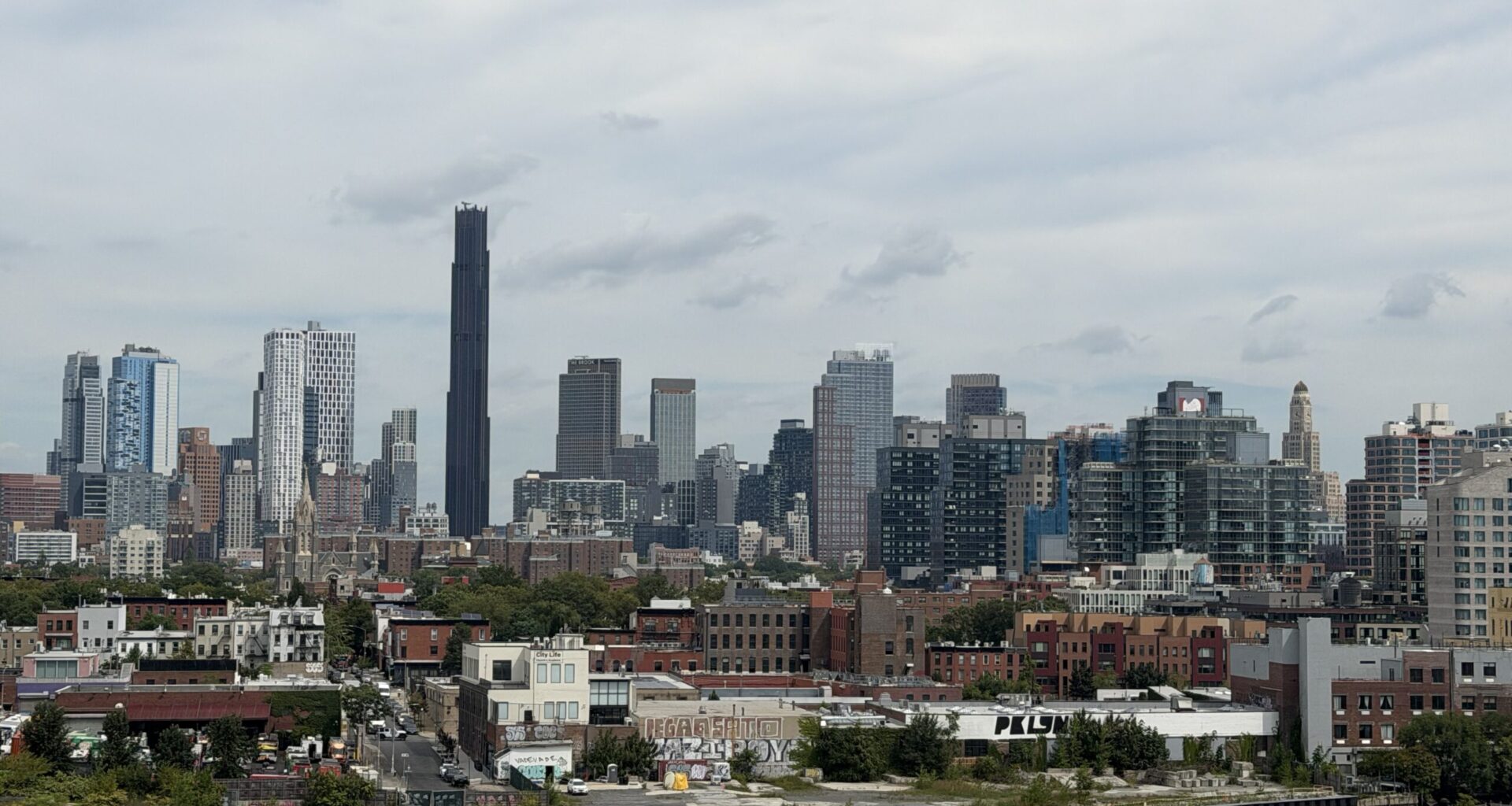
The streetscape of the new neighborhood no longer met the needs of this growing population. Minimal green space, fragmented pedestrian networks, outdated and narrow sidewalks and traffic conflicts between cyclists, vehicles and pedestrians compromised mobility, safety and quality of life.
The Downtown Brooklyn Public Realm Action Plan, developed in partnership with WXY architecture and urban design and BIG, sought to address these challenges.
By incorporating input from businesses, residents, major institutions and community partners, the plan creates a framework that emphasizes pedestrian safety, sustainability and accessibility while acknowledging the complex needs of a thriving downtown.
The plan not only provides a vision, but its key recommendations and city-approved design toolkit have been applied in practice, introducing the largest shared-street network in New York City, upgrading the Fulton Mall, creating a new park (Abolitionist Place), and partnering with developers to implement signature street design that brings pedestrian space, new plantings and generous seating areas.
The plan provides a roadmap of achievable upgrades that can be replicated in other downtowns with similar competing uses.
Key outcomes of the Public Realm Action Plan include:
Full block design pilot in partnership with Tishman Speyer for the 11 Hoyt development. Similar adoption of streetscape designs at The Alloy Block and The Brook.Fulton Mall Revitalization Project: An $8 million project in partnership with NYC Department of Parks to rebuild sidewalks with permeable pavers, add curvilinear benches and new planting areas to create a more welcoming streetscape at Brooklyn’s busiest shopping district. Abolitionist Place: The popular new 1.3 acre park in the heart of Downtown Brooklyn that provides recreation and gathering space for residents, workers and school children. Expanding shared streets network: In partnership with NYC DOT, DBP has adopted a key recommendation of the Public Realm Action Plan to implement the Shared Street model to Downtown Brooklyn’s core streets.New green infrastructure, including plantings and porous surfaces, has improved stormwater management and helped mitigate urban heat.
“Downtown Brooklyn Partnership has demonstrated skillful application of urban place management principles with their project, Downtown Brooklyn Public Realm Action Plan,” said David Downey, IDA president and CEO. “The Downtown Brooklyn Public Realm Action Plan should serve as a framework to all member communities within IDA.”
IDA convened this September in Toronto for “Intersections: Where Districts, Disciplines and Ideas Converge,” a three-day conference to discuss emerging trends in place management. Myer was recognized for DBP’s award-winning project during the Downtown Achievement Awards ceremony at the 72nd annual Conference and Marketplace from Sept. 1 through Sept. 3.
IDA’s annual Conference and Marketplace is the premier gathering for professional place managers and urban champions creating vibrant and healthy cities around the world. The conference features educational sessions, Master Talks, which are short keynotes from industry leaders, marketplace exhibitors and networking opportunities.
About Downtown Brooklyn Partnership
DBP is a not-for-profit local development corporation that serves as the primary champion for Downtown Brooklyn as a world-class business, cultural, educational, residential and retail destination.
The partnership’s diverse activities include attracting new businesses and improving the environment for existing companies, facilitating the construction of public spaces and streetscapes that promote an active and cohesive community, supporting and promoting Downtown Brooklyn’s cultural assets, and encouraging a sense of place and an engaged civic community.
For more information, visit downtownbrooklyn.com
About IDA
The IDA is the premier organization for urban place professionals who are shaping and activating dynamic city center districts. Its members are city builders and downtown champions who bring urban centers to life, bridging the gap between the public and private sectors.
It represents an industry of more than 2,500 place management organizations, employing 100,000 people throughout North America and growing rapidly around the world. Founded in 1954, IDA is a resource center for ideas and innovative best practices in urban place management.
For more information, visit downtown.org.