
By Noah Powelson
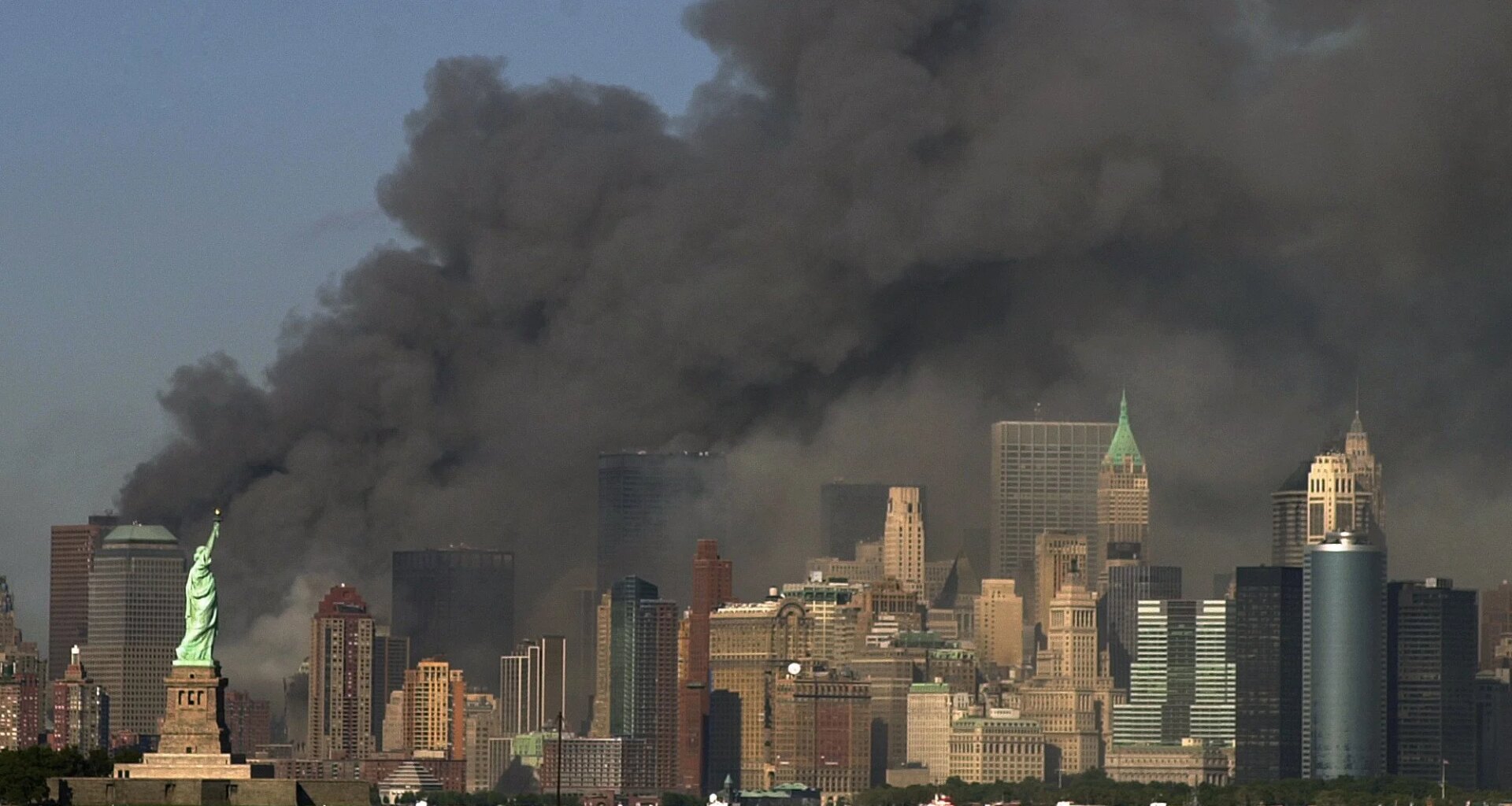
Immediately following the attack on the World Trade Center, most public offices were closed, communications were disrupted and many in the city attempted to pick up the pieces without any idea of how to navigate the aftermath of the attack.
Among those confronted with the chaos was New York City’s legal community.
About 1,300 lawyers’ offices were located inside the World Trade Center, while another 14,000 had been displaced after the attack.
A court facility was also located inside the World Trade Center and three court officers died in the attack, including one from Queens.
But the city’s courthouses reopened relatively quickly compared to other institutions. By Sept. 17, just six days after the attack, then-Chief Judge Judith Kaye decided that New York City’s courthouses would open up for business.
Speaking with the Historical Society of the New York Courts in reflection of that decision, Kaye said it was important for the courts to remain open so that survivors and their family members could file death certificates, insurance claims and other emergency applications in the wake of the attacks.
In honor of the 25th anniversary of the 9/11 terror attacks, the Eagle spoke with a number of judges, attorneys and others in Queens’ legal community about their reflections on the solemn day and its impact on the courts.
The following narratives have been edited for clarity.
Queens Supreme Court Justice Bruna Dibiase
It started out as a beautiful day. I was in a car on my way to Albany, with my boss, Hon. Judy Harris Kluger, the then-Administrative Judge of the Criminal Court of the City of New York, to participate in a conference of court administrators.
Just before 9 a.m., when the first plane hit the north tower of the World Trade Center, we were about an hour outside New York City, reviewing materials and the radio was turned off in the car. Judge Kluger’s cell phone rang and I heard her tell the caller that she was fine, that we were not in Downtown Manhattan and then she gasped and directed, “Turn on the radio!”
Only minutes later, when a second plane crashed into the south tower, there was no mistake that New York City had become a target of terrorism.
Desperately, we tried to call our families, home and the office. My cell phone finally rang and at the other end was my friend Eric Black, a court clerk, calling to see if we were OK. He called from a landline in our administrative offices at 100 Centre Street and that call became our link to New York City and central court operations that day. We both realized that if we ended the call, the chances of re-connecting were slim and he, declining the opportunity to leave, willingly manned that line so that Judge Kluger could direct the operation of the criminal court and we could communicate with others.
We wanted to turn back but we were advised that access to New York City was restricted – the airports were closed and the bridges and tunnels into Manhattan were inaccessible. We were directed to proceed to Albany.
We didn’t know if the courts were additional targets. As the individual court facilities were assessed, we stayed connected via cell phone and were able to identify a core group of individuals who voluntarily remained to assist with the needs of the court. It is astonishing now to recall that central operations did not come to a complete standstill.
The next day, we held an emergency management team meeting in Manhattan, the first of several meetings, where Kluger assembled the chiefs of criminal court operations; security, human resources, legal, technology, arraignments and even our purchasing and supplies manager to evaluate the current state of affairs and move forward.
At 100 Centre Street, we were briefed about the operational impact on the courts by the management team. The functionality of each of the criminal court facilities was assessed. Courts all over New York State, not just New York City, closed following the attacks. Yet there were individuals in custody and essential court operations needed to be addressed. Those services were carried out by personnel who voluntarily came to work and who sought no special recognition.
Two months after the attacks, on the Friday after Thanksgiving Day, I brought my three children to my office in lower Manhattan and walked them to the site of the wreckage. I remember saying to them, “Remember this sight, you are witnessing history.”
I am one of the few judges that doesn’t schedule cases on 9/11. I just can’t.
Retired Justice Kenneth Holder
I was an assistant district attorney for the Queens District Attorney’s office at the time. I heard commotion around the office about something happening in the city. I was in my office on the 2nd floor of the DAs office.
I went up to a colleague’s office on the 3rd floor from which we could see the city, but not the World Trade Center.
But we saw smoke, a lot.
I looked at the huge TV he had and saw the new footage that a plane had struck one of the towers, with no indication of the size of the plane. While watching, I turned away for a second and when I looked back at the TV I saw a plane strike the towers.
I mentioned to my colleague, “Odd, I didn’t know there was video of the plane colliding with the tower. Why are we just seeing this now?”
He told me that it was a second plane that we just saw.
With that, I realized that we were under attack and immediately called [my wife, Sharon,] and told her what was happening and told her to get out of the city as soon as possible. By then, she was also aware and actually saw one of the towers collapse from her office on 59th Street.
At that time Sharon was working at Cravath, Swaine & Moore and was the secretary to Rowan Wilson, before his ascension to the Court of Appeals.
Sharon and some co-workers took the train to Roosevelt Avenue, I drove up Queens Boulevard, and picked her and a co-worker up.
I drove the co-worker to Long Island and Sharon and I went home and continued to watch what was happening.
Retired Queens Administrative Judge Jeremy Weinstein
I was driving when I heard of the first plane, and at first, it sounded like some small little airplane. Well, of course, by the time I got into work, I think the second plane had hit and everybody was in a kind of shock. Like every American, they felt a shock of vulnerability and a deep sense of sadness of what the world has come to.
We gathered all the judges in the boardroom together. We talked, just to be there for each other, that type of thing. From our vantage point from the fifth-floor boardroom, we could see smoke from the buildings coming out. It was surreal.
We didn’t realize at the time that there were court officers who actually went into the building to help with the rescue, who ultimately died. And that’s part of the court family.
After several hours, we were told to go home, so we did. We watched the news and the story on our own. I ended up knowing people who died that day.
Returning to work was a bit of a blur for me. We had a job to do and a responsibility, but at the same time, we knew that this wasn’t normal. It was hard to be normal when the world was no longer normal.