
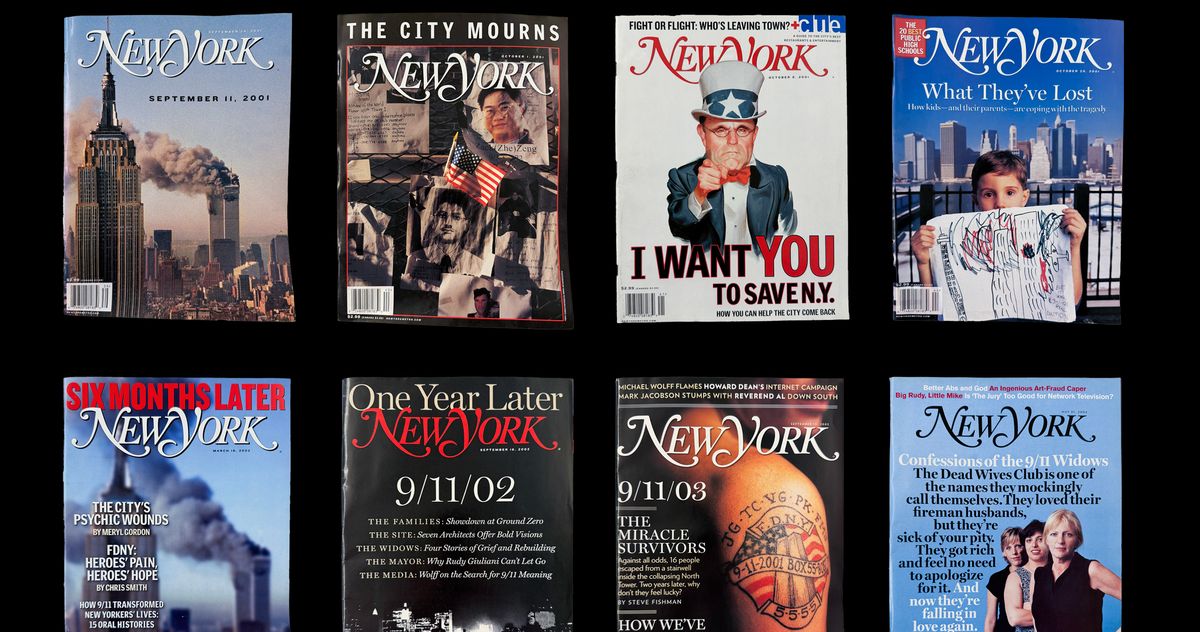
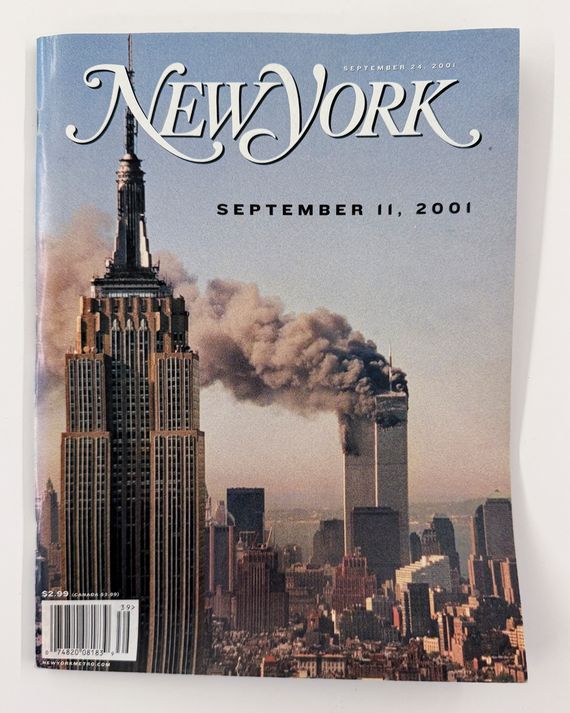
Photo: New York Magazine
For our first issue following the attacks, more than three dozen reporters compiled a gripping chronicle of individual New Yorkers’ experiences from across the city on September 11 and the next two days. From the introduction:
The TV and the newspapers called it an attack on America, which was true, but, in the moment, irrelevant: It was an attack on us. We didn’t experience it through the mediation of CNN, but on sidewalks or rooftops or terraces or parks – if we were lucky enough not to be in the midst of it. The bursting, pulsing fireballs, and the smoke billowing off over the Woolworth Building toward Brooklyn, held a terrible beauty – until we realized that, yes, those were people jumping from the towers. Our neighbors were dying, and we were watching; it’s hard, days later, to remember this without fighting away tears.
“Daddy, is it real?” a son asked a father, seeing the towers aflame on TV. “That can’t happen in my house, right?” What a hard question to answer, now. The week progressed from shock and amazement to a deep grief for our neighbors under the rubble and their families.
Still, the terrorists – people who understand nothing about us, by the way – dealt a blow to something else: our cynicism. Throughout the week, there was a sense of civic nobility, exemplified by the heroism of the firefighters, climbing the stairs against the human current toward what they knew was an inferno. That’s one of the stories of last week. There is a city full of others.
In the same issue, Mark Jacobson detailed what he saw and heard near what was left of the World Trade Center hours after they fell down:
What was there, now so sifted through by 24/7 coverage, remains an adrenaline haze. The flutter of Port Authority memorandums (“To: M. Zoch, From: R. Catlin, Subject: Major Project Delays and Underruns”), circling in the wind like buzzards, stuck in trees. Éclairs and carrot cake melting in glass, soot-covered bakery cases like Zagat’s Pompeii. A roofless, crushed city bus beside the flaming 7 World Trade Center, the ad for Arnold’s Collateral Damage unscathed, opening October 5. Two men came out of a supermarket carrying boxes, asked, “You from the insurance company?” and offered to point out “a leg.” And in the center of it all: what was left of the towers, which was almost nothing.
“What happened to the rest of the buildings?” I asked a weary fireman.
“It’s underneath your shoe” was the reply.
Down there was only dust. Which made it very clear exactly what had happened, and how complete the nightmare was.
It is mighty, an unfathomable gathering of energy, when 8 million people with 8 million things on their minds suddenly think only one thing. The vibe can be felt. A man on a pay phone at the corner of Second Avenue starts to scream: His wife had a breakfast appointment at Windows on the World today, he didn’t know until now. “Not Dem Laden, Ben Laden,” one bum screams at another. A flower-shop owner says business is slow now but he knows it will “pick up.”
He also shared how his kids were reacting and a brief conversation he had with the Palestinian owner of his neighborhood bodega on the morning of September 12.