
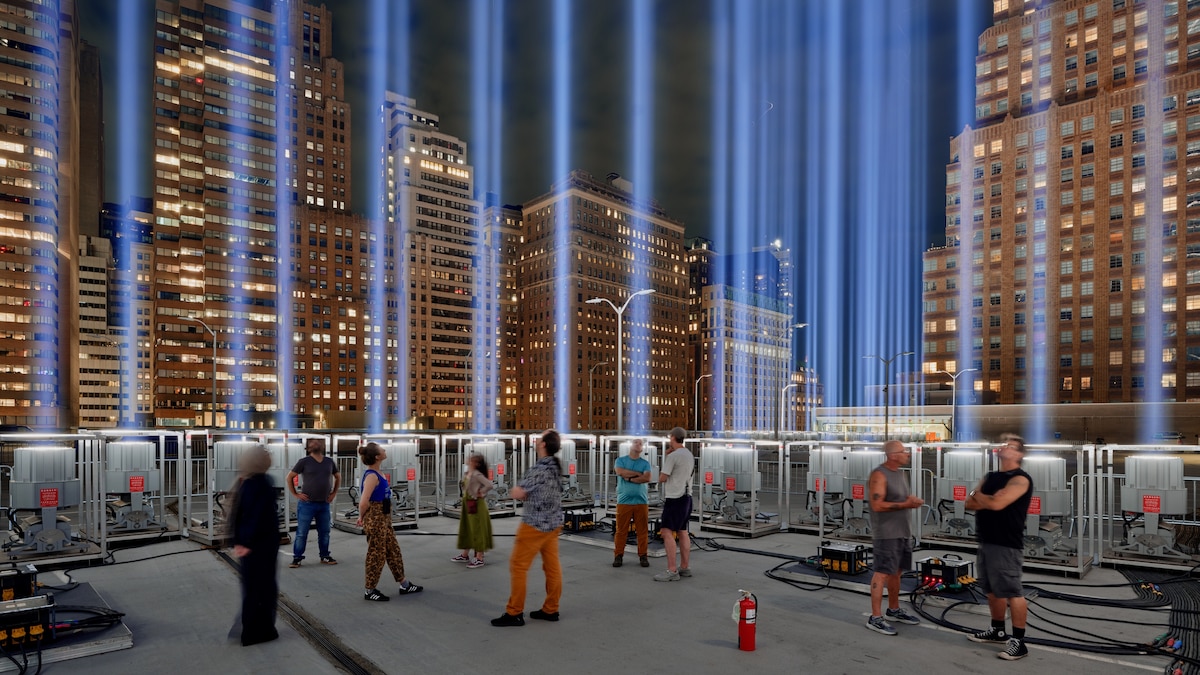
Within 48 hours, the architects hatched a plan to acknowledge that wound by replacing the iconic buildings with two austere beams of light. They called it the “Project for the Immediate Reconstruction of the Manhattan Skyline.”
Today it is known by another name: Tribute in Light, the public art installation that runs each year from dusk to dawn on the night of September 11. This year for the 25th anniversary of the attacks, the 9/11 Memorial & Museum, which now oversees the installation, invited National Geographic photographer Christopher Payne to document it as it came together—and the many people whose painstaking work has kept it alive as a symbol of the city’s resilience for a quarter of a century. Many New Yorkers now wait for the light beams to reappear each year, marking the passing of time and the memory of the attacks—but in the beginning, they weren’t supposed to be permanent, Bennett says. The first Tribute in Light was conceived of as temporary, a one-time deal. “It would never have gotten done if we were like, ‘This is the memorial,’” he says. “That was never in our minds. It was an ephemeral thing.”
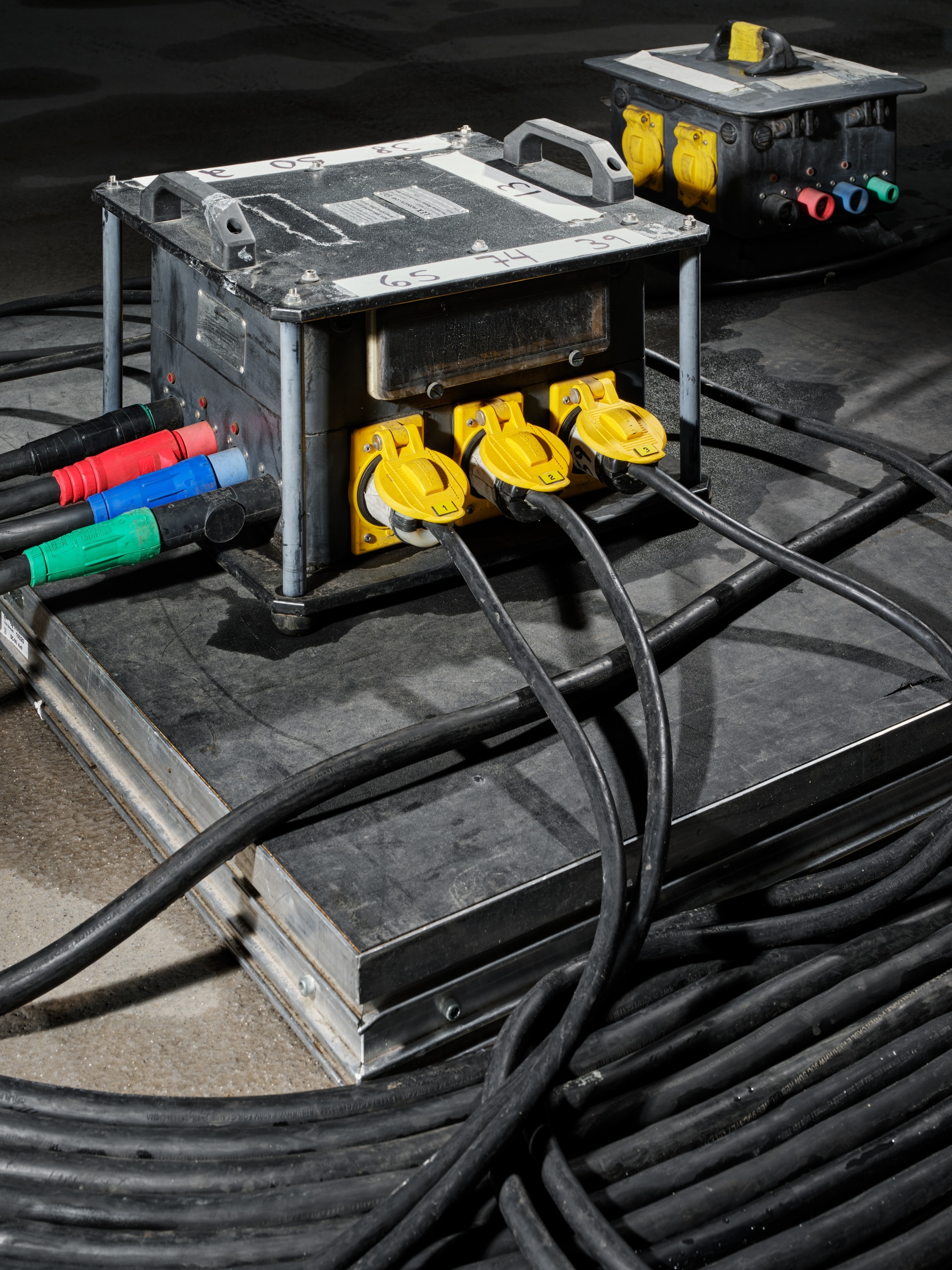
“I think a lot of people don’t realize that there’s 88 lights and not just two big lights,” Campbell says. “It could basically power roughly a hundred average homes at peak usage,” Campbell says—requiring a lot of breaker boxes.
As it turned out, other artists in the city had the same idea to rebuild the skyline through light. Within weeks, Bonevardi and Bennett joined forces with fellow creatives Richard Nash Gould, Julian LaVerdiere, and Paul Myoda to flesh out their plan.
“A few things concerned us,” Bonavardi says—most notably that they needed to be able to translate their creative vision into practical action. What kind of lights would they need? Renowned lighting consultant Paul Marantz joined the project to advise. How would they pay for it—and would the city allow it? Local arts organizations Municipal Art Society and Creative Time took the lead on fundraising and city politics. And who would keep them on track? Enter events producer Michael Ahern.
Another concern was that the installation could not detract in any way from ongoing rescue and recovery. “We never thought of putting them on Ground Zero. Never an option,” Bonevardi says. Instead, after running scenarios on a computer model of Manhattan, they settled on the roof of a parking garage nearby.