
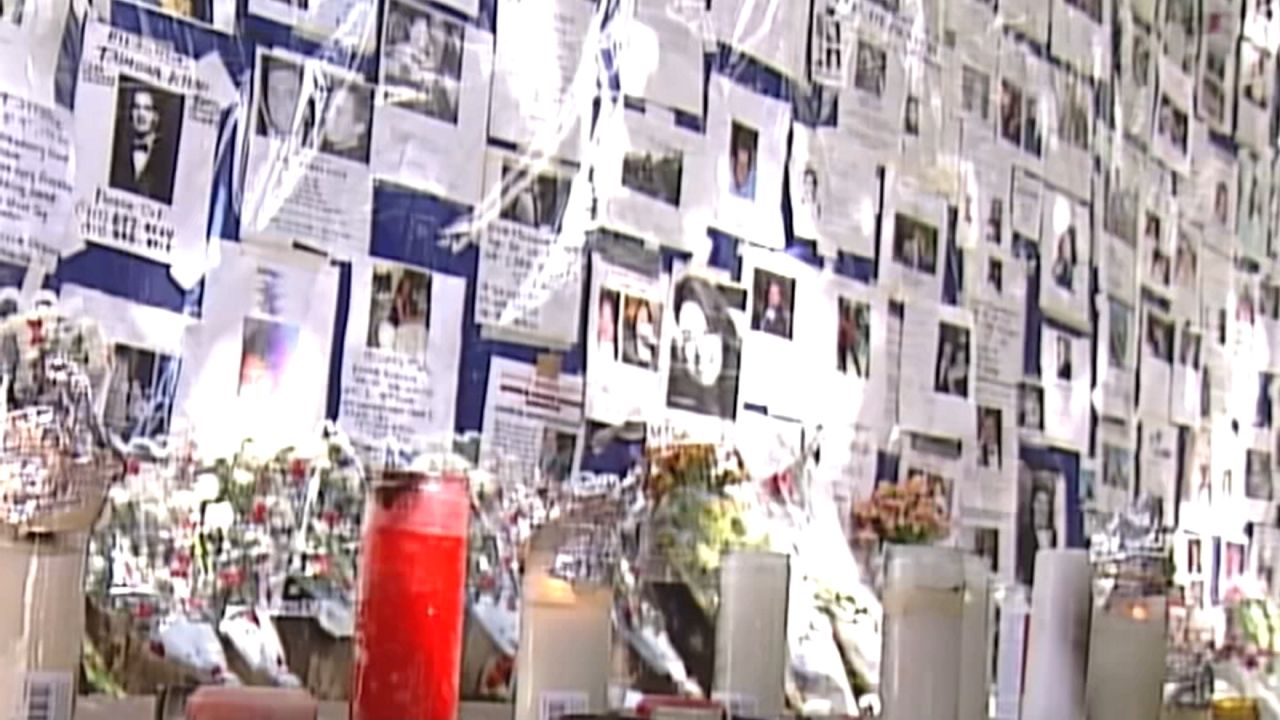
Loved ones of those who never made it home following the attacks on September 11th searched for answers and hope in these missing flyers posted on a construction wall outside Bellevue Hospital.
Plywood plastered with computer paper and Scotch tape, capturing the anguish of a city in shock and in mourning.
School photos, family vacation and wedding pictures, moments of happier times, filled the 50 panels outside the hospital.
The site became known as the Wall of Prayers and over the last 25 years, the Museum of the City of New York has preserved it.
“Understanding the way this spontaneous mode of communication and this kind of emergency outreach had actually become an incredibly important piece of New York’s history,” Lilly Tuttle, senior curator of the Collection at the Museum of the City of New York, said.
Preservation efforts of this wall began organically by employees at Bellevue who initially covered it with plastic to protect all the flyers and photos.
The focus of the wall changed as the realization set in that those who were believed to be missing were in fact killed in the attacks.
Posters were updated with any identifiable features of their loved ones and last known location in hopes they would be found.
“Missing from World Trade Center, Tower one. Attending conference on the 106th floor last heard from at 9 a.m. Telephoned from staircase on the hundredth floor,” read one of the flyers.
Over time, the wall became a way to remember the lives taken in the terror attacks and a place for loved ones and New Yorkers to come together to support each other.
“Remembering those people who had been killed, remembering their lives, their stories, putting information about memorial services that were happening. So it really shifted between September and November as sort of an emergency call for people who were deemed missing to a commemoration for people who were known to have been killed,” said Tuttle.
The wall was ceremoniously taken down in November of 2001 and put under the care of the Museum of the City of New York.
A database of all the names on the wall was created, and all 50 panels were preserved and securely stored.
Only small portions of the wall have been on display for the public.
On the first anniversary of the attacks, a section was displayed at the Smithsonian National Museum of American History.
Another was brought out on the fifth anniversary at the Museum of the City of New York.
Now the museum is working to re-digitize and create new photography of the wall.
“We have to think about what New Yorkers a hundred years from now may wish to know about this horrific day. And so the wall is such a meaningful piece of that. It tells so many stories about how New Yorkers came together and about the anguish that so many families felt after that day.”