
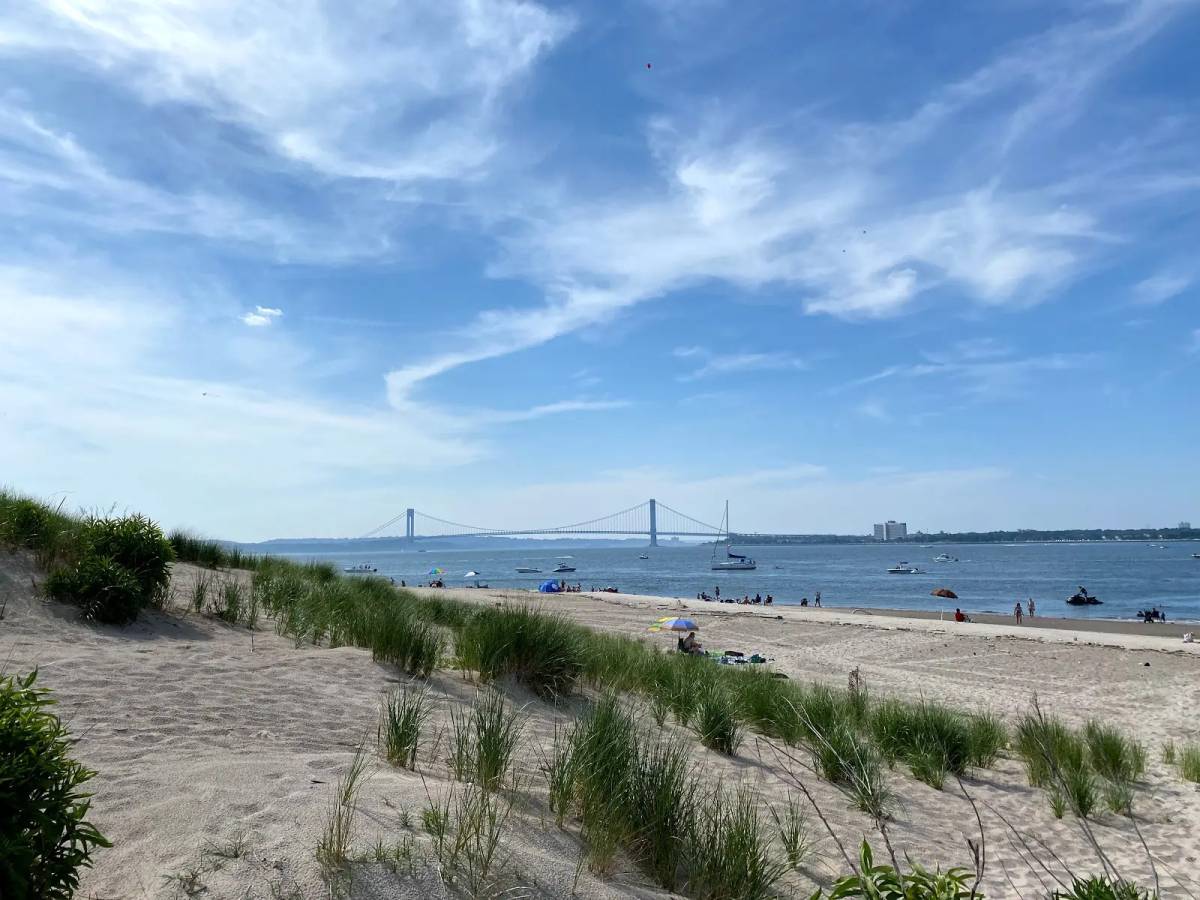
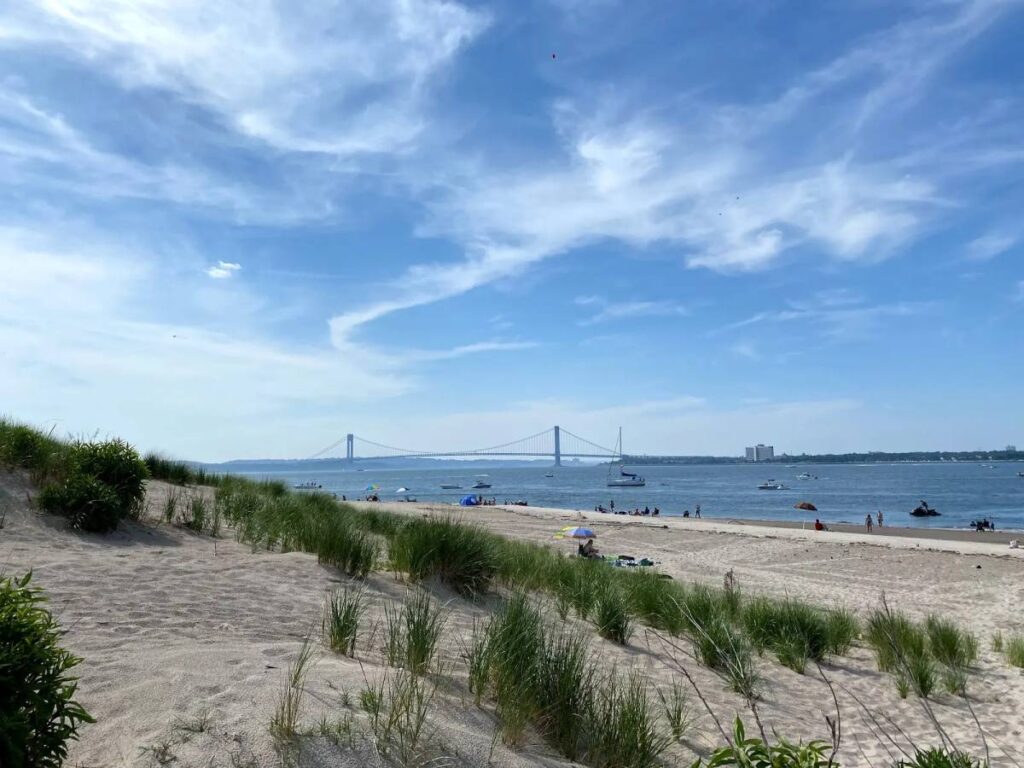
A sliver of shoreline on Staten Island makes the rest of the city feel oddly far away.
There is no boardwalk blasting music, no snack stand, no row of rental chairs, and no crowds racing to claim a square of sand.
Just the harbor, the giant sweep of the Verrazzano-Narrows Bridge, and a little-known public beach tucked beside one of New York City’s most extraordinary historic homes.
Welcome to Buono Beach, a small but beautiful waterfront stop at the foot of Hylan Boulevard in Rosebank.
It sits beside the Alice Austen House, a National Historic Landmark overlooking New York Harbor, Brooklyn, and Lower Manhattan.
The beach is small enough to miss unless you know where to look…but that is part of the magic.
A quiet harbor escape with a front-row bridge view
Buono Beach is not the sort of place where you arrive with an umbrella, a cooler, and plans to spend the afternoon in the surf. It is a waterfront pause, best for sitting by the harbor, watching the boats pass through the Narrows, and catching a view that most New Yorkers don’t expect to find in such a tucked-away corner of Staten Island.
Follow the path down from Alice Austen Park and the city suddenly opens up.
Traffic hums across the Verrazzano-Narrows Bridge, harbor vessels slice through the water, and Brooklyn’s Bay Ridge sits directly across the channel.
NYC Parks describes the beach as usually sandy, though it can get particularly rocky at low tide, so it is more of a sturdy-shoes destination than a flip-flop-and-dip kind of stop.
It’s also an official kayak launch and landing site, according to NYC Parks, with a route that can take experienced paddlers through the Narrows and beneath the bridge.
It feels a little like finding a private waterfront lookout, except the view is entirely public and completely free.
The beach NYC named for a Staten Islander
Before it became Buono Beach, this stretch of waterfront was known as Penny Beach.
There are a few stories behind the original name. One says it was once a lovers’ lane where couples tossed coins into the water while making wishes, leaving local children to comb the shore for spare change the next day. Another links the name to Hylan Boulevard’s former name, Pennsylvania Avenue.
In 1988, the city renamed the shore Buono Beach in honor of Matthew “Giggy” Buono, a Staten Island resident and New Dorp High School graduate who was the 39th Staten Islander killed in the Vietnam War. A memorial at the site also honors Rosebank and Fort Wadsworth residents killed in 20th-century wars.
So while the bridge view might bring you down to the water, the beach carries a far more meaningful neighborhood story than most people even realize.
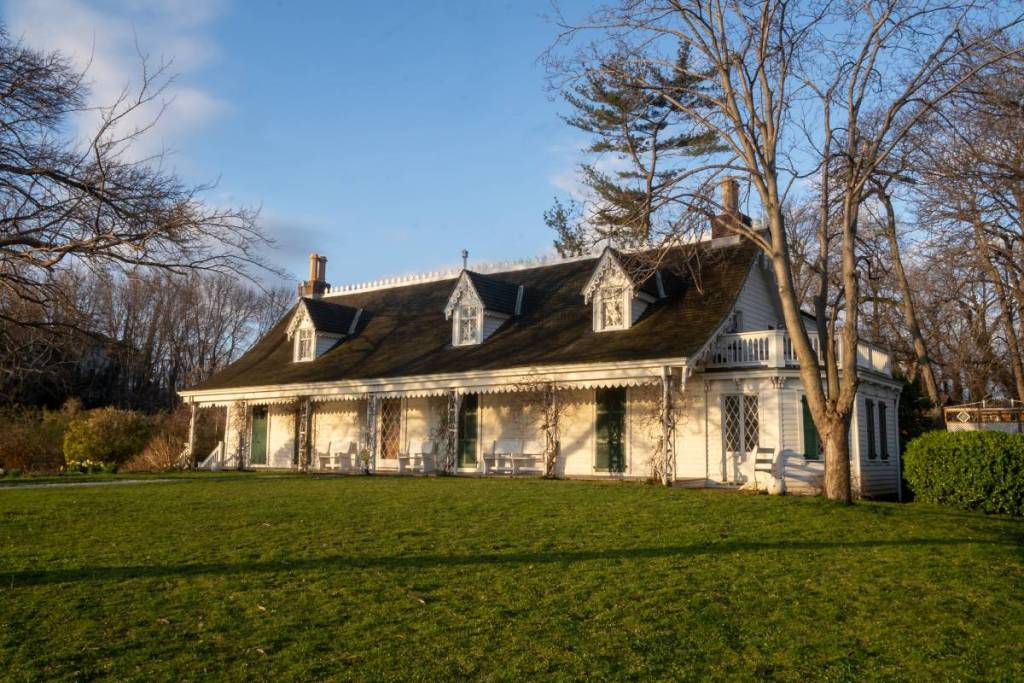 Shutterstock / Brian Logan Photography
A 300-year-old cottage sits right beside it
Just steps from the shoreline is the Alice Austen House, also known as Clear Comfort.
The home began as a one-room Dutch farmhouse in 1690 before Alice Austen’s grandfather bought it in 1844 and gradually transformed it into the Carpenter Gothic cottage that survives today.
Its location at the entrance to New York Harbor made it a prized summer escape long before Staten Island became part of New York City as we know it. The Alice Austen House Museum’s history of Clear Comfort traces the property’s transformation from a small farmhouse to a landmark waterfront home.
Alice Austen moved there as a child in the late 1860s and went on to become one of America’s pioneering photographers. Her work documented everyday New York life, immigration, women’s experiences, and her own social world at a time when few women had the freedom or resources to work so extensively behind a camera.
According to The Alice Austen House Museum, Austen lived at Clear Comfort with Gertrude Tate, her partner of nearly three decades, until financial hardship forced them to leave the home in 1945. The property was ultimately restored and designated a National Historic Landmark in 1993.
Today, the museum interprets Austen’s contributions to photography, women’s history, immigration history, and LGBTQ+ history.
The waterfront setting remains one of the property’s most striking features. Austen and her family once sat on the piazza to read, entertain friends, and watch ships pass through the harbor, a ritual that still feels remarkably easy to imagine from Buono Beach below.
A beach you can still enjoy after swimming season
NYC’s official beach season ends Sunday, September 13, when lifeguards leave the city’s public swimming beaches for the year.
You can still enjoy the sand and shoreline afterward, but swimming is prohibited once lifeguards are off duty.
Buono Beach is different though, and swimming, diving, and bathing are prohibited here year-round, so this has never been a beach for a final summer dip.
Its appeal is the kind that arguably gets better after beach season empties out.
Bring a coffee, take in the late-afternoon harbor light, walk around Alice Austen Park, and settle in for a stretch of city shoreline that feels more like a small coastal town than a corner of New York.