On Sept. 11, 2001, Wayne Cox walked into his first class as a professor of political studies at Queen’s University, lecture notes in hand.
He’d recently left an assistant professor role at the Royal Military College of Canada to teach at Queen’s.
That day 25 years ago would not go as expected.
“I was hired to teach the intro to international relations, and my first lecture was 9:30 a.m. on Sept. 11,” Cox told the Whig.
He walked into Dunning Hall, where 200 students waited.
“One student runs in and says, ‘A plane has just hit the World Trade Center.’ I had to throw my lecture notes out the window.”
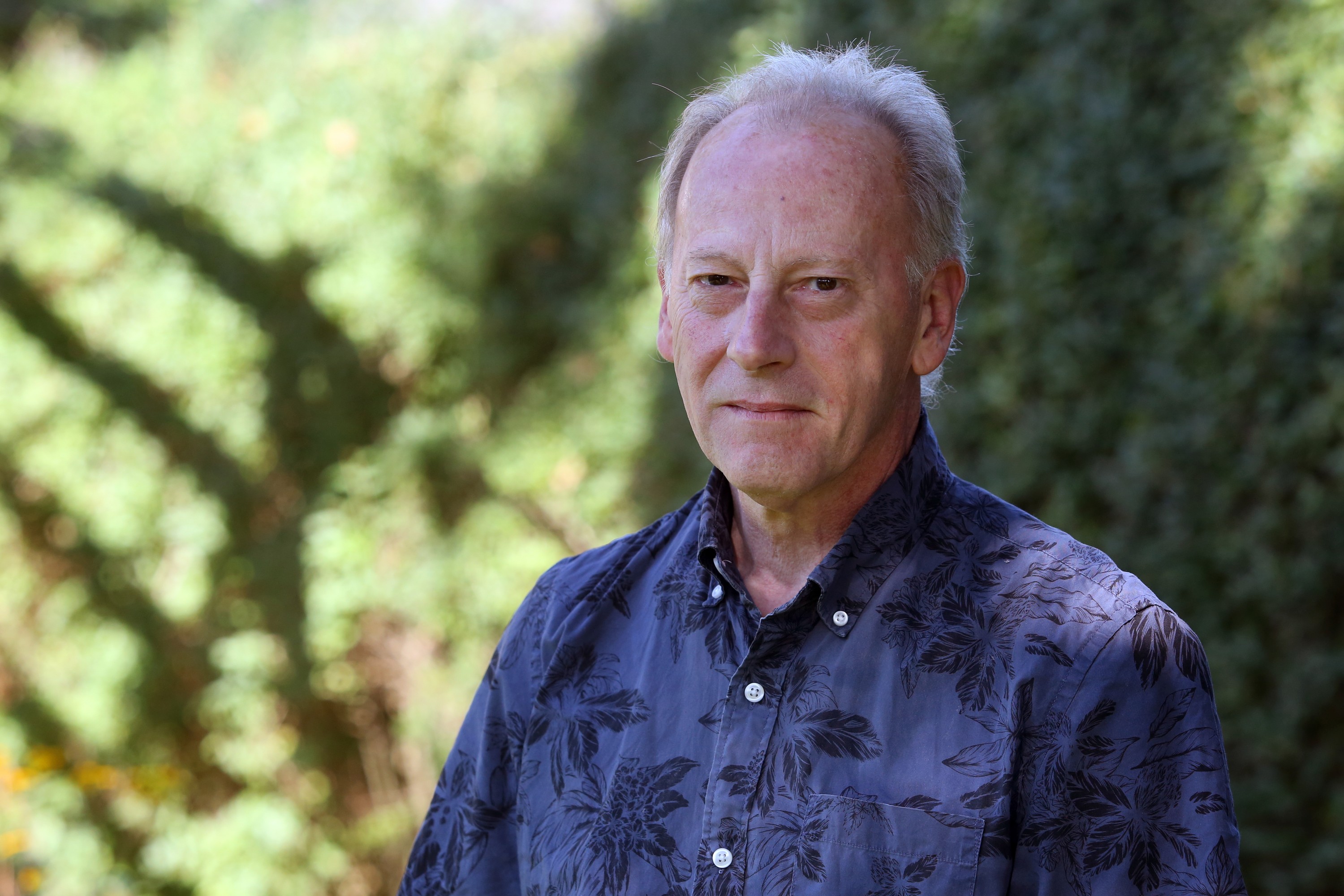 Wayne Cox recently retired from the department of political studies at Queen’s University. He’s pictured in Kingston on Friday, Sept. 11, 2026, 25 years after the 9/11 terrorist attacks marked his first day as a professor lecturing at Queen’s. Meghan Balogh / The Kingston Whig-Standard
That morning, four commercial planes, heading from the east coast of the United States to California, were hijacked by 19 terrorists associated with al-Qaida, an Islamist extremist group.
Two planes were intentionally crashed into the Twin Towers of the World Trade Center in New York City. One plane was flown into the Pentagon, the U.S. Department of Defense’s headquarters in Virginia. And a fourth plane, overtaken first by a hijacker and then by passengers and flight crew, was forced to crash into a field in Pennsylvania.
The co-ordinated attack killed 2,977 people, and the 9/11 Memorial and Museum says it was the “single largest loss of life resulting from a foreign attack on American soil.”
“It was a very interesting time,” Cox, who just retired last week from his professorship at Queen’s University, reflected. “Canadians, and North Americans more broadly, had felt themselves insulated from terrorist events. I can tell you firsthand that when 9/11 happened, Canadians felt it had happened in Canada itself.”
That was because Canadians at the time felt a deep kinship with their neighbours to the south, Cox said.
“At that time, Canada had such a warm relationship with the U.S. It really struck a chord.”
The year that followed was full of empathy and sympathy for Americans, both from Canada’s citizens, and the Canadian government, which didn’t hesitate to fall in line with political policies adopted by the United States in the wake of the terrorist attacks.
Cox hopes that part of marking the 25th anniversary of the event is to remind Canadians that at one time, they were “quite like-minded” and living similar lives to their American counterparts.
“Canada didn’t hesitate to follow those policies in an attempt to root out the forces of terrorism globally,” he said.
The events of 9/11 also led to a dramatic change in domestic society in Canada and the U.S., because of the way then U.S. President George W. Bush framed the “war on terror” that his administration soon launched.
“It was only a matter of days before George W. Bush said, ‘You’re either with us, or you’re with the terrorists.’ ”
That ultimatum was met steadfastly by the Canadian Armed Forces, who joined a conflict that would somewhat reshape their perceived place in global military operations to date.
“At that point, Canada was pretty much an alliance player, and the two alliances that we were really involved with were the North American Air Defence Command (NORAD) with the United, and NATO (the North Atlantic Treaty Organization).
And, while it wasn’t the beginning of the politics of polarization, it was an acceleration, Cox said.
“(The idea grew) that there are good guys and bad guys, and Americans followed that lock, stock and barrel. But Canadians were little more apprehensive.”
Despite that apprehension from Canadian citizens, the Canadian government joined Bush’s war on terror, and spent more than a decade in Afghanistan, sending more than 40,000 Canadian troops to serve — 158 of whom didn’t return home.
Today, the Islamophobia and polarization that began to grow then continues to this day, Cox said.
“In fact, you could argue that it’s actually accelerated under the Trump administration. It was a day that really changed politics, and we see that right up to this very day.”
On Sept. 11, 2001, Amarnath Amarasingam stepped into his first undergraduate class at the University of Toronto, and the beginning of his postsecondary education was quickly redirected — both on that day, and into his future, because of the day’s events.
As Amarasingam and his fellow students huddled around a small television in their classroom, they witnessed the event that would change the course of so many lives in the United States, and in the world.
QUOTE, said Amarasingam, now an associate professor in the school of religion at Queen’s University. He also teaches in the department of political studies.
“That day kind of changed everything, in the sense of what I was going to study, and what I was going to focus on going forward in my undergrad. It was the first day of my university education, and I switched to history, political science and religious studies almost immediately after that. It was a turning point for me.”
Now, Amarasingam teaches young undergrads at Queen’s about the intersections of religion, politics, violence, extremism and terrorism — most of whom weren’t yet born when 9/11 took place.
He works hard to communicate the visceral nature of the event, to help them see for a moment through the eyes of those who witnessed the event, either at ground zero or through their television sets.
“I show them three or four minute clips of media coverage and how it played out live,” he said. “Even though they weren’t born when it happened, there are always at least a few students who start crying because of the intensity.”
The phone calls the came from people who died on airplanes or in collapsed buildings, speaking with their loved ones for a final moment, bring the weight of the day home for many of his students.
“I try to bring them to the moment, and then talk about what it created afterwards.”
In the aftermath, governments instituted terrorism offences, people became suspicious of their immigrant neighbours, and an entire section of the world became villainized.
“The mistrust that we deal with now with institutions and media and politicians is kind of the legacy of the Iraq War, which happened a couple of years later in 2003, and the rise of Islamophobia and even anti-Sikh hatred can be traced back to this time.
“It’s kind of this pivotal turning point, where a whole host of things changed and happened.”
Cox hopes that people will remember the events of that day, not only as a piece of history, but as a warning for the future.
“We do live in a globalized world,” he said. “People move around, ideas move around, and technology spreads ideas very rapidly. No part of our local community is insulated from global politics, and 9/11 was a rude awakening to that fact. We should remember that, and be aware of it.”
Amarasingam pointed out that the people who died in the attacks were only the beginning of the death toll registered as result of the attacks, and that 9/11’s anniversary is a reminder that actions can have widespread consequences.
“I think it’s important (to remember this day) because it goes to show how a very small minority of pissed-off people can cause large-scale, societal changes that can go on to lead to hundreds of thousands of deaths, legislative overhaul, societal overhaul, the targeting of different minority communities, and the pulling at the cleavages of society.
“The thing with terrorism is that it has a ripple effect that goes beyond just that one event.”
“Twenty-five years ago today, nearly 3,000 people were killed in the terrorist attacks of September 11, 2001, including 24 Canadians,” Canada’s Minister of National Defence, David J. McGuinty, said in a statement shared by the Canadian Armed Forces on Friday. “It was a day of profound loss that changed the lives of countless families and reshaped the security of our continent and our world.
“We honour the survivors, families, and loved ones who continue to carry the weight of this tragedy. We also pay tribute to the first responders and community members who, in the face of danger, demonstrated remarkable courage, compassion, and selflessness in helping others.
“In the hours that followed, more than 33,000 passengers aboard hundreds of diverted flights found refuge in communities across Canada notably Gander, Newfoundland. Canadians opened their homes, provided food and shelter, and offered comfort to strangers during a moment of extraordinary uncertainty.”
Kingston and the Islands MP Mark Gerretsen traveled to Gander to participate in events to mark the 25th anniversary of the 9/11 attacks.
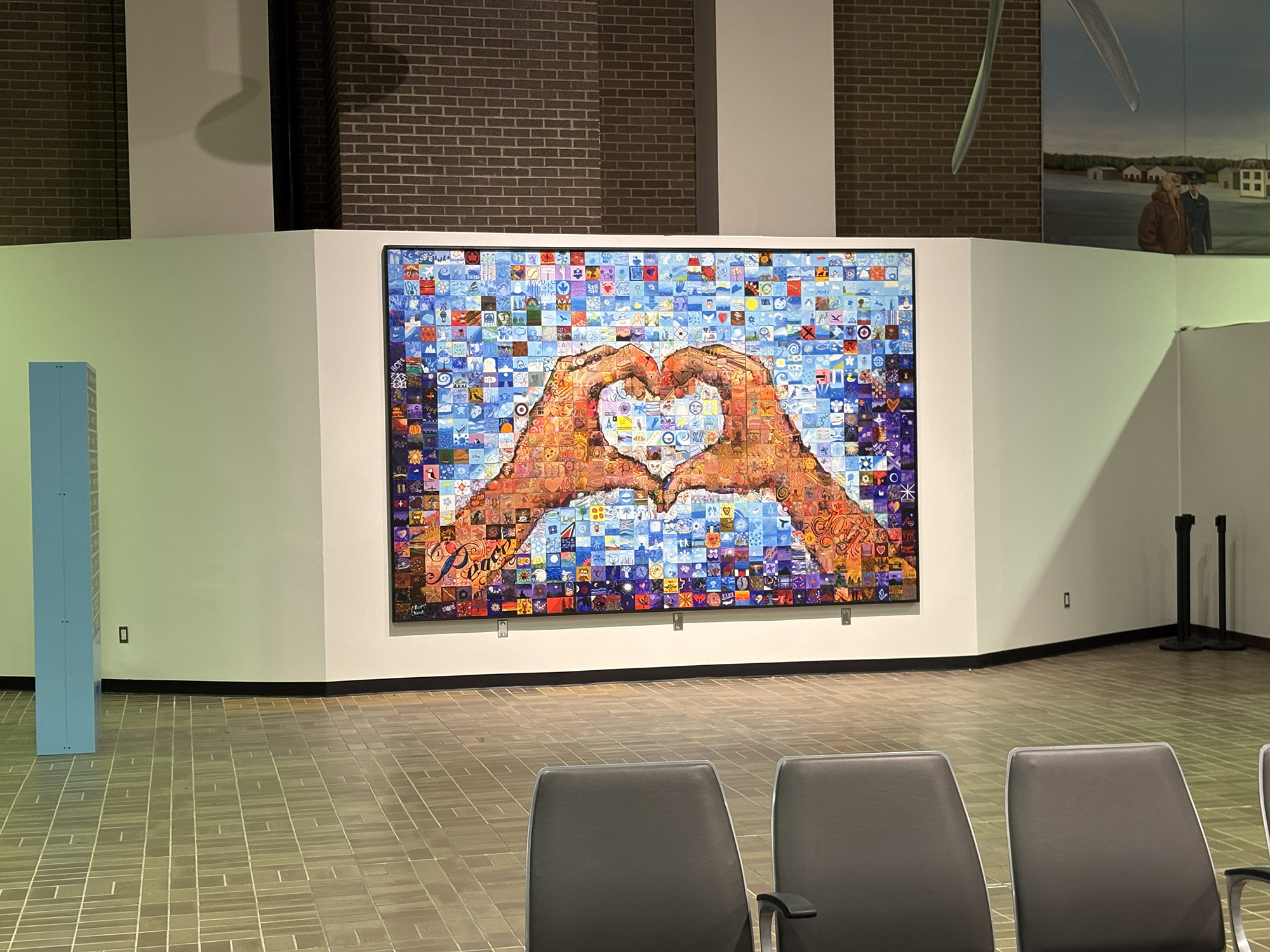 This mural on display at the Gander International Airport. Postmedia Network
Gander, a Newfoundland community of around 10,000 people, famously responded to the call to “lend a hand, do what you can,” and used their homes, schools, and businesses to care for nearly 7,000 stranded air passengers who had been rerouted to the airport nearby.
Gerretsen wasn’t available for comment before deadline.
“As we mark this solemn anniversary, the duty to remember remains,” McGuinty said. “So too does our responsibility to protect Canadians, defend our country and stand with our Allies and partners who share our commitment to peace, freedom and democracy.
“Today, we remember those we lost. We honour those who answered the call. And we will never forget.”