
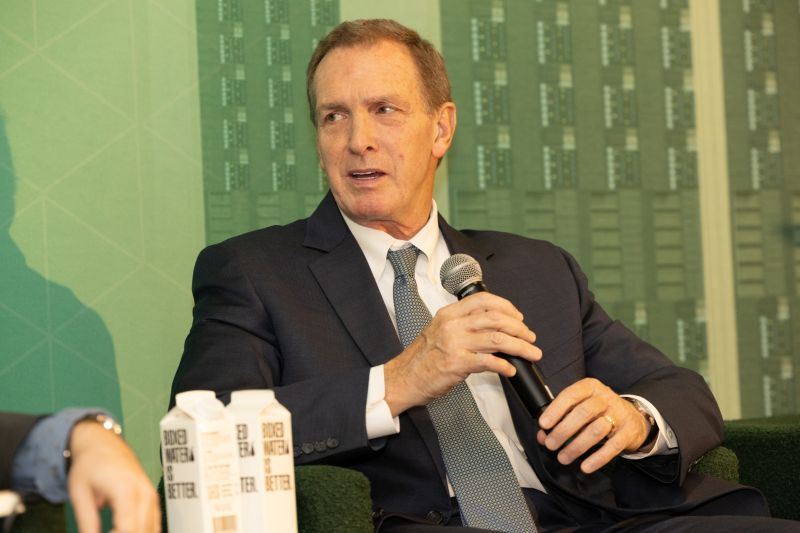
The outgoing chief investment officer of the New York City Bureau of Asset Management has cast doubt on the success of the democratisation of private markets investment.
Steven Meier oversees investments for the five New York City retirement systems – the Teachers’ Retirement System of the City of New York, New York City Employees’ Retirement System, New York City Police Pension Fund, New York City Fire Pension Fund and the New York City Board of Education Retirement System – which as of August 2025 manages total assets of $301.7 billion, some $9.6 billion of which is invested in infrastructure.
“The democratisation of the private markets I think makes sense from the standpoint that private assets have grown to be such a significant part of our economy and continue to grow, that individuals, 401(k) investors and wealth investors should have the ability to tap into that and benefit from that growth as well,” he told the Infrastructure Investor Network’s America Forum in New York.
“My honest assessment is it ends badly, at least initially,” he said. “When I look at our ability to invest in size and scale in private assets, irrespective of whether it’s credit, private equity, infrastructure or real estate, a lot of it comes down to manager selection, but more importantly, fees. It’s the ability to negotiate better legal terms, better economics and a significant amount of co-investment as well. For me, it’s all about net performance, and I do think that as the industry becomes more democratised and more individuals start to have access to products, I think that’ll be an expensive proposition.”
His comments come amid early responses to the Institutional Limited Partners Association’s second annual LP Sentiment Survey, with findings suggesting 83 percent of institutions agree that they would be less likely to invest with a PE fund manager if, all else being equal, they were to take in “significant amounts” of retail capital, affiliate title Buyouts reported. Nearly a third identified the growth of the private wealth and retail channels as “the number one development that poses the greatest threat” to alignment of interest between GPs and LPs.
Fees to private markets managers were a particular concern for Meier, who told attendees that “we need to be very aware of the fact that we may be overpaying fees relative to the outcomes”. However, he said he has seen opportunities amid a slowdown in private markets fundraising and dealmaking in the past couple of years.
“Infrastructure has been a little bit challenging on the fundraising, given the rise in interest rates and valuations, but not nearly as impacted as private equity,” Meier noted. “We’ve been most successful in private equity. There you’ve had really challenging fundraises. You’ve had relatively poor performance, the exits have been few and far between. There are still some questions about valuations. A lot of those deals are highly leveraged, and the interest rate expense has gone up.
“We’ve been able to negotiate better access to the very best managers in the space with better legal terms, better economics and a healthy dose of co-investment which will really drive performance. We won’t see that benefit for the next five to six years, but we’ll see it.”
The NYC pensions generated a fiscal year 2025 performance of 11.9 percent, BAM revealed in August. Its private equity return was 4.5 percent, while its private real estate return was 1.9 percent.
Meier has led investments for the pension funds since August 2022, although his departure from the Office of the Comptroller was announced in October, and will leave the group 7 November “for a new investment management opportunity”, according to a statement. Mark Levine, elected the next New York City Comptroller on 4 November, will lead the search for his successor.