
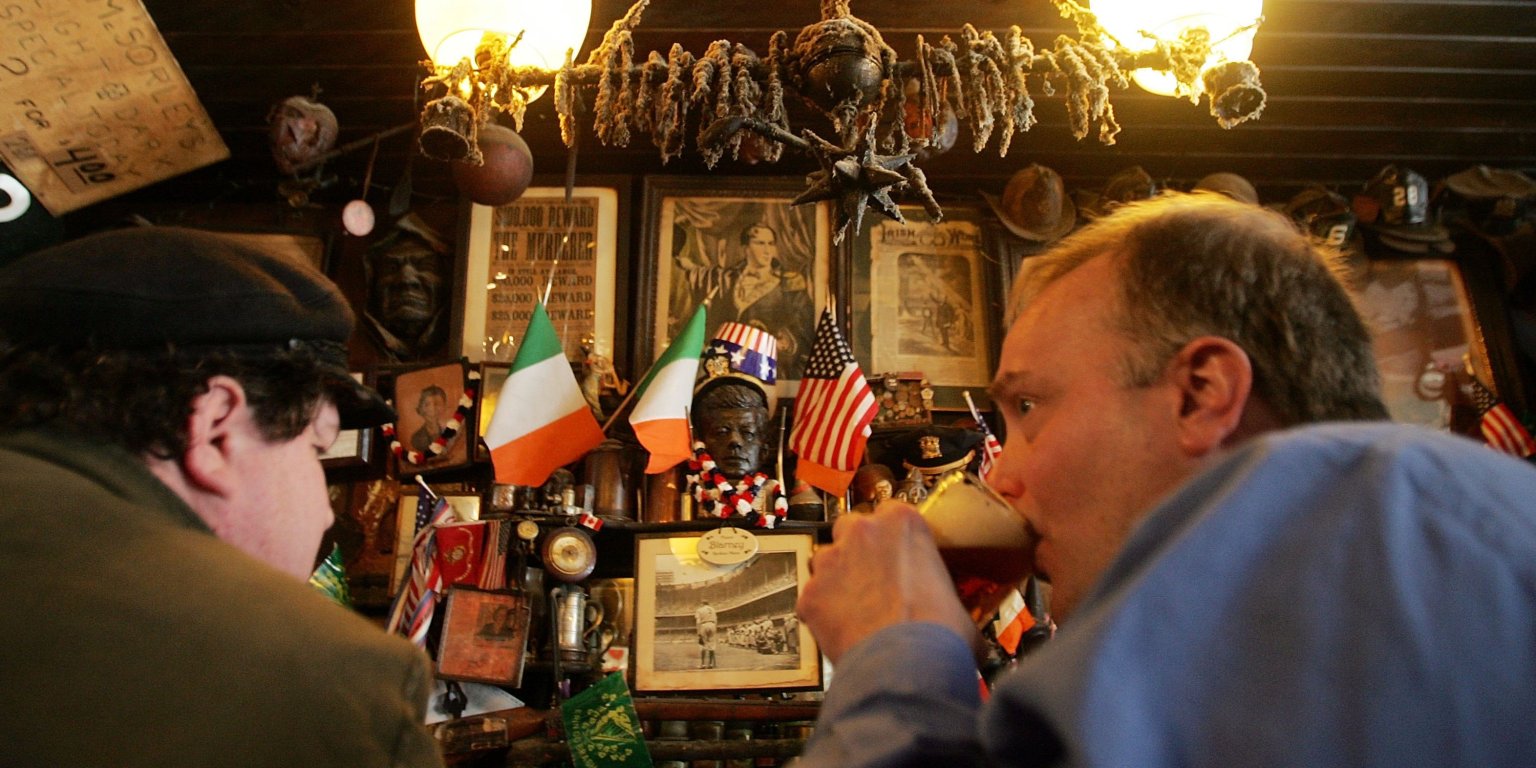
Mario Tama / Getty Images

Updated 47 minutes ago,
September 14, 2026
The bar is McSorley’s in New York, and as the staff tells it, the wishbones have hung above the bar since 1917. Owner Bill McSorley knew what the drafted men were heading into, so he gave them all a free meal before they deployed. Each one hung a wishbone as a good luck charm, with the plan to grab it and snap it when they came home. Breaking it was the wish that got them through the war. The ones still up there belong to the men who never came back to take them down.
That’s the version McSorley’s tells on the tour, and it’s a viral story at this point. The documented history is older and less tidy. Joseph Mitchell’s 1940 New Yorker profile credits the bones to founder John McSorley himself, who “had a remarkable passion for memorabilia” and for years strung up the wishbones from his own Thanksgiving and Christmas turkeys.
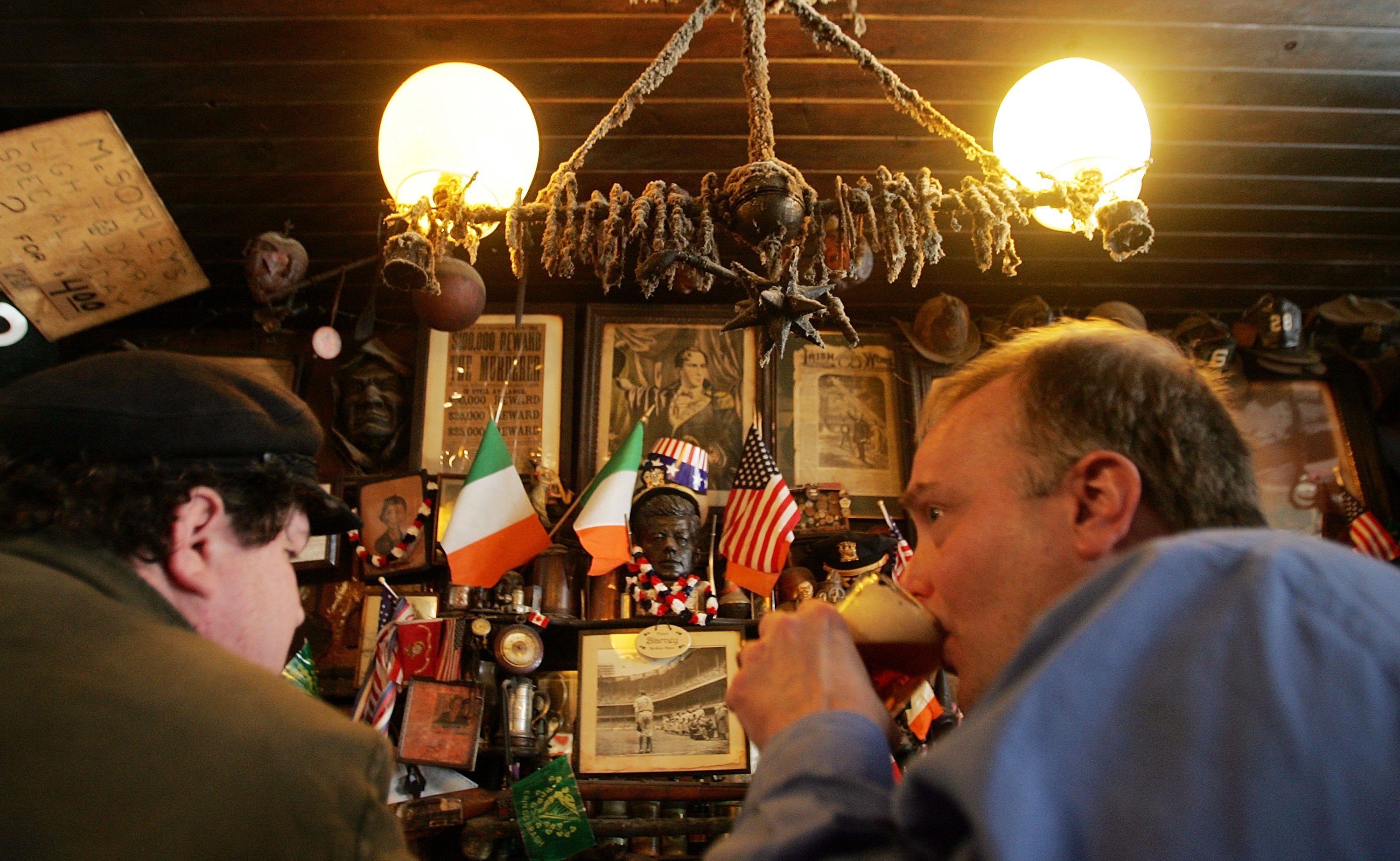 Guests raise glasses inside McSorley’s Old Ale House on East 7th Street in Manhattan, one of New York City’s most storied taverns, in February 2006. Photo by Mario Tama / Getty Images.
A December 1940 New York Sun piece describes it as an ongoing holiday custom, with regulars bringing in bones from their own birds each season. John died in 1910, seven years before the US entered WWI. By 1956 a wire item was calling them relics of an 1865 victory dinner. The doughboy version got layered on later, and no names of any 1917 regulars were ever recorded. A WWI New York historian has called the soldier tale “malarkey.”
 Patrons file into McSorley’s Old Ale House in Manhattan’s East Village around 1970, one of the oldest Irish saloons in New York City. Photo by Peter Keegan / Hulton Archive via Getty Images.
What’s solid: the bones are real, about 20 of them, and whatever they started as, they function as a memorial now. They stayed dusty for decades until a Health Department inspector flagged them in 2011. Longtime owner Matthew Maher cleaned them himself, and a few crumbled in the process. He saved the dust.
 Wishbones dangle from a light fixture at McSorley’s Old Ale House in Manhattan’s East Village, February 2024 — relics said to date back to a turkey dinner served to the 69th New York Infantry Regiment before their WWI deployment. Photo by Charly Triballeau / AFP via Getty Images.
A few of the bones are broken because customers reached up to touch them. That’s the fastest way to get thrown out. These days the staff and the regulars both watch over them.
Thank you for reading. You can find Thought Catalog on Facebook, and read more over on our website.
Read more Gossip.
About the author

Nadia Santiago is a writer who lives between the clouds and the coastline, and writes about all the things your heart knows but your mouth can never quite say.