
The basics:
Liberty Science Center Project Supernova expansion will overhaul 300,000-square-foot campus
$40M project includes river otter habitat, goat-and-kid play area, physics mini golf
River Rising exhibition will replace existing Our Hudson Home exhibition
NJEDA CAFE program supports transformative cultural project
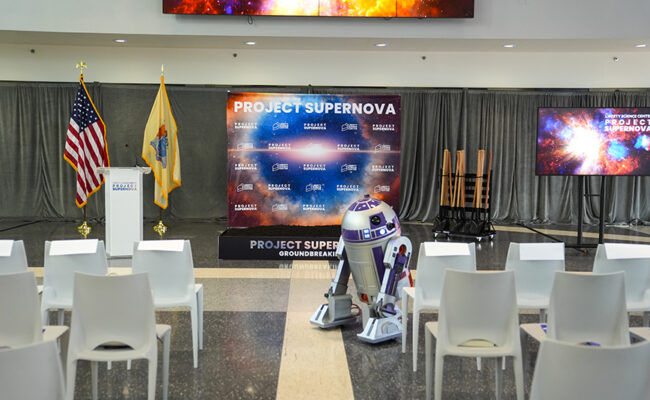
Liberty Science Center broke ground Sept. 10 on a $40 million Project Supernova that will massively overhaul the interactive science museum and New Jersey staple.
The work is supported by the New Jersey Economic Development Authority’s Cultural Arts Facilities Expansion program. It will bring a transformation to LSC’s physical campus and its exhibitions and programs.
For the cultural and educational institution, the indoor and outdoor expansion aims to increase attendance and engagement in key demographics, improve accessibility and sensory inclusion, and – of course – showcase cutting-edge science.
Liberty Science Center President and CEO Paul Hoffman described Project Supernova as a fusion of science, ecology and culture. He said the work will introduce new immersive experiences as well as upgrade existing “iconic” features the center is famous for.
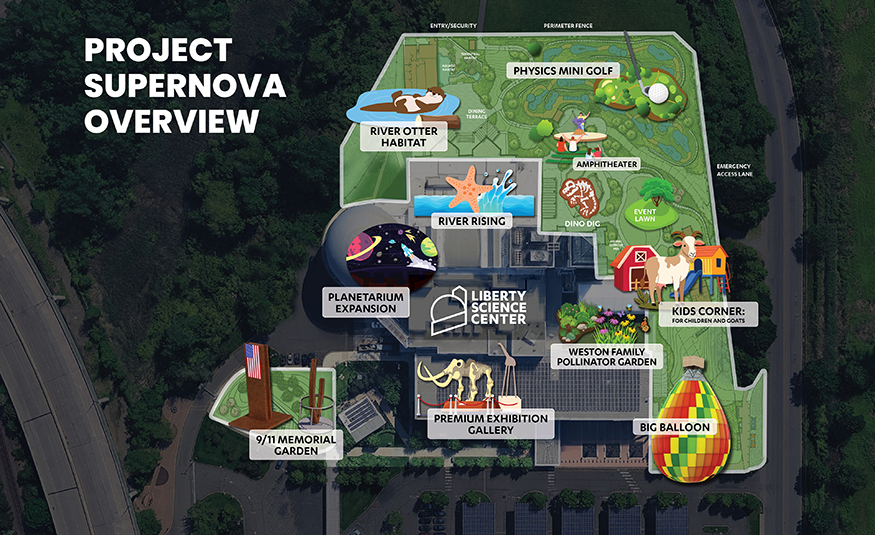 The Liberty Science Center Project Supernova master plan. – PROVIDED BY LIBERTY SCIENCE CENTER
“The project celebrates the intersection of science and culture, honoring New Jersey’s famous scientific legacy and natural ecosystems,” added Hoffman, expressing gratitude to the administration and NJEDA. “And true to the DNA of Liberty Science Center, the project is bold, forward-looking, and inclusive, and it transforms the Center into an all-weather campus where learning is fun, hands-on, and accessible to all.”
Currently 300,000 square feet, LSC hosts more than 280,000 students each year and over 800,000 visitors annually.
Liberty Science Center expansion
What’s new
Kids Corner
A playground for goats and children. This play structure will feature parallel play areas for kids, both human and goat. A designated ground-level area will house a barn and allow trained staff to facilitate supervised interactions between the two groups.
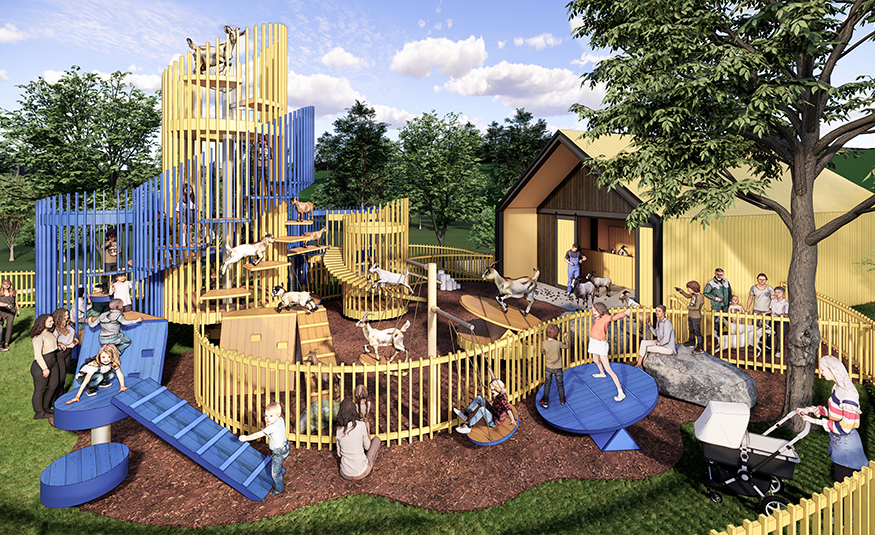 Kids Corner – PROVIDED BY LIBERTY SCIENCE CENTER
River Otter Habitat
River otters were once common throughout the Hudson River estuary but disappeared from its southern urban areas largely as a result of severe water pollution, according to LSC. Thanks to successful efforts to clean up the river, otters have started to return. The new habitat will expand and enhance the story of the Hudson River told in LSC’s existing, but soon-to-be reimagined, River Rising exhibition. Designed as an outdoor experience, the otter building and habitat will work in tandem. The building will be sit along both the pool and dry land areas, offering unique views regardless of weather conditions.
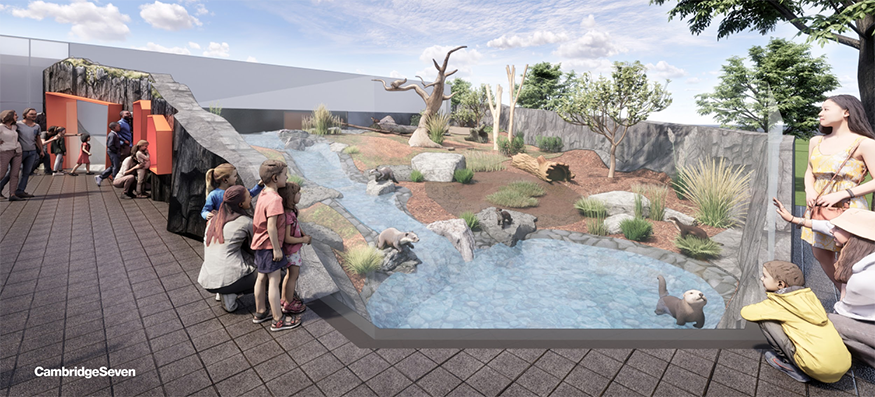 River Otter exhibit. – PROVIDED BY LIBERTY SCIENCE CENTER
Physics Mini Golf Course
Brings together artists and scientists on the design and build of a physics-based miniature golf course that will bring New Jersey’s innovation legacy to life. Each hole will demonstrate a core physics principle, making for a hands-on science learning experience unlike any other in the world.
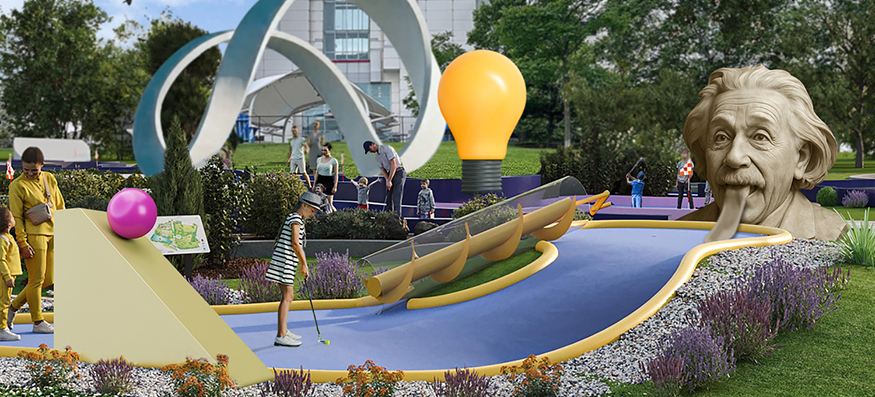 Mini golf is coming to Liberty Science Center, with a heavy dose of physics. – PROVIDED BY LIBERTY SCIENCE CENTER
The Weston Family Pollinator Garden
Named for the longtime LSC supporter, the Center’s eco-friendly green roof will house a carefully plotted garden with native plantings to support local pollinators and other wildlife. This landscape will also provide vegetation to sustain the Center’s resident species, especially such arthropods as the colony of busy leaf-cutter ants. Plantings will align to provide seasonal harvests throughout the year, along with perennial opportunities for science students to experience hands-on horticulture lessons. A garden path will wind through the space, dotted with seating and viewing areas for outdoor visitors.
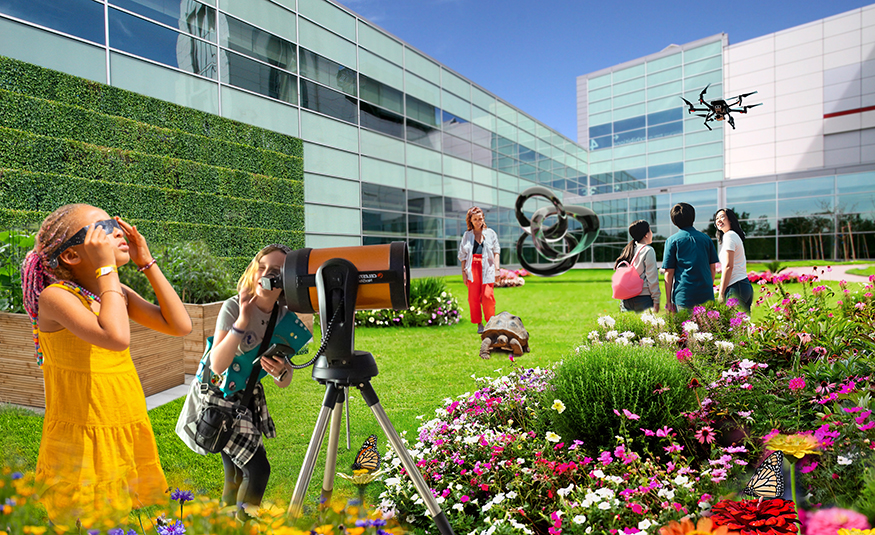 Weston Family Garden. – PROVIDED BY LIBERTY SCIENCE CENTER
Unique Big Balloon
Created by Argentinian conceptual artist Leandro Erlich specifically for LSC, this massive 90-foot-high balloon is in the familiar shape of the iconic Montgolfier hot air balloon invention in 1783 – but with a highly unique twist: It is totally upside down, with the multi-colored balloon resting at the bottom and the payload basket for carrying people and equipment at the top.
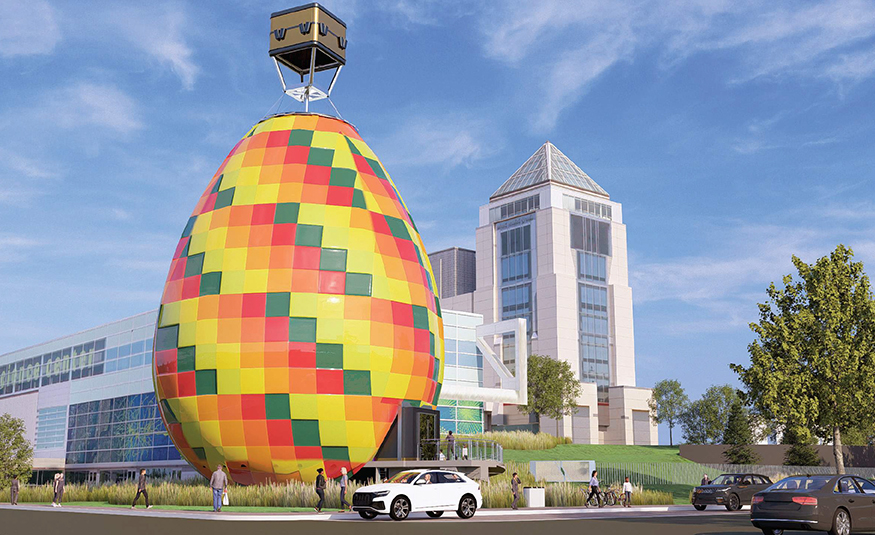 This hot air balloon will stand 90 feet tall in Jersey City. – PROVIDED BY LIBERTY SCIENCE CENTER
9/11 Memorial Garden
The Port Authority of New York and New Jersey donated two original World Trade Center beams, relocated from the former Skyscraper! Exhibition, in recognition of the Center’s assistance to investigators in the days following the attacks.
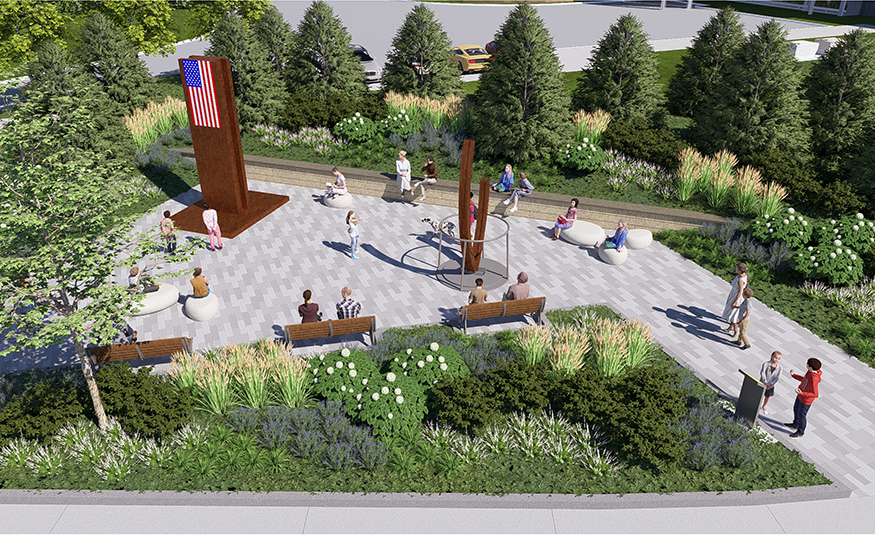 9/11 Memorial Garden. – PROVIDED BY LIBERTY SCIENCE CENTER
What’s changing
The River Rising exhibition will replace the existing Our Hudson Home exhibition. LSC said the “new gallery will surround visitors in the power of the Hudson River and our own power in shaping it.” In January, the center introduced its new Touch Tank and Climate Time Machine VR experiences as part of the reimagination.
LSC will also reconfigure the building layout to better support high-impact and technologically advanced premium exhibitions. The change will move the traveling gallery from the fourth floor to a larger, more flexible and prominent location on the first floor. According to the center, this will help it host experiences, such as the The Van Gogh Expo and The Harry Potter Experience.
Other areas due for upgrades include: Jennifer Chalsty Planetarium, the largest planetarium in the Western Hemisphere; the giant “Science on a Sphere” projection globe located in the Weston Family Lab for Earth and Space Exploration; new outdoor spaces; and the expansion of the Wild About Animals habitat, which is home to more than 100 species of animals and one of the Center’s most popular exhibitions.
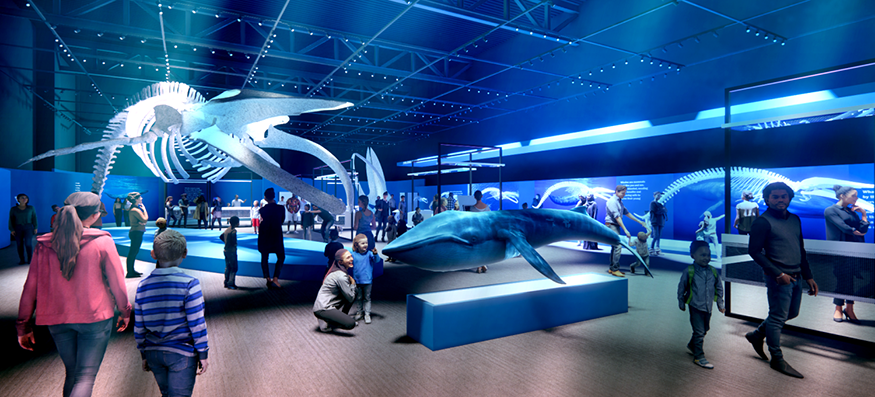 Liberty Science Center will move its special gallery space down from the fourth floor. – PROVIDED BY LIBERTY SCIENCE CENTER
CAFE starts brewing
The CAFE initiative through NJEDA offers transferable tax credits to incentivize transformative capital projects for arts and cultural venues. The Liberty Science Center Project Supernova expansion marks the latest in a string of awards recently announced under the program.
The NJEDA made CAFE awards in August to support the $130 million renovation project at Asbury Park Convention Hall and the Battleship New Jersey Museum & Memorial in Camden.
The month before, the Rialto Theatre in Westfield and Paper Mill Playhouse in Millburn also secured funding under CAFE. Other recipients include the new, permanent home for New Jersey Symphony in Jersey City and to support the Montclair Public Library & Cultural Center in Montclair.
CAFE awards are determined via a competitive application process and can cover up to 100% of eligible costs. Projects must be at least $5 million; the maximum award is $75 million. The application period is currently closed.