
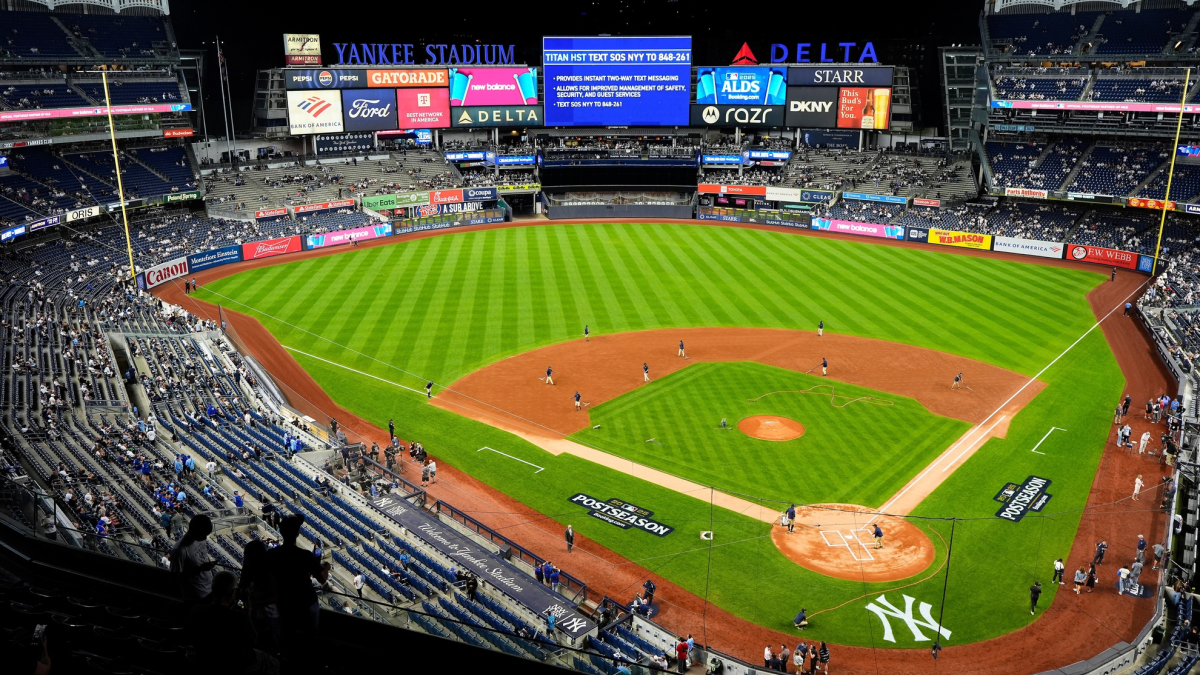
Yankee Stadium is among 10 locations in the Bronx where cooling towers have tested positive for Legionella bacteria as New York City health officials investigate a community cluster of Legionnaires’ disease that has killed one person and sickened eight others.
The city’s Health Department ordered the affected cooling towers to be cleaned and disinfected after preliminary testing detected Legionella. The sites include Yankee Stadium, home of the New York Yankees, and Lincoln Hospital, a major healthcare facility serving the South Bronx.
Stephen A. Smith expresses regret over his first pitch at Yankees gameRoberto Ortega
The initial tests detected Legionella DNA, but officials said the results don’t yet establish whether the bacteria were alive.
That’s an important distinction because only live bacteria can cause Legionnaires’ disease. Additional testing is being conducted to determine whether viable Legionella was present in the towers.
The Yankees said the stadium’s cooling tower was drained, cleaned and disinfected Sunday.
The team also said its most recent Legionella test, conducted August 20, was negative and that none of the cases in the current cluster has been connected to the stadium.
What residents and visitors should know
The investigation is focused on parts of the Bronx, including the Melrose and Morrisania neighborhoods, within ZIP codes 10451 and 10456.
Health officials have urged people who live, work or have recently visited those areas to contact a healthcare provider if they develop symptoms associated with Legionnaires’ disease.
Officials have also stressed that simply being inside a building with a cooling tower that tested positive doesn’t mean someone has been exposed to the bacteria.
People aren’t exposed to the tower’s water just by entering the building, and residents can continue drinking tap water, showering and using air conditioning.
Legionnaires’ disease is a severe type of pneumonia caused by Legionella bacteria. Infection can occur when people breathe in tiny droplets or mist containing the bacteria.
Cooling towers are one possible source because they use water and can release contaminated mist into the surrounding air. Other potential sources include large building plumbing systems, hot tubs and decorative fountains.
The illness can cause fever, chills, muscle aches, headaches, coughing and shortness of breath. More serious cases can result in pneumonia, respiratory complications or sepsis. The disease generally isn’t spread from person to person.
People over 50, smokers, those with chronic lung conditions and individuals with weakened immune systems face a higher risk of developing severe illness.
Antibiotics can treat Legionnaires’ disease, and prompt medical attention is important when symptoms appear.
The Bronx investigation comes after several serious Legionnaires’ outbreaks in New York City. Earlier this year, an Upper East Side cluster resulted in 94 reported cases and 11 deaths, while a Harlem outbreak last year sickened 114 people and killed seven.
Officials are continuing to test the 10 Bronx cooling towers to determine whether live Legionella was present and whether any of the systems contributed to the current cluster.