
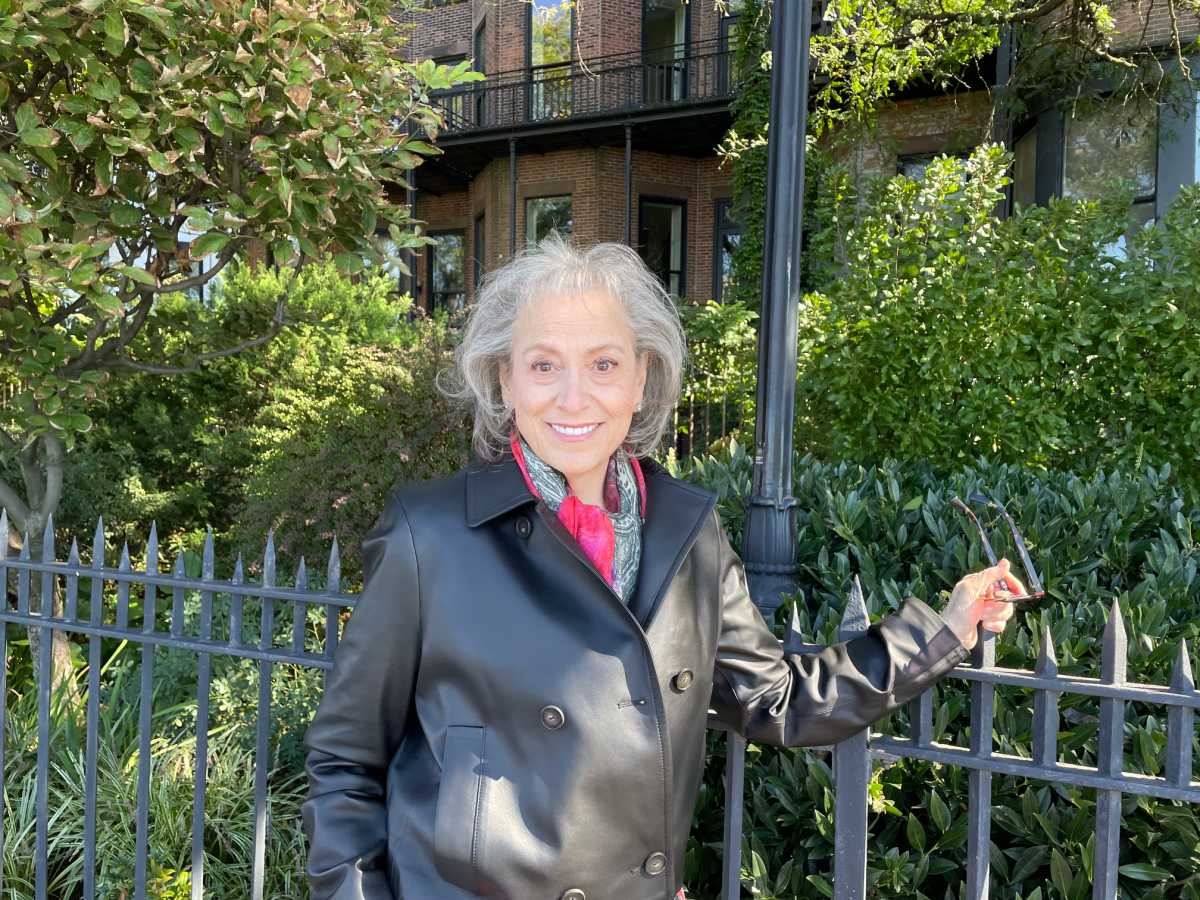
For decades, Judge Miriam Cyrulnik helped people navigate some of the most difficult moments of their lives from the bench in Brooklyn. Now, at 70, the Brooklyn Heights resident is facing a challenge of her own: She needs a kidney transplant.
Cyrulnik, who is not married, was diagnosed in Oct. 2022 with amyloidosis, a rare disease in which abnormal proteins build up in the body and can damage organs, including the kidneys.
Her diagnosis has brought a new urgency to her life as she searches for a living kidney donor, with none of her immediate family members being a match.
But, she is not facing the fight alone.
The Brooklyn Bar community — a group of friends, colleagues and fellow members of the legal profession she has known throughout her career — has rallied around her ever since her diagnosis, which at one long point required weekly, biweekly and monthly chemotherapy sessions.
For Cyrulnik, who retired from the bench in December 2025, that support has been a reminder of the relationships she has built during years of serving Brooklyn.
“My brother just moved to Florida, I live alone, and I thought to myself, ‘How am I going to do this?’ When the chemo started,” the judge said. “And the answer was, I didn’t have to.”
Friends from the legal community have driven the esteemed judge to medical appointments, helped with everyday needs and even cooked meals and brought her soup.
“So many people drove me and sat with me — colleagues and friends,” she said.
A ‘Brooklyn girl through and through’
Before her diagnosis, Cyrulnik built an extensive judicial career rooted in Brooklyn. A highly accomplished yet humble, friendly, and jovial judge, she has rarely been seen in the traditional judicial robe. Brooklyn has remained a constant throughout her life, from her birthplace and education to her legal and judicial career.
“I am a Brooklyn girl through and through. I grew up in Canarsie. I went to Brooklyn College and Brooklyn Law School. And my entire career has been working in Brooklyn. First in a small law firm, then in the courts before I became a judge.”
Although Cyrulnik confessed to “leaving the borough from time to time,” it is not surprising she has such strong ties in the Brooklyn legal community. She is a past president of the Brooklyn Bar Association, the Brooklyn Women’s Bar Association, the Brooklyn Brandeis Society and a member of other bar associations.
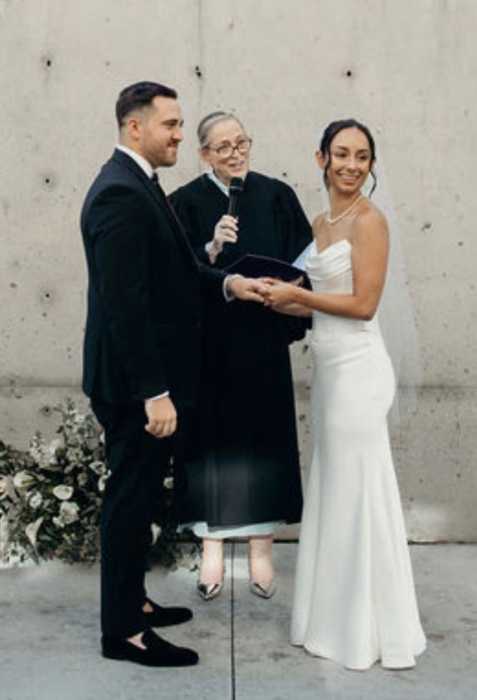 A rare photo of the judge in her robe, officiating her nephew’s wedding.Photo courtesy Miriam Cyrulnik
When Cyrulnik went on NYU’s kidney transplant list, the hospital and other organizations recommended she reach out to her community to spread the word about her urgent need for a kidney.
“After giving it some thought, I realized this is my community—the lawyers and the bar associations that I’ve known and dealt with for four decades,” she said.
Cyrulnik was appointed as a judge to criminal court in 2003. From 2011 to 2025, she was an active Supreme Court Justice in Brooklyn.
“I’ve learned a lot from the lawyers I’ve worked with over the years. They made me a better lawyer and a better judge. And so I’ve come to them again for something personal,” she said.
Living with kidney failure
Cyrulnik is approaching the time when kidney dialysis might be inevitable, her doctors say. While she reports that her daily symptoms are not debilitating yet, her blood levels show otherwise, and kidney function has declined.
“As my nephrologist said, ‘The numbers are what they are, and this is where you are heading. You are heading for dialysis unless we can get a kidney before then.’”
Cyrulnik, who has a strong will and a positive attitude, said she feels “quite well,” but her major symptom right now is similar to morning sickness. And as she awaits help, she is still thinking of others as she puts out a message to possible donors.
“There are thousands of people, including children, who are living with this, hanging over their heads. As a living donor, you have an opportunity to do something miraculous to save someone’s life. There are kids who need kidneys,” she said. “What an amazing thing to give of yourself in a way that will save a life.”
Anyone who is interested in finding out more about becoming a donor can call NYU at 212-263-3621 or by visiting nyulh.donorscreen.org. More information is also available at renewal.org or by contacting 718-215-8735 or R27018@renewal.org.