
Albany, NY (WRGB) — On Friday, the federal government will give immigration officers the ability to determine green cards based on the individual’s dependence on government aid.
On Monday, New York State and New York City suing the federal government to block the the change to what’s called “public charge” laws. It’s a move State and City officials and advocates are calling a matter of life and death.
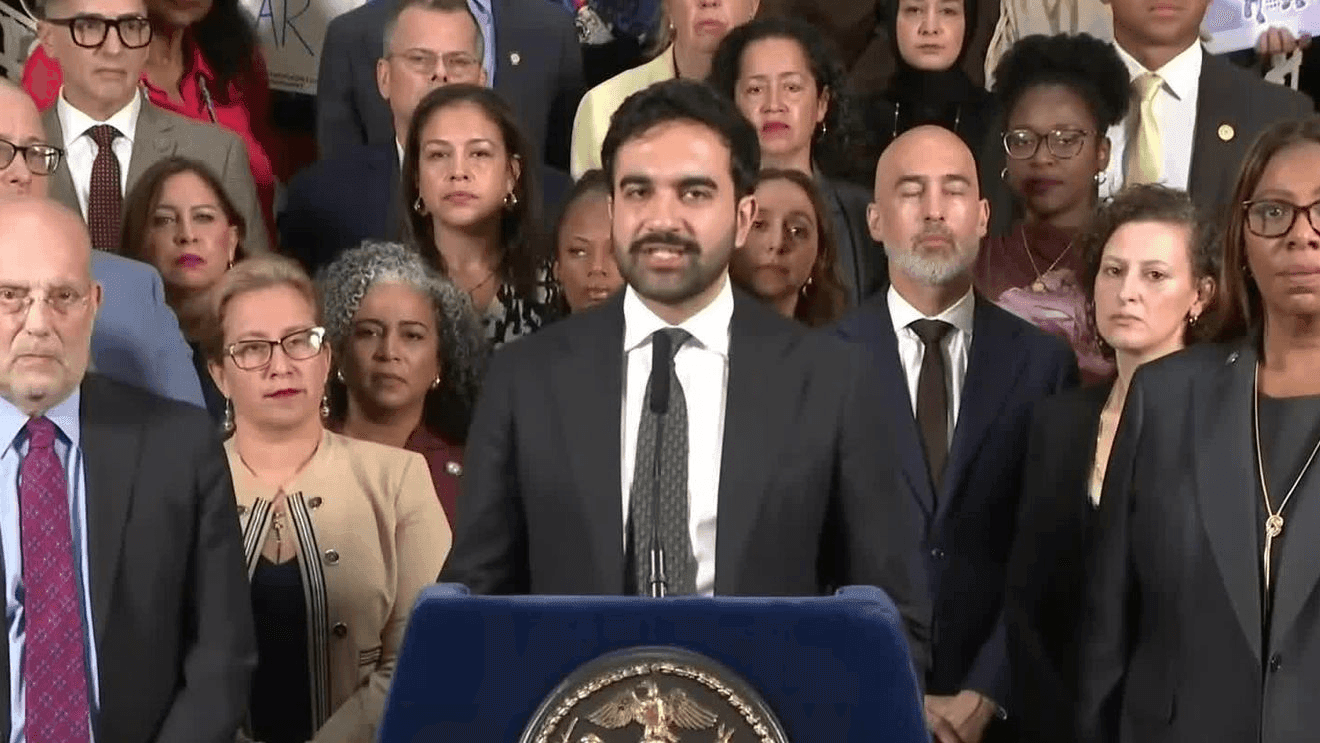
“Despite her child’s significant medical needs, she asked whether she should terminate her child’s Medicaid coverage because she feared becoming a public charge,” Arlene Cruz Escobar, Director of Health Programs at Make the Road New York, said at a press conference held by New York City Mayor Zohran Mamdani and NYS Attorney General Letitia James.
Mamdani and James conveying the message that if citizenship is defined in part by government aid, those who may need Snap benefits, health care, free school meals, would need to make difficult choices.
“People could die,” Mamdani said. “As a result of these changes, the rate of premature mortality in immigrant communities in New York City could increase by up to 10.6% within just the next five years.”
The Department of Homeland Security argues that government benefits should not incentivize immigration, and that “public charge” rules need to be changed. The DHS document explaining the process states”
“It was inconsistent with Congressional intent, unduly restrictive, and hampered DHS’s ability to make accurate, precise, and reliable determinations of whether certain aliens are likely at any time to become a public charge. Rescission restores broader discretion for DHS officers to evaluate all pertinent facts and aligns with long-standing policy that aliens in the United States should be self-reliant and government benefits should not incentivize immigration. This rule also revises the breach and cancellation of public charge bonds regulations.”
The federal government’s Congressional Budget Office estimates that government spending on services for immigrants who are undocumented will reach $177 billion.
The Congressional Budget Office also estimates the recent immigration surge will boost the Country’s GDP by $1.3 trillion.
“The argument that these kinds of rules will save the US government money…It is money that we are going to have to pay at a later stage at a higher price, because people don’t stop getting sick, people simply will get more sick and then the first time that they will interact with a healthcare provider will be at the emergency room,” Mamdani said.
In their document, the DHS provides summaries of what they received in public comment saying “many” commenters were opposed to the rule. For example:
“Some stated that the rule is unfair, cruel and inhumane or barbaric, that previous poverty is not a reason to penalize a person today, and that every human deserves to be cared for and treated respectfully. “
They also said “several” commenters were in favor of the rule. For example:
“One commenter stated that resources for new immigrants should be limited, with another stating that when conditions for U.S. citizens in America improve immigrants can be helped. One commenter expressed their belief that supplemental programs are meant to be a temporary aid but that there are insufficient regulations to prevent such aid from becoming a lifestyle.”
New York Immigration Coalition President and CEO Murad Awawdeh also spoke during Monday’s press conference, then speaking with CBS6, responding to comments like those above.
“As we all know every single person who calls this city, this state, and this country home pays taxes, and everyone is paying into the social safety nets. They should have access to them, and regardless of how people are navigating this moment, our communities continue to contribute here in the state of New York over $81 billion in tax dollars to local and state taxes every single year,” he said. “The lawsuit is the next step, and we’re going to continue to hold on to the hope that our court system will uphold the law, and that’s where we are right now.”