
New Yorkers will soon start seeing ads promising “faster government” across the city as Mayor Zohran Mamdani’s charter commission launches a $1.6 million campaign Tuesday around five proposed City Charter changes headed to voters this November.
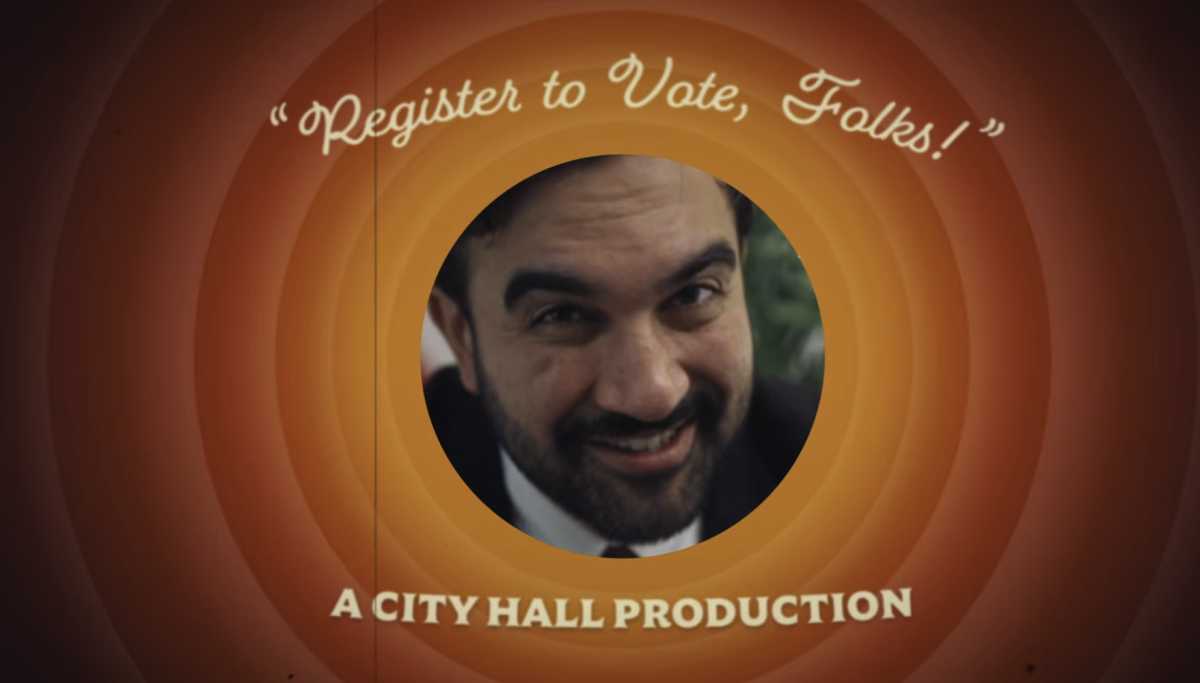
The Commission on Government Efficiency (COGE) is set to kick off its “Vote on Faster Government” campaign on National Voter Registration Day with a new online information hub and a Looney Tunes-inspired video featuring Mamdani.
“This November, New Yorkers will be able to vote on how fast our government runs,” Mamdani says in the video, before describing the measures as simplifying construction, fast-tracking street safety projects, easing outdoor dining approvals, speeding city contracting and strengthening city savings.
Over the coming weeks, the effort will expand to paid digital advertising, public-service announcements, canvassing, briefings with community leaders and educational materials in 13 languages.
But commission officials say the campaign is not asking New Yorkers to support the measures.
“We are not recommending how they vote,” COGE Executive Director Ann Cheng told amNewYork. She said the goal is to make sure New Yorkers are well informed heading into the polls, “but not to advocate that they vote in any particular direction.”
Cheng said the commission wants to prevent voters from encountering the five questions for the first time when they reach their Nov. 3 ballots.
“We want folks to hear about them now, so they have time to research them and talk with their communities and decide how they want to vote,” she said.
Still, the campaign’s name reflects how COGE describes what the proposals would accomplish if passed.
Asked whether “Vote on Faster Government” itself takes a position on the questions, Cheng said the phrase is meant as a factual description.
“These proposals will objectively make government move faster,” she said, pointing to changes COGE projects would shorten processes for outdoor dining applications and certain transactions involving small city-owned properties.
COGE amendments on the ballot in November
The commission unanimously approved the five proposed Charter amendments in July. They would change rules for outdoor dining and other uses of public space; overhaul city contracting procedures; create expedited processes for some street-safety projects, city property transactions and office leases; establish a centralized construction-permitting hub; and set a rainy-day fund target equal to 12% of the previous year’s city tax revenue.
COGE’s public-facing descriptions focus on the efficiencies it says the proposals would produce. But some of the amendments also change how city decisions are reviewed.
Question 1, for example, is being presented as a way to save small businesses time and money by speeding outdoor dining and accessibility approvals. It would also eliminate mandatory public hearings on sidewalk cafe applications and the City Council’s ability to call those applications up for a vote. The Department of Transportation would instead be directed to seek community input through other means.
The City Council, among others, raised concerns after the ballot measures were approved in July, warning that some proposals could reduce public input and weaken longstanding checks and balances. It stopped short of urging voters to reject them.
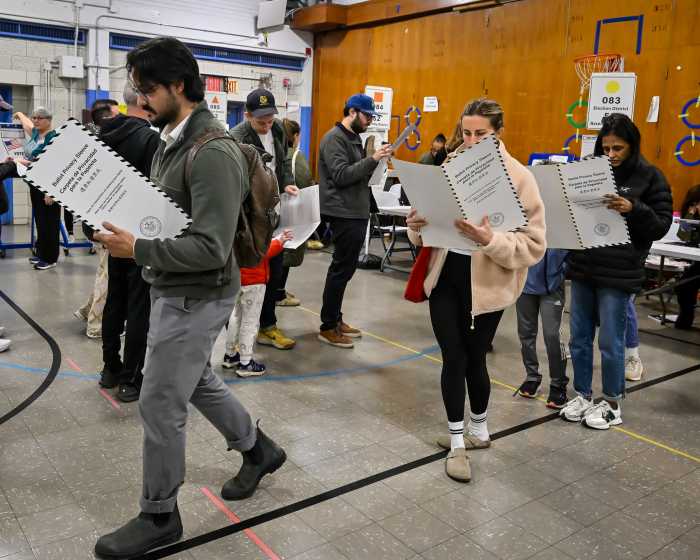 Voters casting their ballot at P.S. 321 in Park Slope, Brooklyn, on Nov. 4, 2025.Photo by Gabriele Holtermann
Cheng acknowledged the difficulty of boiling complicated Charter amendments down to something voters can quickly absorb.
“You want to be brief enough and simple enough that folks can take this information in quickly,” she said, while also ensuring the descriptions are “factually accurate.”
Palm cards will provide short descriptions and QR codes linking to COGE’s information hub, where voters can find the ballot questions, legal abstracts and proposed Charter language. Cheng said the commission tried to create the “most honest version” of condensing the measures while keeping them digestible.
The campaign will also extend beyond conventional advertising.
Cheng said officials are still determining exactly how different parts of city government will participate, but described the approach as harnessing the “full muscle of city government.”
That could include the Mayor’s Office of Mass Engagement canvassing at subway stations and agencies distributing information through existing networks of contracted providers. COGE also expects to use public-service advertising space available to the city, including LinkNYC kiosks and Taxi TV.
COGE has budgeted $1.6 million for the campaign, according to City Hall. The Economic Development Corporation sought competitive bids in August for a consultant to provide public education, design and advertising aimed at maximizing awareness of the ballot questions.
Middle Seat, a political media and consulting firm whose clients have included the Biden Victory Fund, Women’s March and National Nurses United, won the bid, City Hall said. The firm previously produced paid advertising for New Yorkers for Lower Costs, an independent expenditure group supporting Mamdani in the 2025 mayoral race. Middle Seat says that work included message testing and targeted voter persuasion and ultimately involved $1.7 million in television and digital advertising.
The independent expenditure was separate from Mamdani’s campaign, and COGE says the firm’s assignment is different this time around: educating New Yorkers rather than steering their votes. The city’s RFP required all campaign materials to be “neutral” and “solely informational” about the ballot proposals.
Cheng said any outside effort explicitly urging New Yorkers to vote yes or no would be separate from COGE’s campaign.
“That wouldn’t be us,” she said, describing the commission’s role as providing voters with education.
Cheng said COGE would measure the campaign’s success partly by whether it could recreate the level of public engagement the commission saw during its summer hearings, which drew New Yorkers across the city despite the heat and rain.
“I think it would be that New Yorkers really turn out to vote,” she said.