
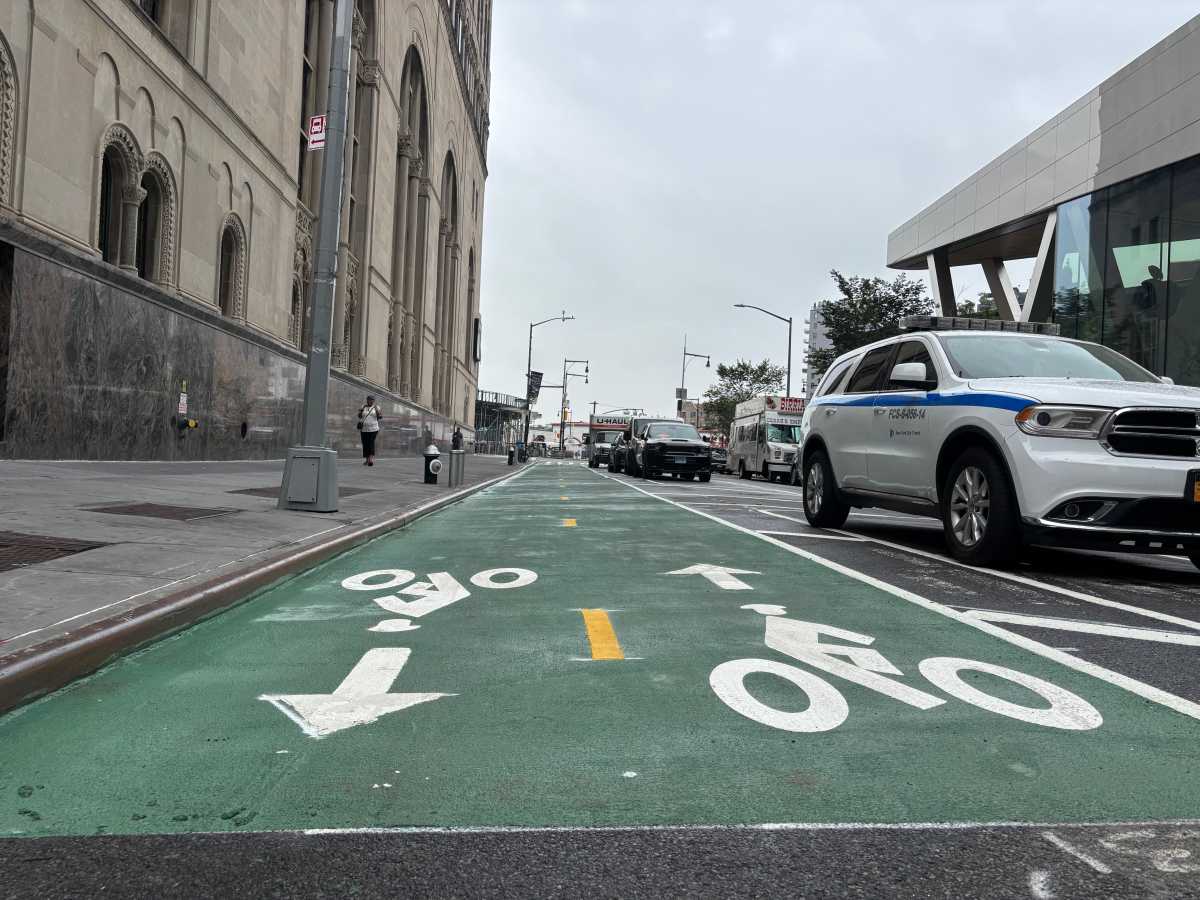
The 104-page plan, entitled “Vision Zero Reimagined,” commits to advancing or building upon many of the strategies the city has already embraced for making its streets safer since Vision Zero was first introduced by former Mayor Bill de Blasio in 2014. Those include cracking down on reckless drivers, lowering speed limits, redesigning streets, and clearing intersection sightlines.
It also floats some ambitious new proposals, including the creation of areas either exclusively for or mostly oriented around pedestrians.
The plan is comprised of over 100 commitments organized into eight “big-picture goals” and involves the participation of 19 city agencies, including the city Department of Transportation (DOT) and the NYPD.
“Vision Zero Reimagined puts forward the bold measures and the practical fixes we need to make preventable tragedy no longer a part of everyday life in New York City,” Mamdani said in a statement.
“With 19 agencies and partners working together, we are doubling down on what works and paving the way for ambitious new models of street safety,” he added. “Safety is a right for every New Yorker, no matter how you travel, where you are going or what neighborhood you call home.”
DOT Commissioner Mike Flynn said that while Vision Zero has been largely successful in reducing traffic fatalities and severe injuries, “too many families are still experiencing preventable loss, and too many of the most dangerous behaviors persist.”
“This moment demands a sharper, more focused strategy, one that builds on what works while confronting with urgency and precision the risks that remain,” he added. “Through a new 10-year Vision Zero action plan…we’re introducing a new generation of tools and policies to follow the data, double down on what we know, and present bold new strategies.”
What’s in the ‘Vision Zero Reimagined’ plan?
Specifically, the plan calls for implementing a Super Speeders program, which was authorized by the state legislature this year and would see the city install speed-limiting devices in the vehicles of repeat dangerous drivers. It would also greatly expand the use of Sammy’s Law to lower speed limits to 20 miles per hour across entire neighborhoods.
Moreover, it says the city will make at least 1,000 intersections safer annually either by using hardened daylighting — the replacement of parking spaces with hard infrastructure — or other “better treatments.” DOT had opposed a similar measure advanced by the City Council last year, which did not ultimately get a full-chamber vote, that would have required it to daylight 1,000 intersections annually with hard infrastructure.
Previously, the DOT had committed to daylighting 1,000 intersections a year with signs rather than hard infrastructure.
“We learned that hardened daylighting is just more effective,” one city official said. “So the new commitment is specifically around hardened daylighting or interventions that would be better in that circumstance.”
The plan also commits to advancing more legislation in Albany to go after reckless drivers, such as those who drive under the influence of drugs; redesigning all of the city’s nearly 200 Vision Zero “priority corridors” — roads it has identified as the most dangerous; and regulating third-party app companies that employ workers who ride electric micromobility devices.
In the 12 years since the city first launched Vision Zero, it has transformed its streetscape with the aim of making it safer for all road users.
During that time, the city lowered its default speed limit from 30 mph to 25 mph, installed 3,300 speed bumps and speed cushions, and built 600 miles of bike lanes. Those changes combined with many others have led to a 16% drop in traffic fatalities between the year Vision Zero launched and last year — a decrease from an average of 287 to 241 annual deaths, according to the city.
“Vision Zero has proven that change is possible,” Flynn said. “Our efforts to redesign streets, expand automated enforcement, bring accountability to dangerous behavior, and sustained public engagement have saved hundreds of lives and driven traffic deaths to historic lows.”
However, another city official said that in this Vision Zero update, the Mamdani administration is trying to address the issues that have persisted over time. They said that is particularly the case with the plan’s focus on going after serial dangerous drivers.
“There’s proposals and commitments in this plan around having more accountability and more enforcement tools,” said the official on the condition of anonymity for this report. “One thing that kind of characterizes this plan is that it’s looking at more of those systemic areas where you know just kind of continuing to redesign streets and do some of the outreach and enforcement as we’ve been doing it. We’re feeling like we have to kind of go to the next frontier to really meaningfully keep moving the needle towards zero.”