
The recent allegations involving another manufactured housing operator in New York have understandably created concern across the industry. What is important in moments like this is not defensiveness or finger-pointing, but a broader conversation about responsibility, responsiveness, and the role ethical operators play in preserving and expanding attainable homeownership opportunities across New York State.
Manufactured housing remains one of the most important, and often overlooked, tools we have to address New York’s housing affordability crisis. For tens of thousands of New Yorkers, these communities provide a pathway to stable, attainable homeownership that would otherwise be out of reach.
Like any industry that serves large numbers of people across diverse communities, manufactured housing is not perfect. Challenges arise. Disputes happen. Infrastructure ages. Residents sometimes have frustrations or concerns that deserve attention. The measure of a company should not be whether issues ever occur, but how leadership responds when they do.
Good operators understand that responsibility extends far beyond collecting rent or filling lots. It means maintaining properties, communicating transparently with residents, investing in infrastructure, complying with evolving regulations, and taking concerns seriously when they are raised. It means recognizing that these communities are not simply assets on a spreadsheet, but neighborhoods where people live, raise families, retire, and build their futures.
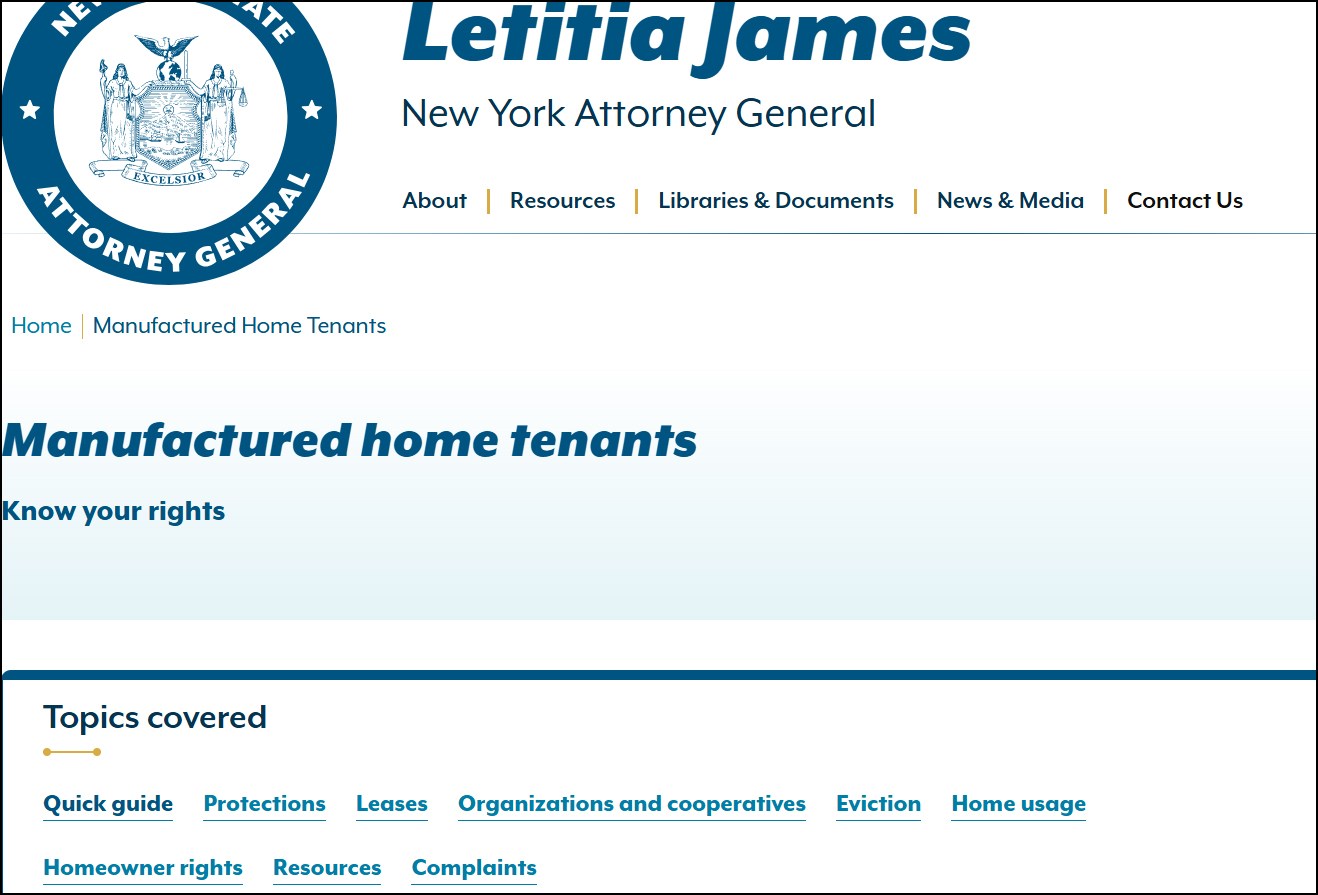
That is why oversight and accountability matter. New York Attorney General Letitia James deserves credit for emphasizing resident protections and reinforcing that all housing providers, regardless of size or sector, must operate responsibly. Thoughtful enforcement and clear expectations strengthen public trust and help distinguish responsible operators from those who may fall short.
At the same time, it is important not to paint an entire industry with too broad a brush. The overwhelming majority of New York manufactured housing community owners work hard every day to provide safe, stable, and attainable housing options. Many are family-owned businesses with deep roots in the communities they serve. Many invest millions of dollars into upgrades, infrastructure improvements, and long-term stewardship of their properties.
The future of manufactured housing in New York depends on continuing to elevate best practices and encouraging a culture where operators are proactive, responsive, and community-minded. Residents deserve that. Policymakers should expect that. Responsible owners should welcome that standard. Maintaining that trust also requires communication among residents, operators, regulators, and elected officials so concerns can be identified early and addressed constructively.
As New York continues searching for solutions to its housing shortage, manufactured housing must remain part of the conversation. The state needs more housing at a range of price points, and manufactured housing can continue providing an attainable ownership option for families, seniors, and others seeking stability. Protecting that opportunity requires both strong operators and a regulatory environment that holds bad actors accountable without undermining those who are investing responsibly in their communities.
Preserving the credibility and long-term viability of the industry also requires leadership from within the industry itself. Responsible operators have a role to play in demonstrating what good stewardship looks like and in helping raise expectations. The operators who succeed in the years ahead will be those who understand that being a good actor is not about being flawless. It is about being accountable, responsive, and committed to doing right by the people who call these communities home.
Cook is the CEO of Cook Properties, New York’s largest developer of manufactured housing.