
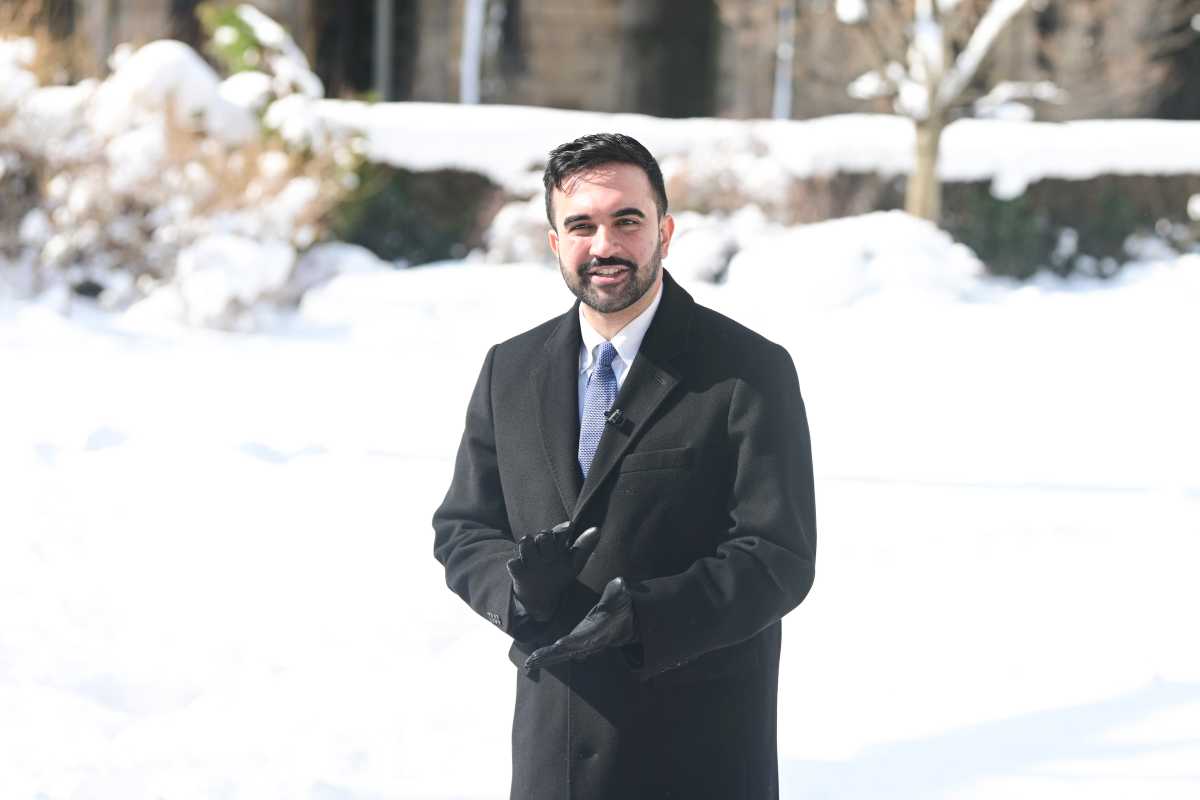
Mayor Zohran Mamdani is making the $30-an-hour rate temporarily offered to New York City’s emergency snow shovelers during February’s blizzard the standard starting pay this season, while revamping how the temporary workers are recruited and paid.
The starting wage represents a nearly 57% increase from the previous standard rate of $19.14 an hour. Hours worked beyond 40 in a week will be paid at $45, up from $28.71, City Hall announced Tuesday.
The city also plans to recruit workers before winter arrives, offer a paid four-hour orientation in December and speed up payroll for those who register in advance.
“If this past year of blizzards, thunderstorms and heat waves taught us anything, it’s that it’s never too early to prepare for extreme weather,” Mamdani said. “Last winter, thousands of New Yorkers stepped up to help their neighbors dig out from heavy snow and ice. This year, we’re raising their pay and making it easier to join the program — because when the snow comes, our city needs to be ready.”
City Hall said more than 7,800 New Yorkers answered the call to join the emergency snow shoveler program last winter, which the administration described as a record.
The Department of Sanitation also used the workforce differently during last winter’s storms. Emergency shovelers were sent out while snow was still coming down and were assigned evening work for the first time, according to the administration.
Yet whether the emergency shovelers team will be called into action remains to be seen. The Farmer’s Almanac, which predicted a cold and snowy winter last year, recently forecast a warmer and less snowy winter for coastal areas of the northeast U.S., such as New York City, thanks to a record El Niño formation in the Pacific Ocean, which is influencing jet stream patterns around the globe.
NYC learns snow-shoveler lessons from a brutal 2025-26 winter
Alongside regular Sanitation employees, the temporary workers were part of an effort that cleared 135,000 crosswalks, 34,000 bus stops and 29,000 fire hydrants over the winter, City Hall said.
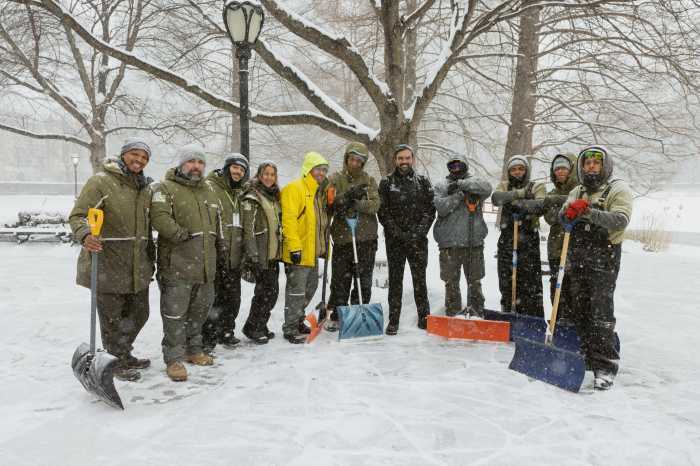 Mayor Zohran Mamdani with Parks Department members in snowy NYC during a winter storm on Jan. 25, 2026.Kara McCurdy/Mayoral Photography Office
The program became an unlikely national talking point during February’s blizzard, when Mamdani temporarily raised the hourly rate to $30 and urged New Yorkers to sign up. Republican critics — and later President Donald Trump during his State of the Union address — mocked requirements that applicants produce identification and employment documents, including two forms of ID and a Social Security card.
Mamdani later thanked Trump for the attention, saying the controversy had helped spread the word about the program. But that surge also exposed issues around workers getting their hard-earned cash.
The City Reporter reported in late February that several people who shoveled following January snowfall were still waiting for checks about a month later. A DSNY spokesperson told the outlet at the time that it had taken four to six weeks to pay emergency shovelers the previous year.
This season, DSNY is trying to get more of the paperwork out of the way before the first major storm hits.
Getting on the snow crew
People who register at a DSNY event by Nov. 30 will qualify for a paid four-hour orientation in December and expedited payroll processing, with the city aiming to get them paid within two weeks after they work.
There is no cap on how many New Yorkers can register, Deputy Sanitation Commissioner Joshua Goodman told amNewYork. The number ultimately called in to work will depend on the needs of each storm.
Registration may also be available later in the winter, Goodman said, but signing up in advance gives the department time to process workers before it is simultaneously trying to fight a snowstorm.
Those who register early will also be assigned to a DSNY garage based on borough needs and their location preferences, then contacted when they are needed for a shift.
The shovelers are paid through the city’s snow budget, which is set by a formula in the City Charter and falls outside the normal budget negotiation process, Goodman said. He said the administration expects to have the resources it needs for snow-clearing operations.
DSNY is also eliminating one small piece of the old registration process: applicants will no longer have to bring their own printed photographs. The department will take the photos at registration events.
“From adapting to a changing cityscape to applying lessons learned from previous years, we constantly update and innovate to ensure a safer city after winter weather events,” Sanitation Commissioner Gregory Anderson said.
Before last winter’s temporary $30-an-hour increase, DSNY’s standard emergency shoveler rate was $19.14 an hour, rising to $28.71 after 40 hours. In 2024, the job paid $18 an hour, or $27 after 40 hours.
The first registration event for the coming winter is scheduled for Saturday, Sept. 19, from 9 a.m. to 5 p.m. at Taft High School, 240 E. 172nd St. in the Bronx. A second is planned for Sept. 26 in Manhattan, with additional events across the five boroughs to be announced.
Applicants must be at least 18 years old, authorized to work in the United States, and capable of strenuous physical work in harsh winter weather. To register, they will need a valid phone number and email address, a Social Security card, completed W-4 and IT-2104 tax forms, and a completed I-9 with the documents needed to verify identity and work authorization.