
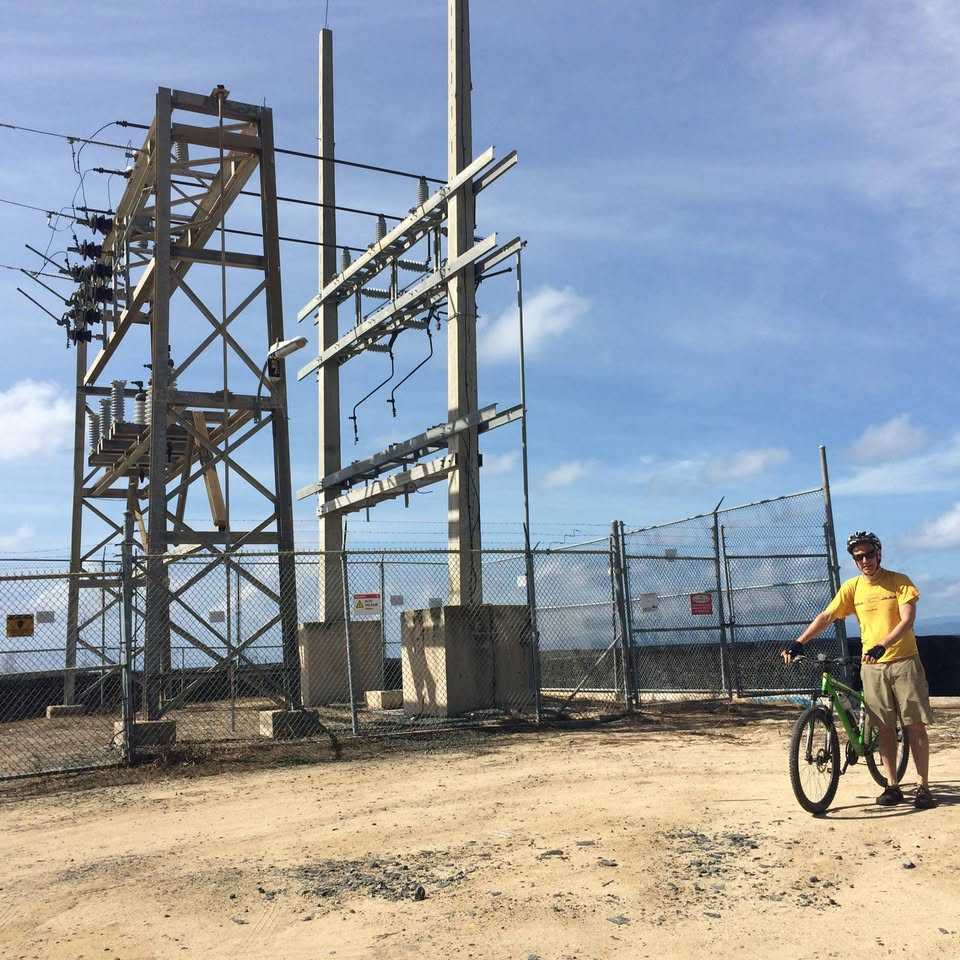
Behind New York City’s powerful electricity grid is a cadre of lawyers working for both private companies and the government in a sector of legal practice known as energy law, deploying their love of cities and the legal counsel necessary to keep the city’s lights on and make its energy supply more resilient and sustainable.
Rich Miller, who currently co-chairs the City Bar Association’s Energy Committee, has spent decades of his life serving as one of those attorneys. Miller, 68, has worked on both the private and public sides of energy law, litigating and lawyering to clean up and strengthen the city’s energy supply in City Hall between 1998 and 2003 and at ConEdison from 2003 to 2023.
“The problem with cities is that they were always very efficient, but the pollution was really bad,” Miller said. “We want cities to function well. Having a really reliable electric system is a great way to get there. We also want cities to be attractive places to live. Having a clean electric system, a clean transportation system … works towards the larger project of cities.”
For Miller, becoming an energy lawyer was his contribution to working towards the larger project of cities — and combating climate change.
“Climate change really isn’t an environmental problem; it’s actually an energy problem,” Miller said. “The transformation of our energy systems is our ultimate goal in terms of solving the problem of – or mitigating to the greatest extent – climate change. If that’s an issue you’re interested in taking on as a cause for your life, being an energy lawyer, as opposed to an environmental lawyer, is a great way to take on that cause.”
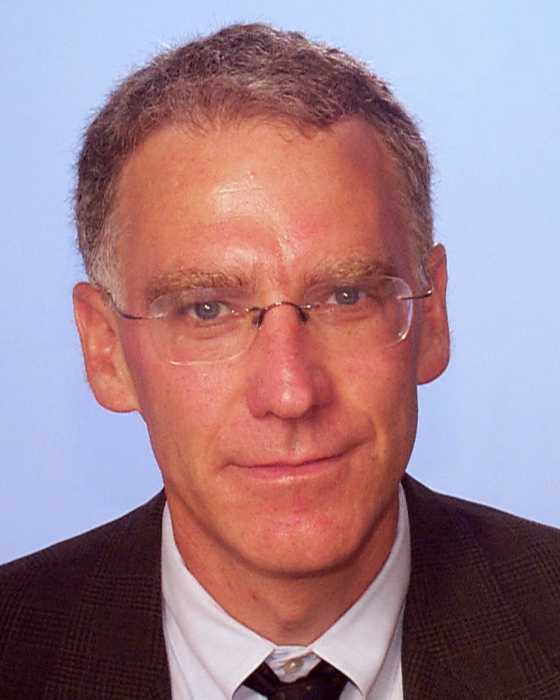 Rich Miller, an energy attorney who helped push ConEd and the city government towards clean energy.
But, even though he’s a lifelong environmentalist who spent his college years protesting the use of nuclear power plants (a position he’s since softened on) and the years after working for the Peace Corps in West Africa helping farmers plow fields with oxen, Miller said he actually came to urban energy law in a bit of a roundabout way.
Rich Miller’s road to energy law
Miller had left his job as a union-side labor lawyer in New York City-based firm Cohen Weiss and Simon to move upstate. As an environmentalist, he said he’d wanted to get out of the city and be around more nature.
He ended up falling into a job at a small energy law firm representing alternative energy developers instead, and as he leaned into and learned more about the field through the 1990s, he became convinced working in cities was the way forward.
“While I was working at the energy law firm, I really became immersed in the issues around air pollution,” Miller said. “Everyone always talked about power plants as a big issue for air pollution. But automobiles were the bigger issue, and so that was how I started thinking that I really wanted to be involved more in urban infrastructure and cities.”
As the public consciousness started to shift away from solely worrying about air pollution to concerns about climate change, Miller said he became very interested in studies showing that urban residents emit less greenhouse gases per capita than non-urban residents. He was also interested in leveraging his law degree to push city-centric energy policy forward.
“It was funny that it was moving out of the city that resulted in me getting more focused on environmental issues, and then that my thinking that came out of that is that, ‘Cities are the solution to environmental problems,’” Miller said. “That’s where I have always drawn inspiration from my work. You’re really doing the nuts and bolts in a city.”
So, in 2003, he returned to the city and began working for the government, serving as the senior vice president for energy policy in the city’s Economic Development Corporation under former Mayors Rudy Giuliani and Michael Bloomberg. In that position, Miller helped the city navigate major legal changes in the electricity and energy industry, which was undergoing state and federal policy reconstruction that left states as the entities making the final decisions on energy and increased competition between providers.
He also played a pivotal role in upgrading and modernizing New York City’s power plants to make them more energy efficient and emit fewer air pollutants and greenhouse gases, and handled the permitting process of building new, cleaner plants in and around the city, something which allowed New York to reduce its reliance on older plants that were producing harmful byproducts. Miller estimated his work resulted in 2,000 megawatts of new energy capacity coming from cleaner plants.
“We didn’t go as far as I would have liked to have seen the city go … but I still feel very comfortable about what I accomplished at that time,” Miller said. “All the existing plants were still necessary to maintain reliability. There was some capacity after I left city government to begin to shut down some of the plants, and some of them are finally beginning to shut down. The one thing I can say unequivocally is all those older plants run a lot less than they used to because of the fact that all these new plants came in.”
The power invested in him
He also represented the city in rate cases against Con Edison and investigated what caused the city’s energy grid to fail in July 1999, when Washington Heights experienced a complete blackout. Through that, he learned the city needed to focus on the reliability of its individual, essentially neighborhood-centric networks – and that he wanted to learn more about how electricity actually worked to improve his ability to work as an energy attorney.
So, he got a job with ConEd.
“I was also acutely conscious at the time that while I was really interested in electricity and electricity infrastructure, I really didn’t know that much about electricity,” Miller said. “I thought if I went to work for Con Edison and spent a lot of time hanging out with electric engineers, I would finally not only know the law of energy but better understand how electricity and natural gas actually worked.”
Miller thought he would work there for just a few years, learn the ropes, then move into a different job, maybe with city government again. Instead, he ended up at the company for two decades, eventually serving as its vice president for energy and environmental law, supervising about 25 lawyers handling energy and environmental issues.
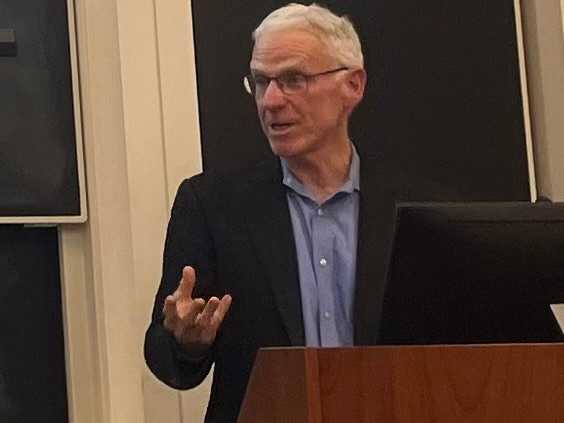 Miller giving a talk at New York University.Photo provided by Rich Miller
Miller said he was one of a group of “change agents” during his time at ConEd, helping move the company into facilitating clean energy production, making its energy production more efficient and increasing its renewable energy portfolio. Change can be hard at a utility company, he said, as reliability and safety are priorities, which naturally creates a conservative culture. But he said he believes he and others were successful in moving the company forward.
“Of course, change is going to be difficult,” Miller said. “I wanted to move the company more aggressively into facilitating and promoting clean energy, which, given that solar and wind are intermittent resources, and the company’s focus is on reliability, that is a big culture change for a company like that.”
“That required both advocacy and involvement in negotiating some very difficult and interesting contracts at the beginning. I got to do some very interesting legal work and play an important role in an important transformation of the company,” he said. “I was the lead person for the company on the lead attorney for the company on the renewable portfolio standard … [and] a contributor in making sure that the company was going to be supporting the state’s efforts to increase renewable power, energy efficiency.”
Miller was required to retire from the company at 65, something he said he was initially sad about but has grown to be grateful for. He said it’s left him with free time he’s using to pour even more of himself into his passions of history and cycling – he and his wife bike about 4,000 to 5,000 miles each year in the city – and the many urban advocacy groups and volunteer boards he’s spent decades on, including Transportation Alternatives, Brooklyn Greenway Commission and the New York City Water Board.
“I’m a real history person,” Miller said. “I got myself qualified as a New York City history tour guide, and I now do these tours: The Birth of the Electric Grid Walking Tours of Lower Manhattan. So many of the important early developments in electricity grid technology actually occurred in Lower Manhattan with Thomas Edison and Nikola Tesla, and talking about them on a personal level, there’s some interesting stories to tell.”
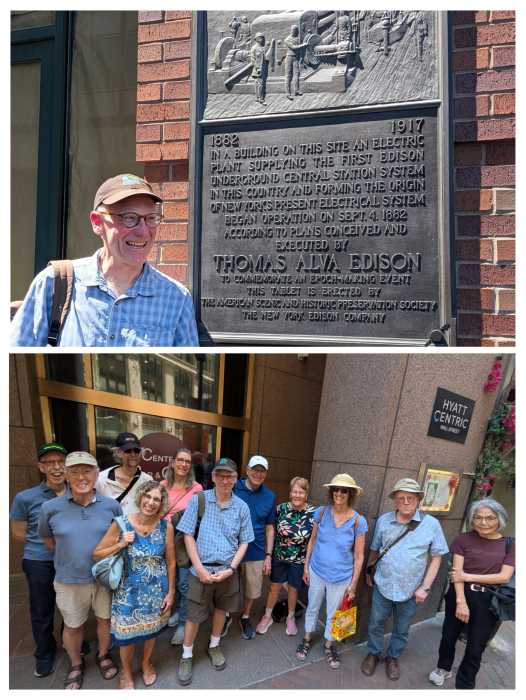 Miller leading one of his walking tours.
He’s also using his retirement to inform young lawyers and the public about the value of energy law and clean electricity, both through his walking tours and in his position chairing the Energy Law Committee at the City Bar.
“I have 30 years of energy law experience now, very focused New York City experience,” Miller said. “Number one, I want to see New York City to be a leader in clean energy, so I want to help keep facilitating that to happen, while hopefully also being a realist at the same time.”
“Our committee’s goal is to give everybody a taste of all the different sides of energy law,” he continued. “I like the fact that we have both experienced practitioners and new people who are interested in working on energy and environmental issues, and hopefully engaging in some good knowledge transfer, in particular for the younger people who are on the committee. Our other goal is to play a role in public education by holding conferences and issuing memos on important public policy topics.”