
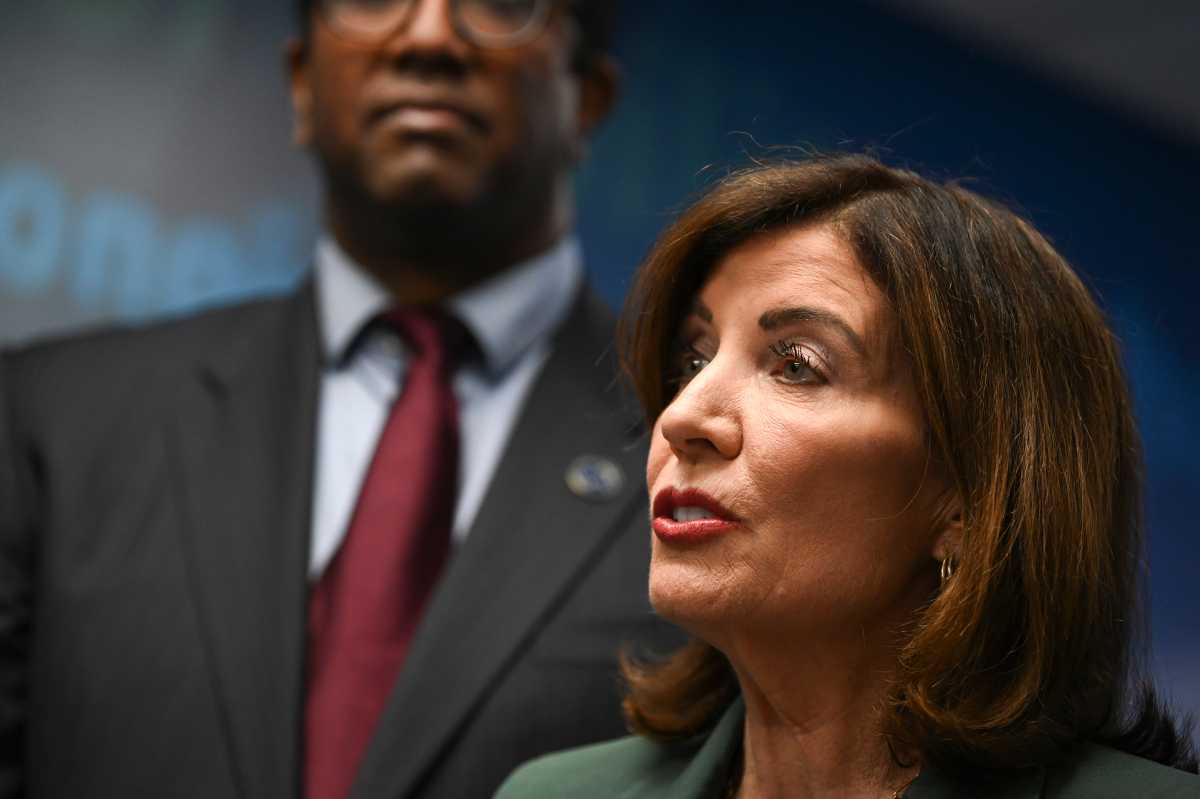
Gov. Kathy Hochul pushed back Wednesday against Republican rival Bruce Blakeman’s charge that energy rebate checks arriving weeks before Election Day amount to an election-year gimmick, saying she would not make New Yorkers wait until after the campaign for help with rising energy costs.
“I won’t make New Yorkers wait for relief. He may want to do that. I will not,” Hochul told reporters during a stop at the Flatbush YMCA.
Hochul was in Brooklyn urging residents to sign up for the state’s Energy Affordability Program, which provides monthly utility discounts to eligible households.
Nearly 1 million households are already enrolled, while the state estimates another 2.5 million are eligible but have not signed up. Hochul’s administration says participants can save hundreds of dollars a year, with some households eligible for up to $500 in annual savings.
“Bills are going up for everybody, and middle-class families who don’t have other benefits available to them are being hardest hit,” Hochul said.
The program’s eligibility was expanded in January to include households below the state median income, or below area median income in New York City, Westchester and Nassau counties. For Con Edison and National Grid NYC customers, that includes one-person households earning up to $113,400 and four-person households earning up to $162,000.
The state is now launching a broader enrollment push using digital advertising, mail, email and text messages, along with outreach through community organizations, government agencies and utilities.
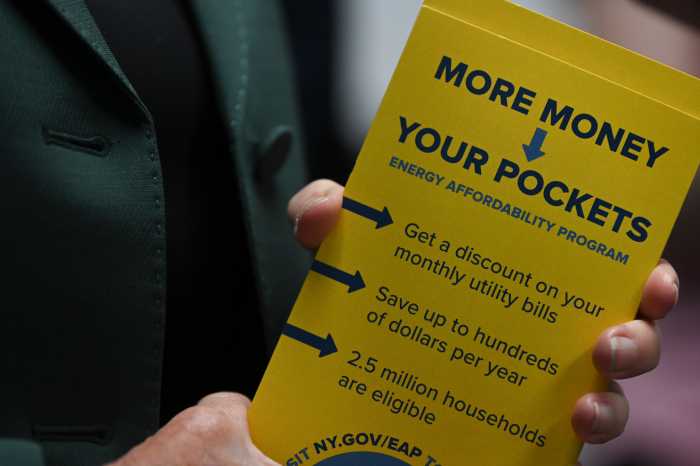 Gov. Kathy Hochul holds an informational flyer for New York’s Energy Affordability Program during a visit to the Flatbush YMCA in Brooklyn on Wednesday. Photo by Lloyd Mitchell
The monthly discounts are separate from another Hochul affordability initiative that has become an issue in the governor’s race — $1 billion in one-time energy rebate checks that the state says will begin going out to 8.2 million eligible households Sept. 21.
Blakeman, the Nassau County executive and Republican nominee for governor, called those payments an “election-year gimmick” Tuesday and argued that one-time checks would do little to offset rising utility costs. His campaign also blamed Hochul for increases in electric bills, claims the campaign used to promote Blakeman’s pledge to cut utility costs.
New York electricity prices have risen sharply in recent years, though an analysis by the New York Independent System Operator points to a mix of factors, including natural gas prices, tightening power supplies, aging infrastructure and grid investments.
Asked about the criticism Wednesday, Hochul said the $1 billion in rebates was negotiated with lawmakers in the spring and signed into law in May, and that state officials then needed time to determine who qualified.
“That’s just the process,” Hochul said. “People are saying, ‘Why don’t we wait till next year?’ I say, ‘As soon as we’re able to, we’re doing it.’”
She made a similar argument Tuesday night on NY1’s “Inside City Hall,” when host Errol Louis noted that the checks were set to arrive less than 50 days before the election. Hochul said the election should not stop her administration from providing relief that had already been approved in the state budget.
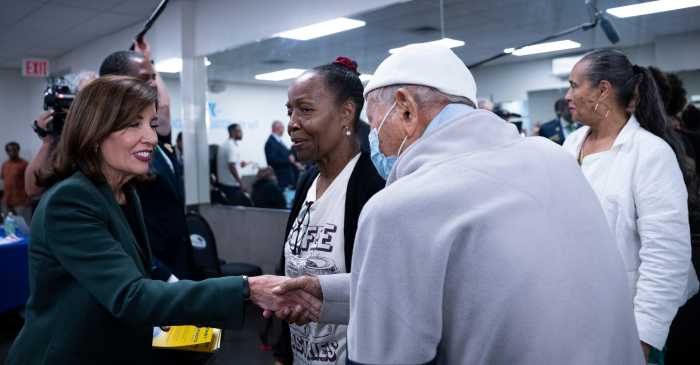 Hochul speaks with local residents at the Flatbush YMCA in Brooklyn on Wednesday. Photo by Lloyd Mitchell
Hochul also picked up support Wednesday from the New York Working Families Party, months after the progressive party declined to endorse her ahead of the Democratic primary.
A WFP representative told amNewYork that the endorsement followed a vote of the party’s state committee but declined to disclose the tally. Announcing the endorsement Wednesday, WFP state director Jasmine Gripper said the party was urging New Yorkers to support Hochul and lieutenant governor nominee Adrienne Adams on the Working Families ballot line.
In February, ahead of the Democratic primary, the committee chose a placeholder rather than endorse Hochul or then-Lt. Gov. Antonio Delgado. City & State reported at the time, citing a person present for the vote, that Hochul received 3% of the weighted vote. WFP leaders disputed the reported totals but declined to provide their own. Delgado dropped out of the race days later.
WFP leaders later said on the Max Politics podcast that the period before an endorsement gave the party leverage to press its priorities, pointing to child care and immigration among areas where it had pushed Hochul.
Hochul welcomed Wednesday’s endorsement, saying she looked forward to continuing to work with the party as part of what she called a “big-tent coalition.”