
New York City’s emergency alert system picked up nearly 177,000 additional subscriptions during Mayor Zohran Mamdani’s first six months in office, as snowstorms, bitter cold, flooding and extreme heat battered the city — and Hizzoner repeatedly pushed the service across social media.
The growth is reflected in the Mayor’s Management Report released Thursday, which shows the broader reach of Notify NYC and three other emergency communications channels climbing from 1.34 million subscriptions in fiscal 2025 to 1.61 million in fiscal 2026 — a roughly 20% increase.
But because the fiscal year began six months before Mamdani took office, NYC Emergency Management provided a more detailed look at what happened under the new administration to amNewYork.
Notify-related subscriptions grew from 1,425,523 at the end of December to 1,602,111 by June 30, a net increase of 176,588 (up 12.3%). The vast majority of that growth came through two channels: Nixle, which lets people quickly subscribe to text alerts, and the Notify NYC mobile app.
Citywide Nixle subscriptions rose by 86,010 over the six-month period, while subscriptions to localized Nixle alerts rose by another 49,215. Together, they accounted for more than three-quarters of the growth. The mobile app added another 35,160 subscriptions.
NYCEM expanded its use of Nixle in fiscal 2025 under Eric Adams, launching localized messaging that lets people sign up for alerts tied to their neighborhoods. The agency has said the Nixle figures also incorporate an existing channel that was added to its subscriber count in 2025.
By comparison, signups through the Notify NYC website rose by just 1,371, while 22 additional subscriptions came through the city’s 311 phone system.
Emergency Management Commissioner Christina Farrell said Nixle’s simplicity is part of its appeal: people can sign up by text and immediately begin receiving alerts. But she said the city also had an unusually eventful first half of the year.
“We also have had so many emergencies this year,” Farrell said in an interview Thursday, pointing to snowstorms, extended cold, flash flooding and extreme heat.
The city has long seen Notify subscriptions jump around major emergencies. Last year’s Mayor’s Management Report similarly noted that growth tended to spike around major weather events as city officials urged people to sign up.
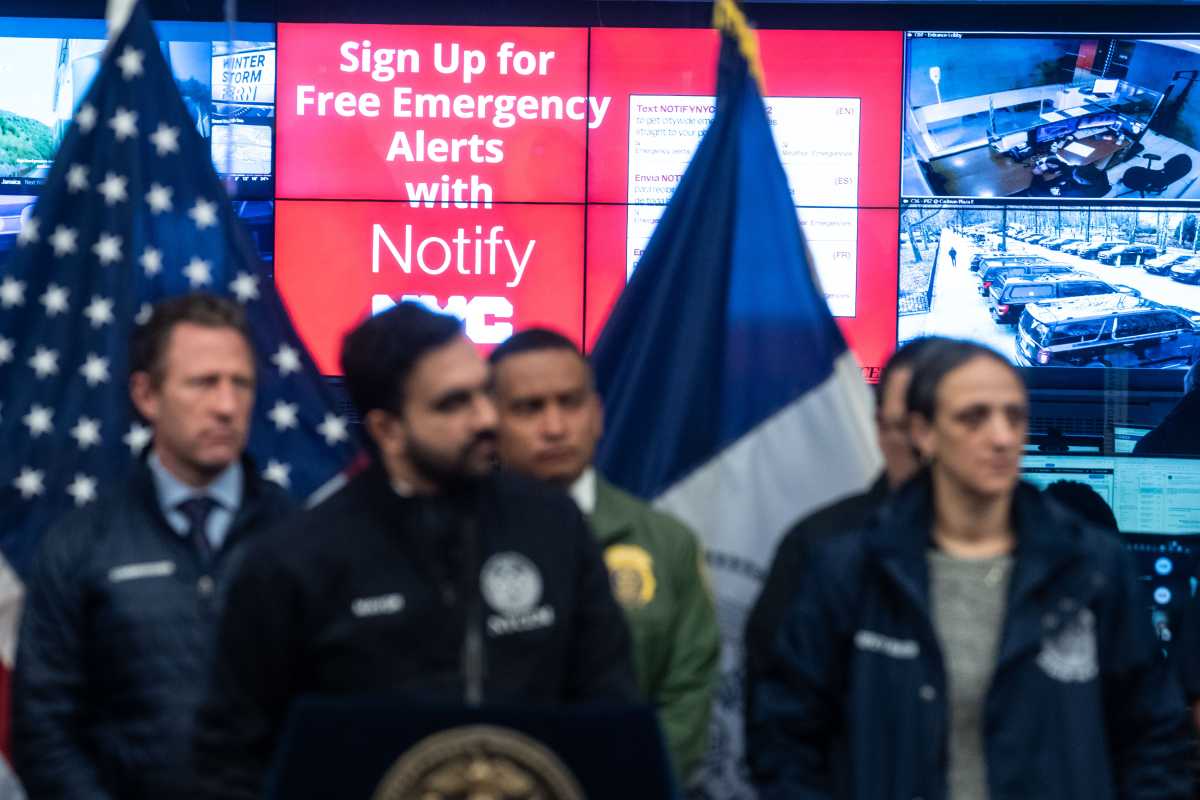
 Mayor Zohran Mamdani and Emergency Management Commissioner Christina Farrell attend a World Cup preparedness briefing in Brooklyn on June 12, 2026. NYCEM said major summer events helped drive another wave of Notify NYC signups. Photo by Ed Reed/Mayoral Photography Office.
Storms, signups and Mamdani’s megaphone
Farrell said this year’s first major jump came during January, when the Big Apple became the Frozen Apple — gripped by back-to-back snowstorms and an extended period of frigid temperatures.
The numbers show how sharp the jump was. Between Jan. 20 and Jan. 27, Notify-related subscriptions increased by 69,239 — nearly 40% of the total growth recorded over the first six months of the year.
More than 58,000 of those additions came through citywide and local Nixle alerts.
The spike came as Mamdani and other city officials repeatedly promoted the service ahead of the winter weather. On Jan. 23, the mayor posted a short video telling viewers to “stay in the know for the snow” and directing them to sign up for Notify NYC. The video drew more than 1.7 million views across Instagram and Facebook, according to metrics shared by City Hall.
The data does not establish how many of those viewers subsequently subscribed. Farrell said emergency-related news coverage, elected officials and community groups all contribute to signup increases when severe weather approaches.
But she said Mamdani has brought a particularly large audience to the city’s outreach effort.
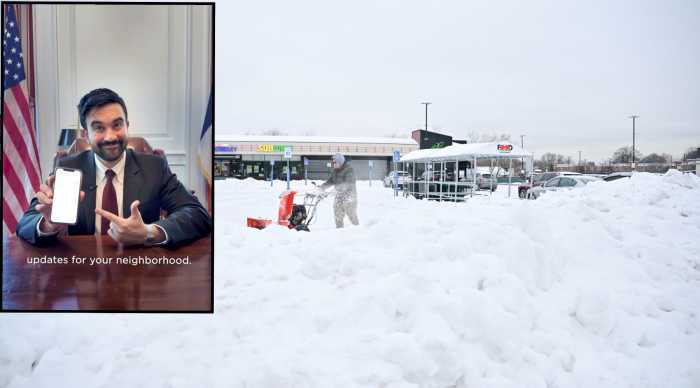 A snow-covered New York City during the January storm, alongside a screengrab of Mayor Zohran Mamdani’s Jan. 23 Instagram reel urging New Yorkers to sign up for Notify NYC. The city’s emergency alert system added nearly 70,000 subscriptions that week. Photo by Lloyd Mitchell/NYCMayorInstagram
Farrell said Notify NYC came up during her first conversation with the mayor in January, when they discussed reaching populations that had not previously been plugged into the system.
“He has been a wonderful spokesperson,” Farrell said, adding that Mamdani has pushed Notify through his “multiple channels” and “large audience.”
“The prior mayors have definitely supported Notify, but I don’t think they had the platform,” Farrell said.
As of Thursday, Mamdani’s personal Instagram account had about 12.4 million followers, more than twice the 4.8 million following the official mayoral account. On TikTok, his personal account had 3.6 million followers, compared with 3.8 million on the official NYC Mayor account. On X, the official mayoral account had about 2.5 million followers, compared with about 1.2 million on Mamdani’s personal account.
Farrell said Mamdani’s reach may be particularly useful in connecting with younger New Yorkers, a group she said can be difficult to engage on emergency preparedness.
Older residents can be harder to reach for a different reason. Some do not rely as heavily on smartphones, apps or social media, Farrell said, requiring the city to continue using traditional media, printed materials, landlines and community organizations.
She said she believes many of the people signing up this year are younger and that Mamdani’s age and following may be helping the agency connect with that demographic.
NYCEM is also trying to expand its reach among non-English speakers and residents of areas particularly vulnerable to coastal storms, Farrell said, citing the Rockaways, Coney Island, the North Shore of Staten Island and City Island.
From faxes to Nixle
Once someone is signed up, the alerts are produced around the clock by NYCEM’s Watch Command, a 24/7 operation staffed across three shifts.
Farrell said staff receive information throughout the day about everything from transit disruptions and major crashes to flooding, road closures and planned events. Most alerts begin with templates that are adjusted to the circumstances, she said, and can then be translated and targeted citywide, by borough or to particular ZIP codes depending on who needs the information.
Notify NYC itself dates to 2007, when it began as a pilot in one community board in each borough. Farrell said the system initially relied much more heavily on phone calls, faxes, emails and text messages, years before mobile apps and social media became major ways of reaching New Yorkers.
The service has expanded over time to include more types of notifications and new ways of receiving them, including a mobile app and school-related alerts. Farrell estimated that close to 2 million people signed up for a dedicated COVID-era short code between roughly 2020 and 2023 as officials pushed rapidly changing information about city services and vaccines.
Today, the system sends information in 14 languages, including American Sign Language, according to the Mayor’s Management Report.
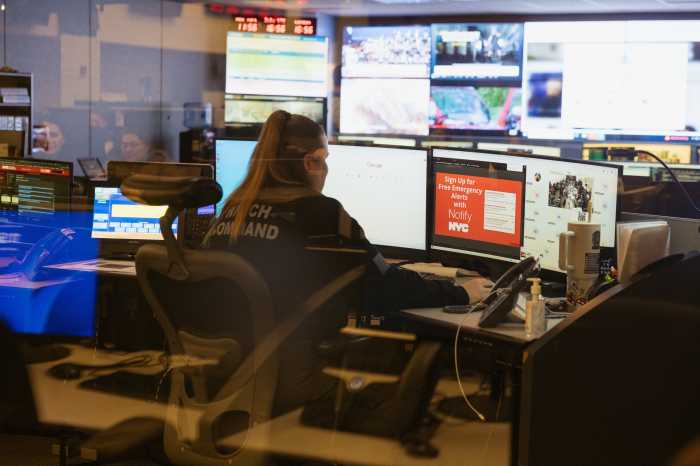 An NYC Emergency Management worker at the agency’s Brooklyn headquarters, where staff monitor incidents around the clock and send Notify NYC alerts about severe weather, transit disruptions and other emergencies. Photo by Kara McCurdy | Mayor’s Office of Photography
The subscription figures themselves are not necessarily a count of 1.6 million individual NYC residents. Farrell said the agency works to avoid double counting, but acknowledged that people can receive alerts on multiple devices or through different channels. NYCEM also encourages people outside the five boroughs to sign up, including commuters, tourists and people with relatives in the city.
The Mayor’s Management Report attributes this year’s broader increase partly to support from elected officials and coordinated social media and advertising campaigns. It says Notify NYC subscriptions rose 20% from fiscal 2025, with growth driven largely by summer event marketing and public encouragement from city officials between January and June.
Farrell said that push continued into the summer as the city promoted Notify around major events, including the Knicks’ championship run, World Cup matches and July 4 activities. She described that period as less about emergencies and more about helping people navigate major events and making residents and visitors more familiar with the system.
Now, she said, the agency is considering more ambitious targets and looking at which platforms and populations it should focus on next. With Notify’s audience now in the range of 1.6 million to 1.7 million subscriptions, Farrell said: “It would be great to get it up over 2 million.”
New Yorkers can subscribe to citywide and neighborhood-specific emergency text alerts by texting “NOTIFYNYC” to 692-692.