Posted by Wei Min Tan on September 17, 2026

Manhattan is one of the most expensive residential markets in the world. But even within Manhattan, prices vary dramatically from one neighborhood to another.
A luxury apartment on the Upper East Side can trade at a very different price per square foot from a comparable apartment in Tribeca. A West Village townhouse can command a premium that has little to do with the age of the property and almost everything to do with scarcity. And in Hudson Yards, a relatively small number of ultra-luxury new-development transactions can push the neighborhood’s median price to extraordinary levels.
So where are Manhattan’s most expensive neighborhoods today?

Read about Wei Min’s style in Best Manhattan property agents and Role of a buyer’s broker.
Based on recent sales data and the underlying quality of their housing stock, these are the neighborhoods at the top of Manhattan’s residential market.
Email to schedule a chat: tan@castle-avenue.com
1. Hudson Yards
By median sale price, Hudson Yards currently sits at the top. In Q2 2026, the neighborhood recorded a median sale price of approximately $6.56 million, making it the most expensive neighborhood not just in Manhattan, but in New York City (PropertyShark). There is an important caveat, however.
Hudson Yards is a relatively small residential market dominated by expensive new-development condominiums. Only six sales were recorded during the quarter, meaning a handful of transactions can have an enormous effect on the median. Buildings such as 15 Hudson Yards and 35 Hudson Yards offer large apartments, extraordinary views, extensive amenities and direct access to the shops, restaurants and offices of Hudson Yards.
Why it’s expensive: Almost the entire luxury housing stock is relatively new, with very few lower-priced co-ops or older condominiums pulling down the neighborhood median. For buyers, I would therefore be careful about interpreting Hudson Yards’ $6.56 million median as meaning that it is automatically Manhattan’s most valuable neighborhood on a price-per-square-foot basis.
Weimin’s article, New York Property Report
2. Tribeca
If Hudson Yards has the highest headline number, Tribeca may be the more important luxury residential market. Tribeca recorded a median sale price of approximately $3.68 million in Q2 2026, making it Manhattan’s second-most-expensive neighborhood. (PropertyShark)
Tribeca’s appeal comes from scarcity combined with an extraordinary mix of housing. You have historic loft buildings, converted warehouses, modern condominiums and major architectural buildings such as 56 Leonard Street, 111 Murray Street and 30 Park Place. But buyers aren’t simply paying for the apartments. They’re paying for Tribeca itself.
Cobblestone streets, Hudson River Park, restaurants, large loft-style apartments and convenient access to Soho and Lower Manhattan have made Tribeca one of New York’s most established luxury residential neighborhoods.
Why it’s expensive: Large apartments + limited inventory + a highly desirable downtown lifestyle. Unlike some newer luxury districts, Tribeca doesn’t need to manufacture a neighborhood around its buildings. The neighborhood is already there.
Deal example: Investor client’s 3-bedroom condo in Tribeca, targeting renter demand for larger apartments post Covid. Rented out immediately after closing.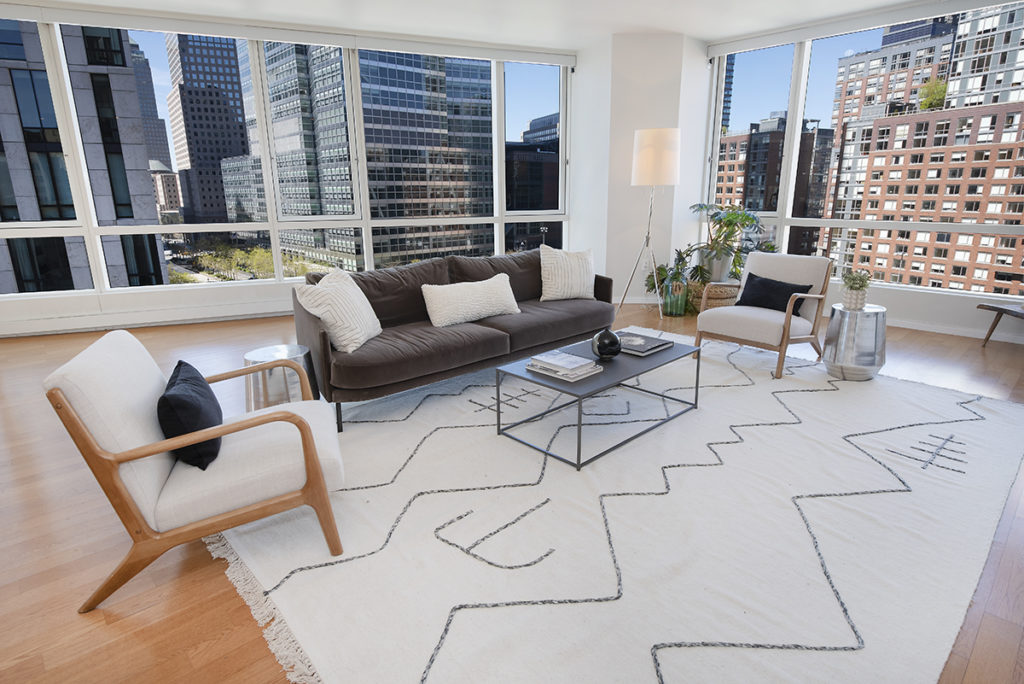
3. SoHo
SoHo ranked just behind Tribeca, with a Q2 2026 median sale price of approximately $3.41 million. (PropertyShark)
Its luxury market is fundamentally about scarcity. Much of SoHo consists of historic cast-iron buildings, and there is very little land available for large-scale new residential development. That means the best apartments — particularly large lofts with high ceilings, oversized windows and authentic architectural character — are extremely difficult to replicate.
SoHo also occupies one of Manhattan’s best locations. Tribeca is immediately south, the West Village is nearby, and some of the world’s best-known luxury retailers and restaurants are within walking distance.
Why it’s expensive: Architectural scarcity, large lofts and one of Manhattan’s most internationally recognizable neighborhoods. For international buyers in particular, SoHo is one of those Manhattan neighborhoods that requires very little explanation.
4. Hudson Square
Hudson Square doesn’t yet have the global name recognition of Tribeca or SoHo, but its luxury residential market has changed dramatically. Located between Tribeca, SoHo and the West Village, Hudson Square benefits from something extraordinarily difficult to create in Manhattan: proximity to three of the city’s most desirable downtown neighborhoods. Recent asking-price data puts the neighborhood around $3.49 million, while Q1 2026 sales data showed a median just under $3 million. (Realtor)
New developments such as 565 Broome SoHo have helped establish a high-end condominium market in an area that historically had much less residential inventory. And the location is compelling. Walk south and you’re in Tribeca. East takes you into SoHo. North and west brings you toward the West Village and Hudson River Park.
Why it’s expensive: New luxury housing combined with an unusually strategic downtown location. Hudson Square is also an interesting example of how Manhattan neighborhoods evolve. Twenty years ago, relatively few international luxury buyers would have specifically requested Hudson Square. Today, it increasingly competes for the same buyer looking at Tribeca and SoHo.
Deal example: Dining area of client’s prewar condo in Greenwich Village. This was a turnkey apartment, fully renovated and we didn’t even have to repaint. Received 4 applications on the first day of showing for rent.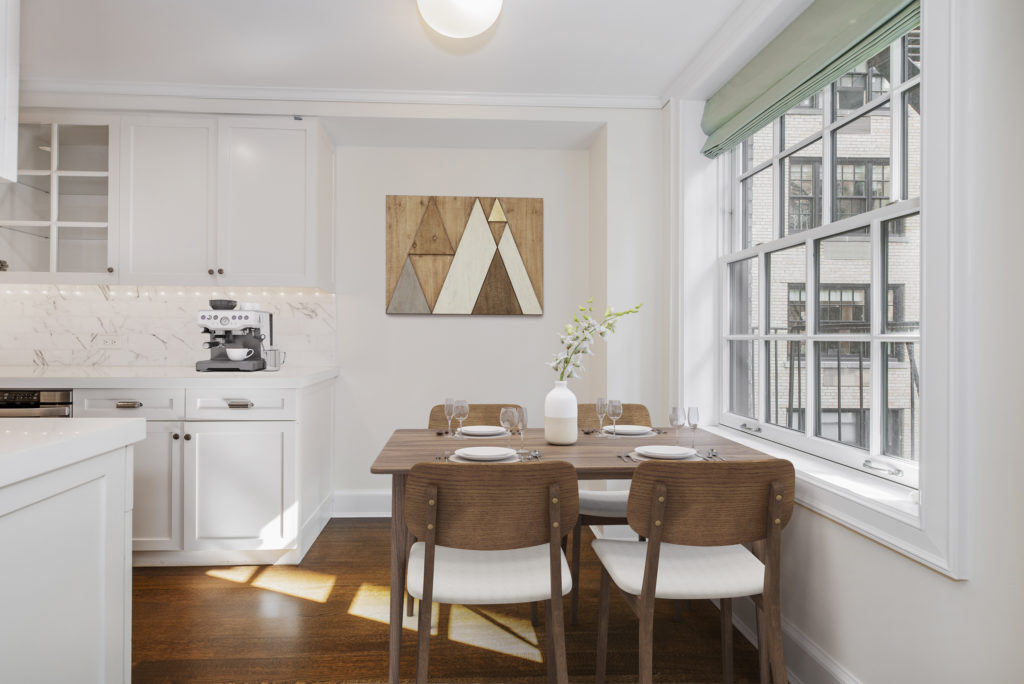
5. West Village
The West Village is harder to rank using median sale price alone. That’s because its housing stock includes everything from small prewar co-ops to multimillion-dollar condominiums and some of Manhattan’s most valuable townhouses.
In Q2 2026, the overall median sale price was approximately $1.3 million, but condominium sales had a median closer to $2.9 million. More importantly, the neighborhood’s median price per square foot reached approximately $2,484, illustrating just how valuable West Village real estate can be despite its lower overall median transaction price. (PropertyShark)
Buildings such as 150 Charles Street demonstrate what happens when modern luxury inventory is introduced into a neighborhood where very little new construction is possible. The result is extreme scarcity. The West Village’s tree-lined streets, historic townhouses, restaurants and proximity to Hudson River Park create something that a developer simply cannot reproduce elsewhere.
Why it’s expensive: Scarcity. There will never be a large supply of new luxury condominiums in the West Village. And in Manhattan real estate, scarcity is often the ultimate luxury.
What Actually Makes a Manhattan Neighborhood Expensive?
Looking at these neighborhoods reveals something important about Manhattan real estate. There are essentially two ways to create an ultra-expensive neighborhood.
The first is to build extremely expensive real estate. That’s largely the Hudson Yards model. New construction, large apartments, spectacular views and luxury amenities create a very high entry price.
The second is much harder: Take an already desirable neighborhood and combine it with extremely limited housing supply. That’s Tribeca, SoHo and the West Village. You can build another luxury tower. You cannot build another West Village. You cannot manufacture another collection of historic SoHo cast-iron lofts. And you cannot easily reproduce Tribeca’s combination of large apartments, historic architecture, waterfront access and established neighborhood life.
That distinction is particularly important for buyers thinking about Manhattan real estate as a long-term store of wealth.
Price Isn’t the Same as Value
The most expensive neighborhood isn’t necessarily the best investment. For a buyer allocating significant capital to Manhattan, I would look beyond today’s median sale price and ask three questions:
How difficult is this housing stock to replicate?
Will wealthy buyers still want to live in this neighborhood 10 or 20 years from now?
How deep is the future buyer pool when I eventually want to sell?
Those questions can matter far more than whether one neighborhood happens to rank first or third in a particular quarter. Manhattan has a finite amount of land. But within Manhattan, the truly scarce asset isn’t simply land. It’s prime residential land in neighborhoods where people with choices consistently want to live.
And that is why Tribeca, SoHo, the West Village and Manhattan’s other premier neighborhoods have been able to command extraordinary premiums — and why the best properties within them remain so difficult to replace.
What We Do
We focus on global investors buying Manhattan condos for portfolio diversification and long term return-on-investment.
1) Identify the right buy based on objectives
2) Manage the buy process
3) Rent out the property
4) Manage tenants
5) Market the property at the eventual sale