
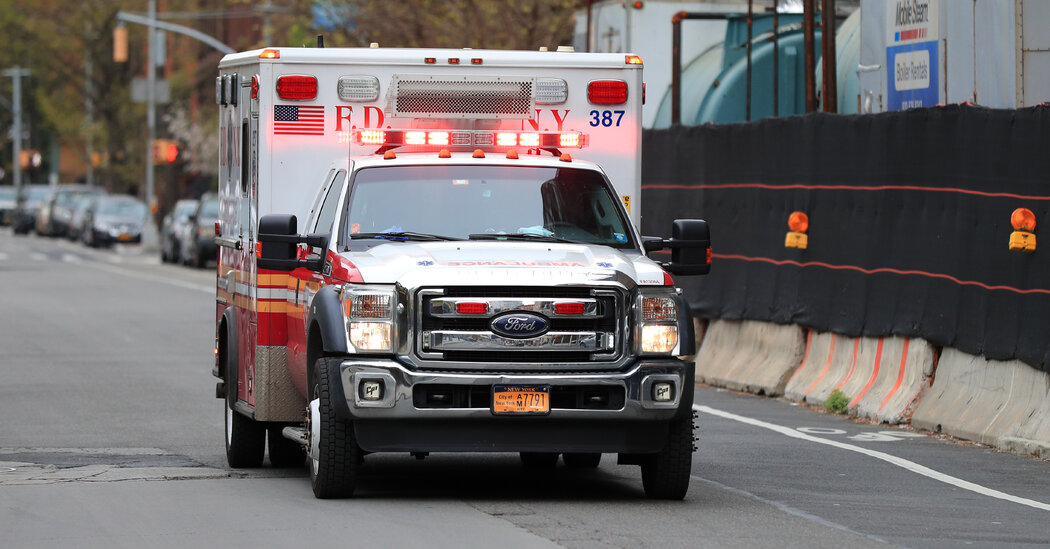
The amount of time it took for ambulances to respond to life-threatening emergencies in New York City rose for a fifth year, according to the city’s annual management report.
It now takes an average of more than 13 minutes for an ambulance to reach someone in a life-threatening emergency after a call to 911, according to the report, which covers the 12 months ending in June. That’s nearly two minutes longer than the figure for the previous year, according to the report. The city reports the statistics based on its fiscal year, which begins in July and ends in June.
Response times for emergency medical services, which fall under the New York Fire Department, began rising in 2021, when the average was 9 minutes 34 seconds, according to the report, a compilation of citywide statistics released annually, covering the fiscal year that ends in June.
“We take this issue extremely seriously and will continue to take steps to improve response times and keep New Yorkers safe,” said Amanda Farinacci Gonzalez, a spokeswoman for the Fire Department. “That includes improving coordination with hospitals, enhancing efficiency in high-volume areas, and increased operational visibility to help return units to service quickly.”
Response times have increased as emergency medical technicians have left the job in high numbers, frustrated by what union officials describe as low pay for grueling work.
Fire officials said they were working to hire more technicians. They also cited traffic, fewer ambulances and a high number of calls as factors in slowing response times. Ambulances were called to 1.6 million medical emergencies in fiscal year 2026, down slightly from 2025 but up from 2022, when there were 1.53 million emergencies.
The average response time to life-threatening emergencies was slightly better when both firefighters and ambulances responded — 11 minutes 55 seconds — but still 94 seconds more than the year before, according to the report. When only fire companies responded, the average time was 10 minutes 41 seconds, an increase of 59 seconds from 2025, according to the report.
Officials noted that the response times included calls that were not initially life-threatening but were later upgraded to that status as emergency officials were on their way.
Calls that were immediately reported as life-threatening — such as a heart attack — had an average response time of 7 minutes 28 seconds.
Emergency medical officials also “performed more than 141,000 lifesaving interventions,” according to the report, which noted that the number of life-threatening injuries to firefighters had also fallen by 10 percent.
Police responses to all crimes in progress went up by 28 seconds, to an average response time of 15 minutes 21 seconds, according to the report. The average response time for “critical” crimes in progress was 9 minutes 38 seconds, 28 seconds longer than in fiscal year 2025.
In a statement, the police said the increase occurred over a period when the department got about 7.5 million 911 calls, 20,000 more than the year before. Those calls rose as the number of major crimes like murders and shootings fell, the police said.