
As New Yorkers and the nation marked the 25th anniversary of the terrorist attacks of Sept. 11, 2001, an Ipsos poll revealed that approximately half of American adults name 9/11 as the number one historic occurrence in their lifetimes while an entire generation representing a third of the current population is too young to have memories of the tragic events that occurred that morning.
While the attacks on Lower Manhattan, the Pentagon, and Flight 93 which crashed in Shanksville, PA, that day are among the most thoroughly documented events in human history, members of Generation Alpha — young American also known as “screenagers” and “iPad Kids” — can learn more from a plethora of material found on Google and for those with notoriously shorter attention spans can turn to feature films and documentaries such as “BOATLIFT – An Untold Story of 9/11 Resilience” narrated by Tom Hanks that depicts the largest maritime evacuation in U.S. history, rescuing half a million people from Lower Manhattan on 9/11. Then there are popular TV series, such as “Rescue Me,” that chronicles the impacts on FDNY firefighters who struggled with survivor’s guilt or “Blue Bloods” detailing the effects on an NYPD family after that traumatic day.
Unlike Tommy Gavin and Frank Reagan, there are real-life experiences of the tens of thousands of people who took part in the recovery effort whose stories have largely gone untold in the years since.
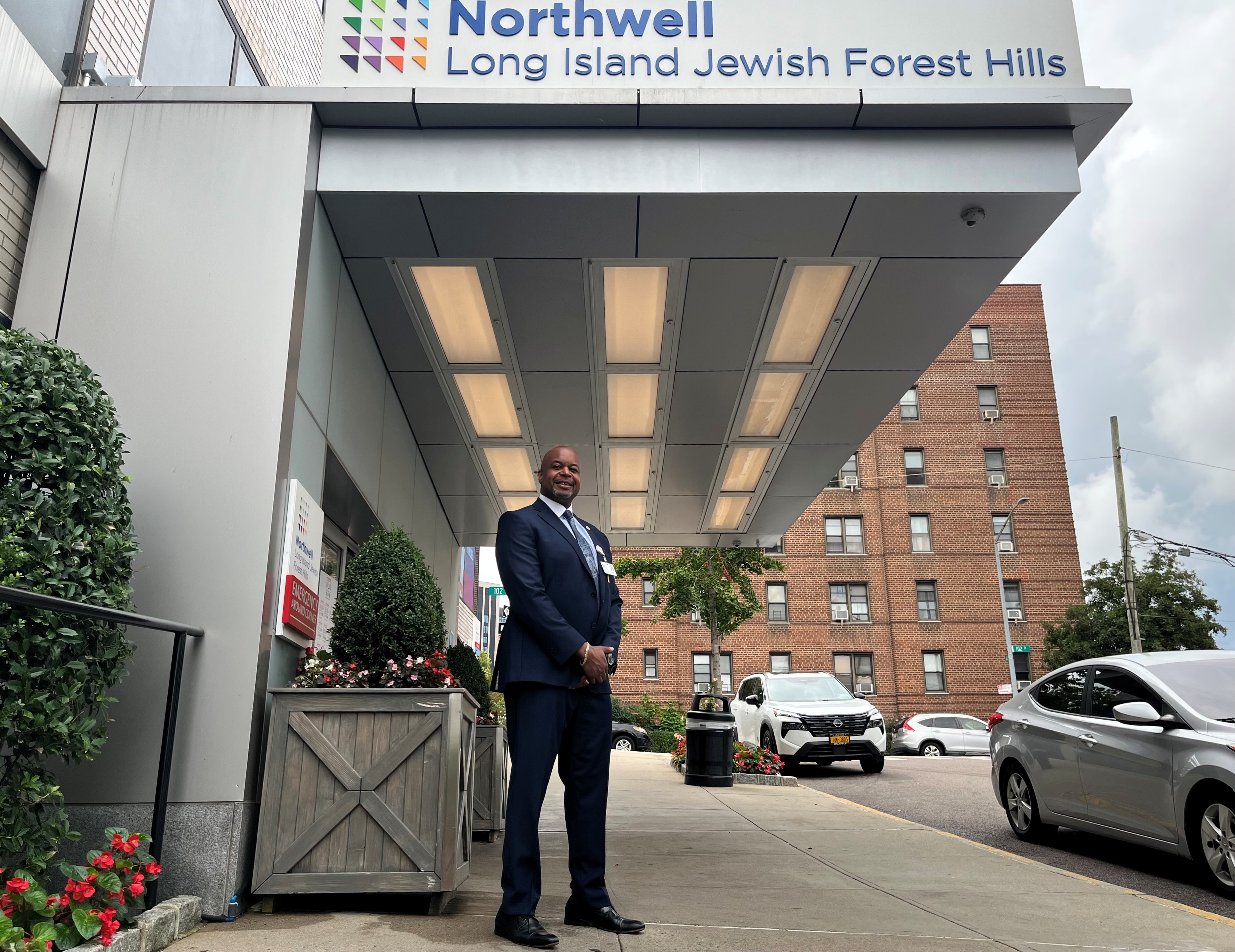 Gaspard was appointed director of securitty at LIJFH in 2024 after serving in the NYPD for nearly three decades.Photo courtesy of Northwell Health
A case in point is Alan Gaspard, the director of security at Long Island Jewish Forest Hills Hospital, who served the city for nearly three decades in the NYPD before retiring as a lieutenant detective commander in 2020. Gaspard was an off-duty 31-year-old detective assigned to the Brooklyn North Narcotics Squad when the hijacked planes crashed into the Twin Towers. While the Laurelton-native currently protects patients, visitors and staff at one of Queens’ busiest hospitals, his memories of the days and weeks that followed the terrorist attacks at the World Trade Center remain vivid.
“We were off that day, and we got called in and changed into uniform, and they sent us into Manhattan because it was still an unstable scene,” Gaspard told QNS. “So, we were at Pier 40 along the Westside Highway for the majority of the day and we could hear these air horns alerting rescuers that they needed to evacuate from Ground Zero when other buildings collapsed.”
His team spent the night of Sept. 11 at Pier 40 until the next day when they were deployed to provide security where the Twin Towers stood.
“I remember when we first got to Ground Zero the next day, I became violently ill,” Gaspard said. “I was amazed by the level of destruction, but I also remember thinking how positive it was during that dark time to have the cooperation of people we didn’t know coming in from all over the world to try to help us here in New York City. I never personally met any of them, but I remember the support coming in.”
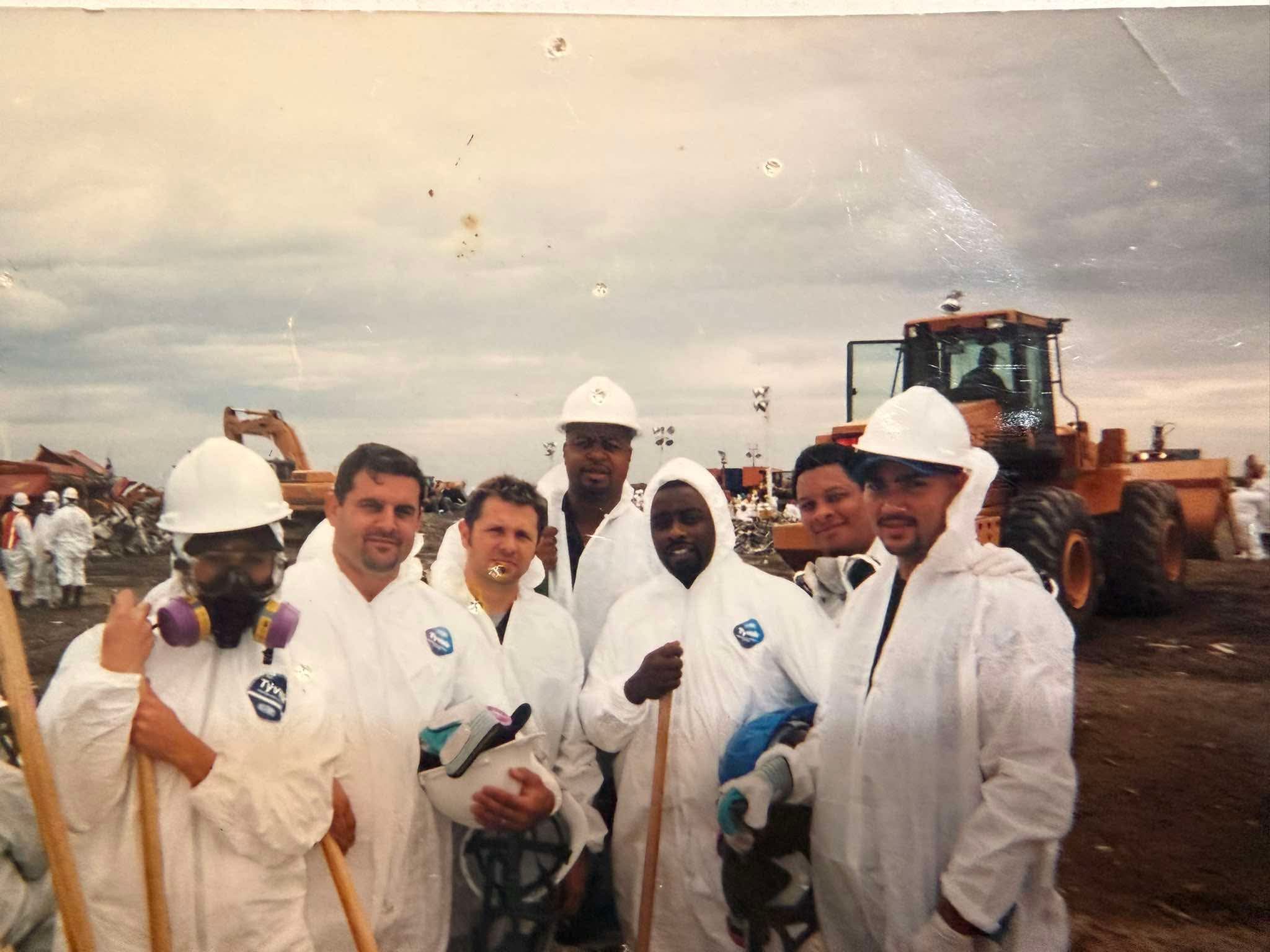 Gaspard with his team at the Fresh Kills landfill on Staten Island.Photo courtesy of Alan Gaspard
By December, Gaspard was assigned to the Fresh Kills landfill on Staten Island where much of the 1.8 million tons of debris had been transported from Ground Zero.
“Dump trucks and Sanitation trucks would bring in loads all day and it was placed on conveyor belts were we sifted through all of the debris and just try to try to retrieve whatever evidence that we could that we could gather, whether it was personal items for the family members or you know items that we could probably retrieve DNA from the victims,” Gaspard recalled. “I never personally found body parts, but there was a member of our team that found a person’s scrotum. Mostly I just found personal items like documents.”
One of the young detectives who served alongside Gaspard later died from illnesses related to the recovery effort.
“He succumbed to cancer not too long after 911. The rest of my team, everybody’s fine,” Gaspard said “I go through the annual exams. They had found some stuff on my lungs, but not anything that prevented me from my activities.”
He continued at the landfill for several more weeks before returning to regular duty.
“We were all detectives, and we had ongoing cases that couldn’t stay idle for too long,” Gaspard said.
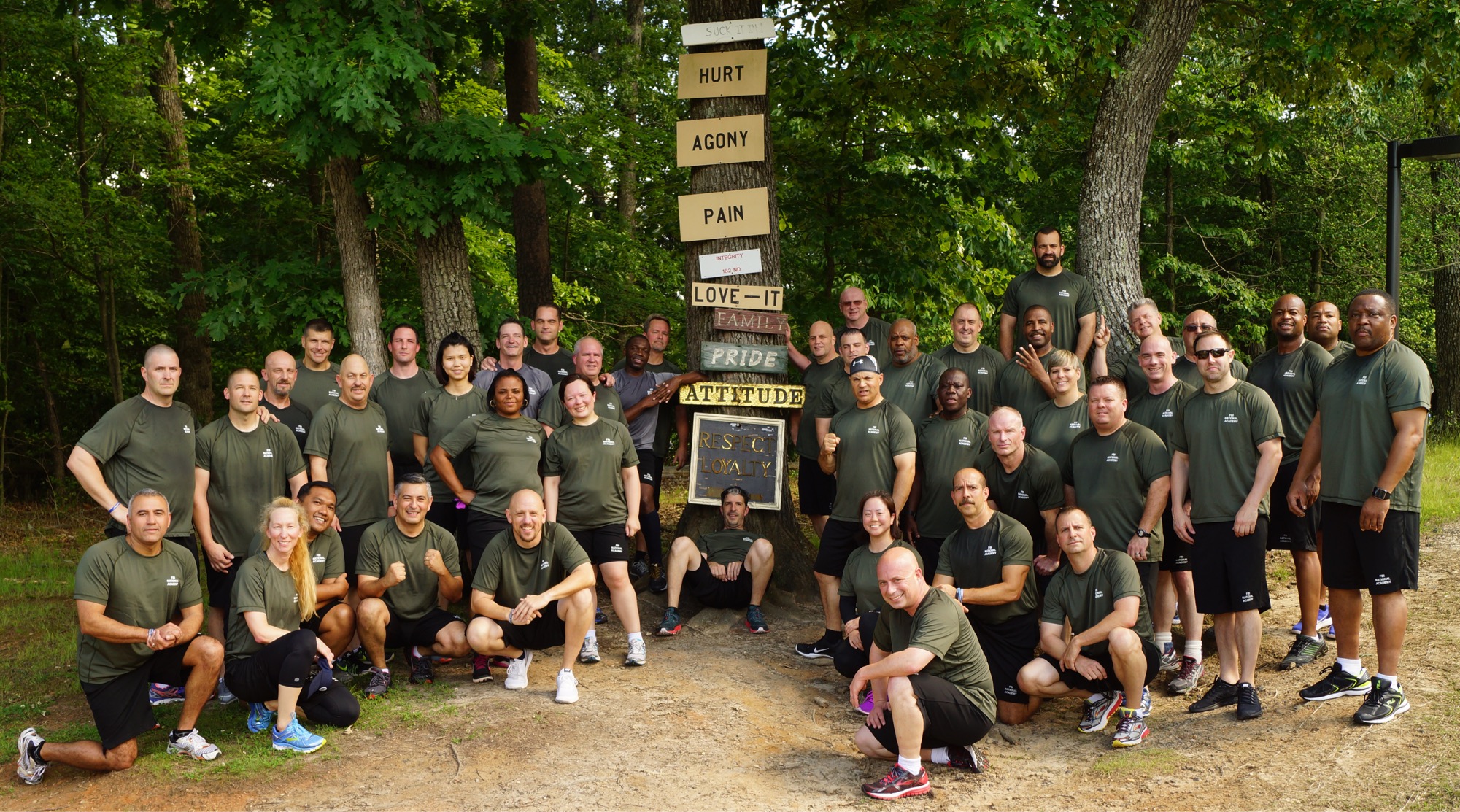 Gaspard joined police executives from across the nation for training at the FBI National Academy in Quantico, VA, in 2017.Photo courtesy of Alan Gaspard
These days, Gaspard says many of the skills he developed as an NYPD detective continue to shape his work leading security at LIJ Forest Hills Hospital. Members of his security team have nicknamed him the “Patient Whisperer” for the way responds to emergencies, de-escalating tense situations, or helping patients experiencing mental health crises. Gaspard believes compassion and communication remain his most valuable tools.
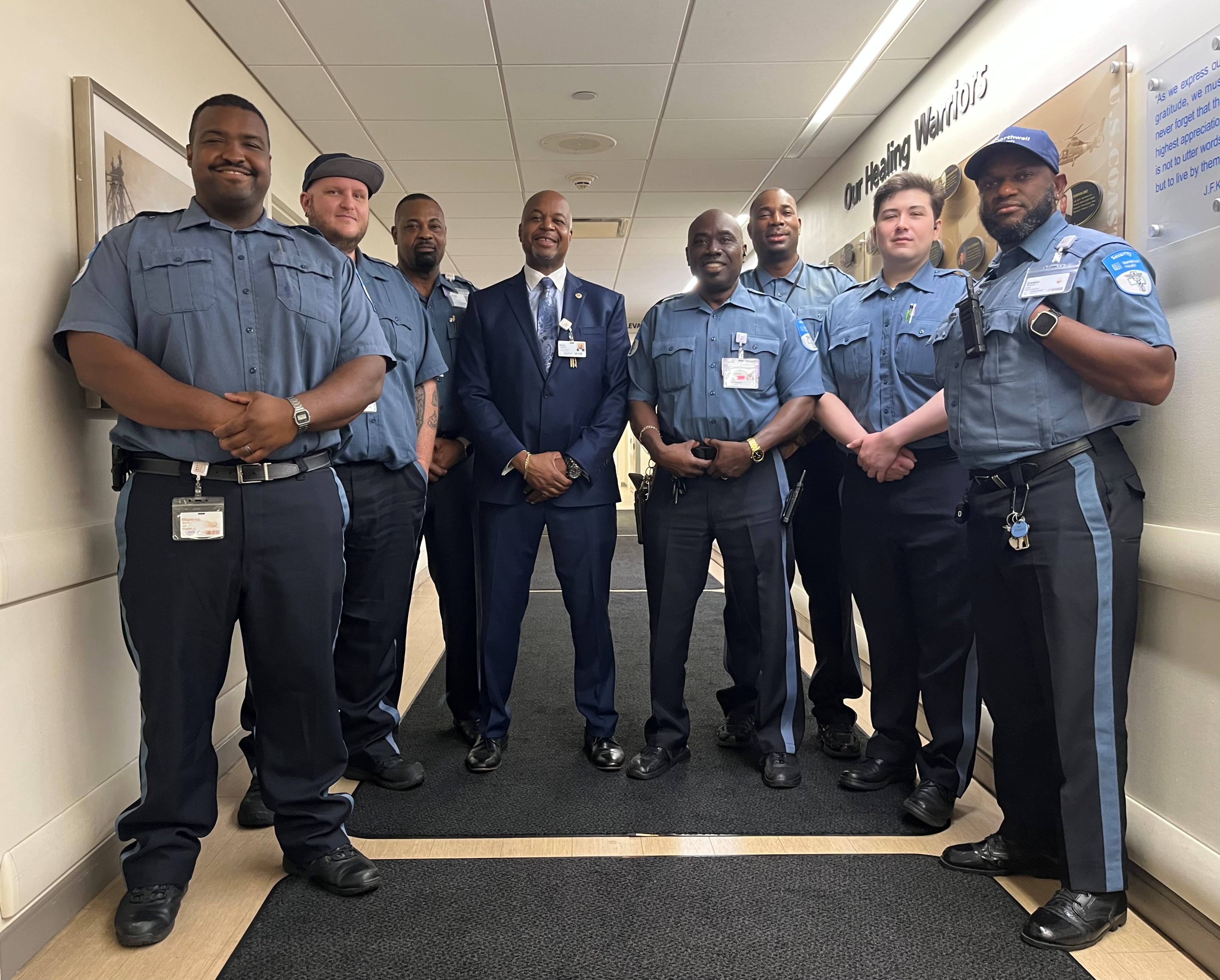 Gaspard’s security team at Long Island Jewish Forest Hills Hospital calls him the “Patient Whisperer” for the way he handles the challenges of the job.Photo courtesy of Northwell Health
“I try to respond to every incident where the staff is requesting my guards, and I make it a point to talk to the patients that they’re having a problem with, and a lot of times the way that I talk to them suits them and gets them to comply,” Gaspard said. “It doesn’t work with everybody, but you know, I make it a point to lead by example, so my guards could see and then mimic my behavior, just trying to calm the situation, so the patient can get the treatment that they want, and the staff can be safe at the same time.”
While his current home is in Nassau County, he loves working in Forest Hills, near his parent’s home in Laurelton.
“New York City is a microcosm of the world, and especially here in Queens, because it’s like the United Nations of the world, because we have so many different communities, different cultures, so it’s a wonderful place,” Gaspard said. “I did 27 years in the police department and it’s a wonderful job. Being a police officer, I learned how to engage with different people, different communities, different cultures, all while developing a profound respect for the common man.”