
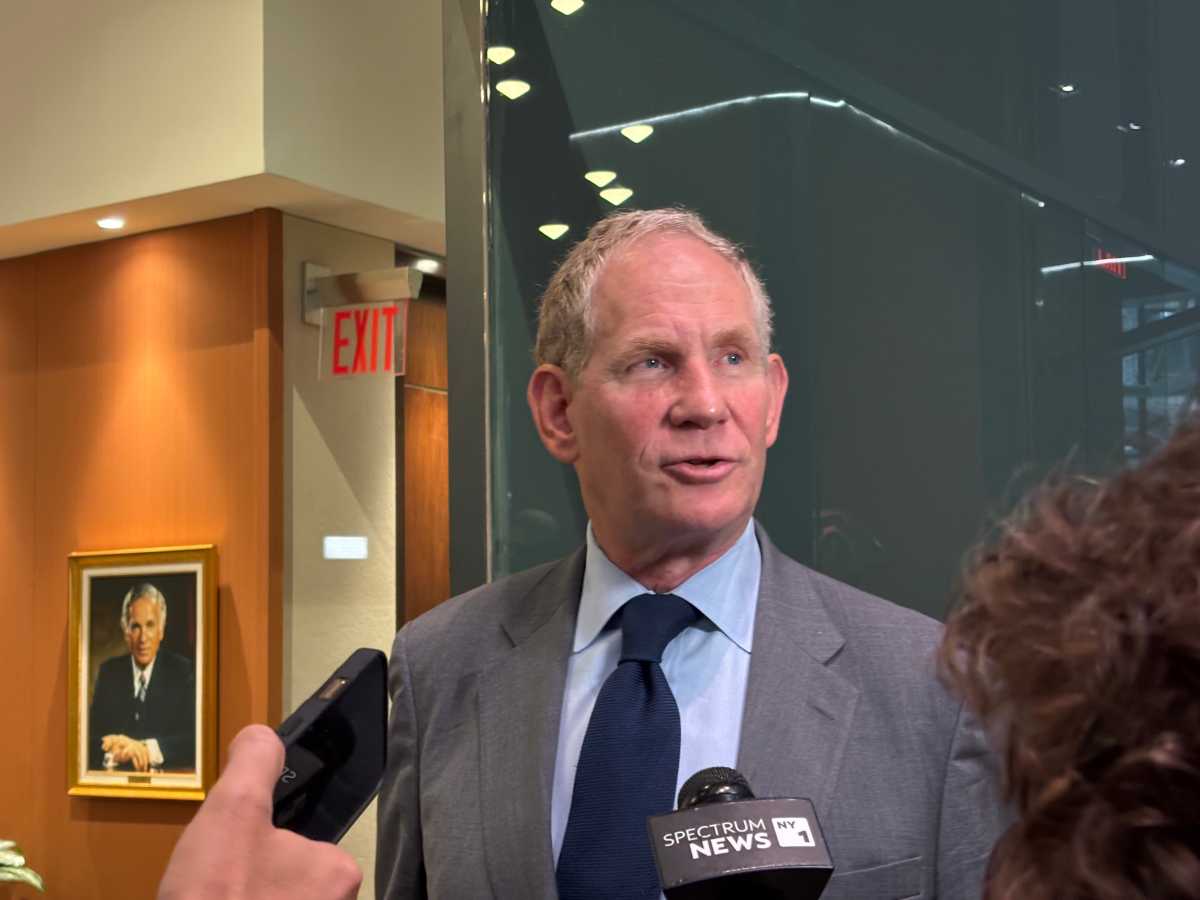
In the MTA’s contract negotiations with the union representing nearly 40,000 New York City Transit workers — Transport Workers Union (TWU) Local 100 — the authority is pushing to ensure that some workers show up to the job more often while also increasing all health care contributions, agency Chair and CEO Janno Lieber said on Tuesday.
The MTA is pursuing both changes possibly in exchange for the wage increases that Local 100 is seeking, Lieber said during a Sept. 22 Citizens Budget Commission breakfast event in Midtown Manhattan. He said bargaining a new contract presents the only opportunity for the MTA to eliminate what he called “kooky” work rules that Local 100 secured in the past and make other adjustments it finds necessary.
“What we always come to the table with is, in order to justify the wage increases, we ask for work rule and other improvements,” Lieber said. “One of the challenges is … [under] our collective bargaining system, for better or worse, once a work rule is in the book, as they say, you can’t get it out except by agreement, no matter how kooky it is. And that is a challenge.”
One of the work rule changes that the MTA wants stems from what Lieber said is workers’ ability to take unpaid sick days after three days of work, while still being eligible for overtime pay to make up the lost wages.
The transit boss contended that the system has given rise to an “availability” issue, in which roughly 1,400 NYC Transit workers are on the job less than half the days they are supposed to work. He said that group of employees is working 160 days or less out of the 260 workdays in a year.
“One of the things that we’re pursuing in these negotiations is a range of different things to increase availability,” Lieber said. “Without getting into every detail, we’ve got to make sure that when you hire people, that they’re showing up. So you don’t need to hire more and more people and have more and more overtime.”
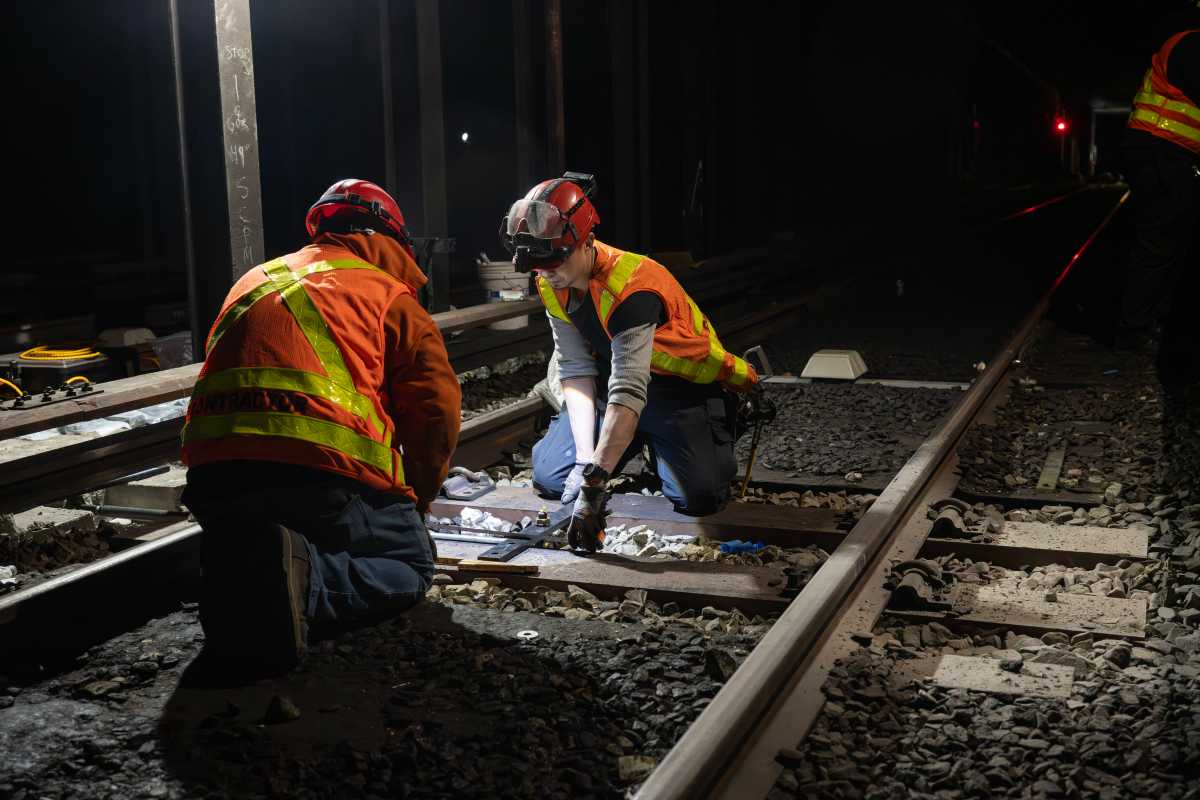 MTA workers repairing tracks on the Queens Boulevard subway line in December 2025.Trent Reeves/MTA
Lieber, however, did not go into specifics about how the MTA is trying to address the issue he identified in the negotiations.
Increasing workers’ contributions for health insurance payments is another of the MTA’s priorities in bargaining, Lieber said. The change is aimed at rebalancing MTA employees’ share of health care cost payments, he said — with workers now paying 5% of the sum, versus the 11% they shelled out after the 2005 labor deal two decades ago.
“We need to address the healthcare imbalance between management and labor,” Lieber said. “Healthcare and availability are the two issues that we’re really pushing in these negotiations. We’d like to get a deal done, but those are important.”
Transit union’s response? Look elsewhere to cut costs
In response to Lieber’s remarks, Local 100 President John Chiarello contended the MTA is flush with cash and should look elsewhere than his members for cutting costs.
“There is an unprecedented amount of money flowing into the MTA’s budget and the state budget from casino licenses and congestion pricing, and the agency is facing fewer financial obligations because of the pension payment restructuring,” Chiarello said in a statement to amNewYork.
“We took these jobs for the healthcare and benefits,” he added. “Why is it that Janno’s looking to us for the money? Why is he looking to squeeze the hardworking men and women of transit? Squeeze the contractors and hordes of consultants that Janno puts so much faith in to do nothing. They don’t move New York. Our members do. But we’re not going to bargain a contract in the press. Bargaining will continue at the table.”
The chair’s comments come over four months after TWU Local 100’s most recent contract with the MTA expired in mid-May.
During that time, Local 100 leaders have publicly bashed the MTA’s offers around wage increases, benefits, and work-rule changes. In early July, Chiarello decried the agency’s pitch of 2% pay raises and that transit workers make higher health care contributions, among other proposed tweaks, as “unacceptable.”
Meanwhile, at the time, MTA spokesperson Tim Minton maintained that negotiations had been “routine” and productive.
It also remains unclear how a labor deal struck between the MTA and five Long Island Rail Road unions, representing roughly half of the system’s workforce, to end the group’s three-day work stoppage earlier this year, is affecting the former’s negotiations with Local 100.
As of now, there has been no indication of a strike threat from TWU Local 100. Under the state’s Taylor Law, the union’s MTA workers are prohibited from walking off the job, though that has not thwarted past job actions; the last transit strike took place over two days in December 2005, and resulted in a $1 million fine for the union.