
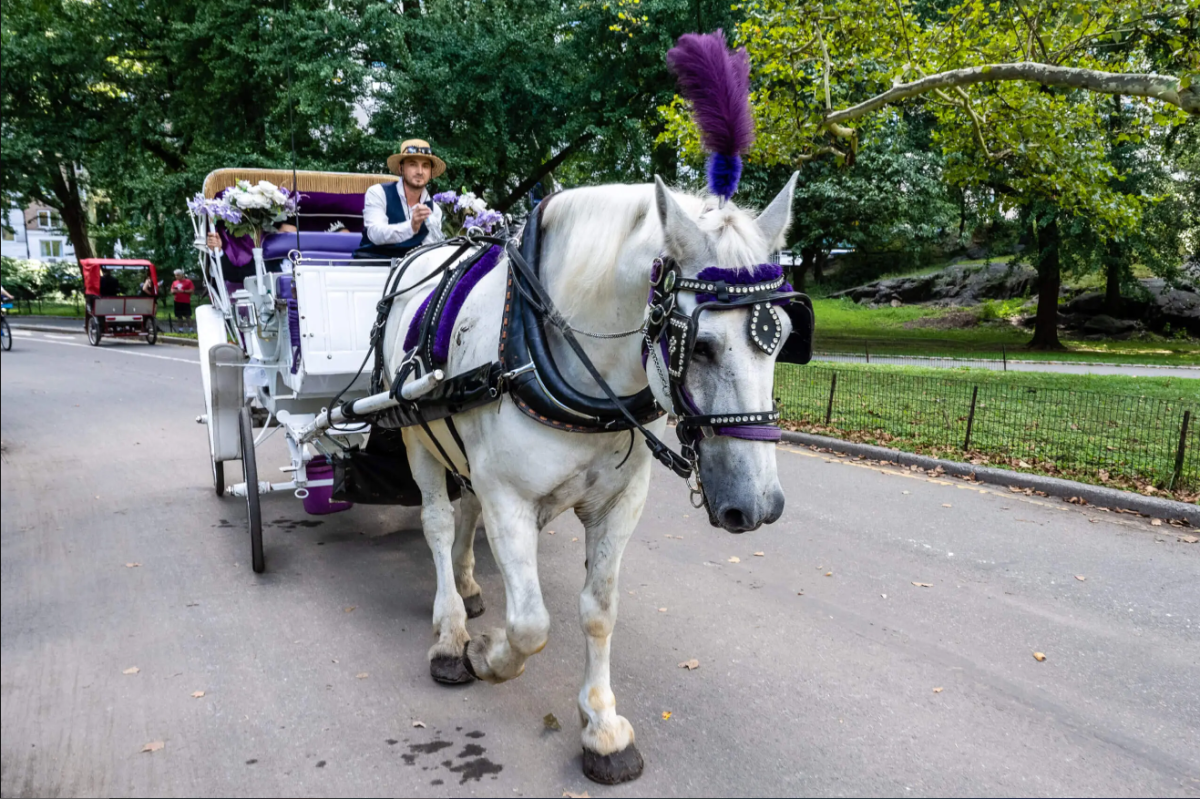
The New York City Bar Association continued its decades-long campaign against New York City’s horse-drawn carriages this week, urging the City Council to quickly pass its latest piece of pending legislation to ban them and relieve the equines of their “dangerous and inhumane” job pulling people around Central Park.
It seems its advocacy will be well-received: A City Council spokesperson told amNewYork the legislative body is “prepared to pass the bill” — named Romanch’s Law after teen tourist Romanch Mahajan who died after being thrown from a carriage when a horse spooked this June — “at any time.” The Council held a July hearing on the bill where Mahajan’s family and animal advocates provided emotional testimony in support of banning the equine cabs and is just waiting on the Mayor’s Office to finish its environmental review of the bill, a typical procedural step, before bringing it to a vote.
The spokesperson said the Council expects to vote to outlaw the carriages in October.
The City Bar emphasized it would like to see the carriages banned “expeditiously,” before more injuries — and legal actions against the city — occur. The bar noted that, while waiting for the Council to take action on the bill, the city saw “yet another incident” of danger created by the carriages when carriage horse Snowman collapsed on Aug. 29.
“The dangers caused by horse-drawn carriages are no longer open for discussion,” the City Bar’s Animal Law Committee said in a Monday statement. “Legal cases, as well as numerous witnesses at the recent hearing, have established that the dense city environment is inappropriate for horses; that there is routine failure to comply with regulations; that existing regulations are inadequate; and that existing requirements are not adequately enforced.”
Romanch’s family has sued the city for $105 million over their son’s death, alleging negligence and a failure to address safety issues by the city. Earlier this week, owners of carriage horse Deniz, who collapsed and died after allegedly eating a poisonous plant in Central Park, have threatened to sue the city for negligence if the Central Park Conservancy doesn’t ensure the plant and other harmful ones like it are removed.
Since 1982, roughly 40 carriage horses have died and dozens more have collapsed or become injured on the job, the Manhattan Borough President’s Office reports. Dozens of people, both passengers, bystanders, and handlers, have also been injured as a result of horses collapsing or bolting because they were scared by traffic or other city noise.
Romanch’s Law has more public and political will behind it than any other recent push to ban the carriages. It’s gained the support of over half of the city’s council members, including Council Speaker Julie Menin, as well as Mayor Zohran Mamdani, who has said he supports the “spirit” of the bill though he’d like to see it include more support for the carriage workers who’d be out of a job.
The proposed ban — which would go into effect June 1, 2028 — has drawn opposition from some carriage drivers and the Transport Workers Union that represents them, who said banning the carriages would “strip blue-collar workers of their jobs and offers nothing in return” when testifying at an emotional July hearing on the bill. A representative for Council Member Chris Marte, who introduced the bill, told amNewYork the Council is working on language to expand protections for workers.
Previously introduced bills to ban the horse carriages have proposed to replace them with a “horseless electric carriages program,” something the City Bar has expressed support for in the past when that was part of the proposed Council legislation.
The City Bar has for years staunchly opposed union proposals to simply add additional regulations aimed at improving safety to the carriage industry, saying both that nothing could adequately prevent horses and humans from the unexpected danger from equines bolting and injuring people acting irrationally in fear and that existing safety standards aren’t properly followed – and haven’t been for years – meaning it’s unlikely that adding additional measures would prevent horses from collapsing from the work or hurting people.
“It is apparent that the carriage horse industry continues to cause unnecessary danger to both the horses and the public,” the City Bar said. “Carriage horse operations should be banned here before more tragedies occur.”
The current language of the proposed bill would mandate that the horses not be sold for slaughter or to work in another city’s carriage industry. A spokesperson for Marte’s office said the Council is also working on strengthening language to further protect the horses that would no longer be pulling carriages.