
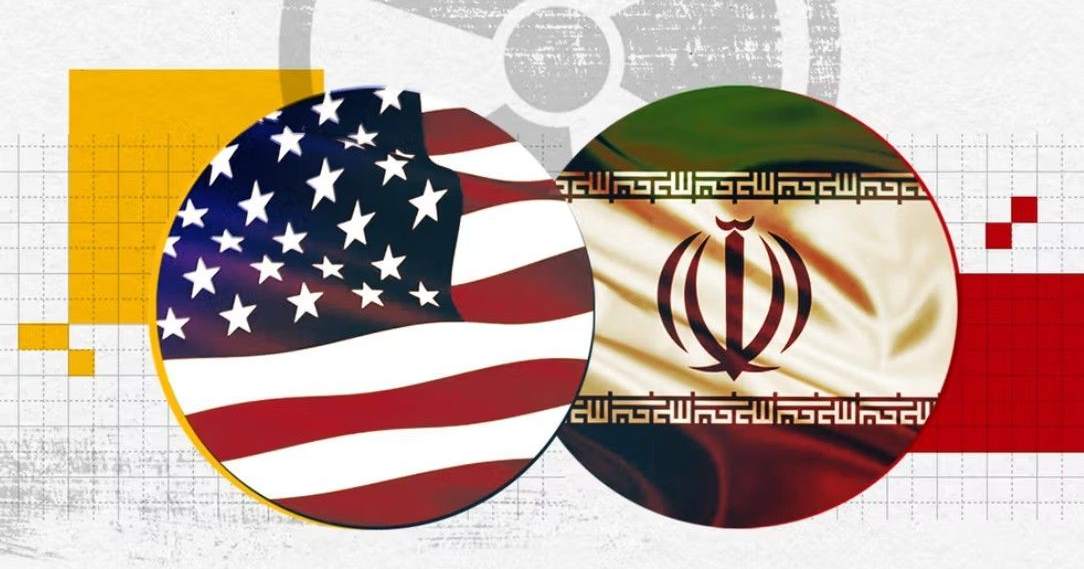
Trump said Steve Witkoff and Jared Kushner held a “very good” three-hour meeting with an Iranian delegation and predicted that “a settlement is going to be reached.”
Iranian state television later confirmed that Foreign Minister Abbas Araghchi met Witkoff “at the insistence of the American side” and conveyed Tehran’s conditions.
The diplomatic activity continued into Trump’s meeting with Persian Gulf Arab and other regional leaders, where he said Witkoff and Jared Kushner had also held a “very productive” meeting with mediators working on Iran.
“I think there’s a lot of momentum for them to make a deal,” Trump said, adding that his envoys had respect on both sides and that he believed they would “get this thing ended.”
The contacts marked the clearest movement toward direct negotiations in New York after days of proposals passed through Qatar and other regional mediators. But both Washington and Tehran continued to accompany the diplomacy with military threats, leaving Hormuz — where Iran has offered to ease restrictions in return for US concessions — at the heart of both the talks and the confrontation.
Hormuz moves to center of negotiations
In the meeting with Witkoff, Araghchi presented Iran’s conditions for reopening the Strait of Hormuz, including lifting the US naval blockade, releasing frozen Iranian assets and ending the war across all “resistance” fronts, according to state media.
A senior Iranian official separately told Reuters that Tehran could reopen the strait within seven days if Washington eased military pressure and lifted the blockade on Iranian ports. The proposal was conveyed to the United States through mediators last week, the official said, adding that Iran’s delegation in New York had authority to pursue renewed diplomacy.
Iranian officials also made clear that Tehran still sees the waterway as leverage. Parliament deputy speaker Ali Nikzad said negotiations were now tied to Hormuz and that Iran would “not back down” over the strait.
A parliamentary committee, meanwhile, advanced provisions allowing authorities to seize 20% of the cargo or its value from ships found to have violated Iranian passage rules.
Regional push gathers pace
Qatar said Tuesday it was working with Pakistan to open a path for dialogue and facilitate an agreement between Tehran and Washington, including a possible short-term deal that could allow wider negotiations to resume.
Araghchi met Qatari Prime Minister and Foreign Minister Mohammed bin Abdulrahman Al Thani in New York on Tuesday.
Saudi Arabia, Egypt, Pakistan and Turkey also called for dialogue and diplomacy and backed implementation of the Islamabad memorandum between Iran and the United States. Arab mediators were separately pressing for a high-level US-Iran meeting during the General Assembly.
Trump’s meeting with Persian Gulf and other regional leaders later Tuesday put those efforts directly before the US president. He said Washington was “hearing from everybody” and compared the gathering with a similar meeting last year that preceded the Gaza agreement.
Threats remain around diplomacy
Neither side, however, eased its military rhetoric. Trump used his UN address to urge other countries to join Washington’s campaign to isolate Iran and later warned Tehran to act “fast” before it was too late.
During his meeting with GCC leaders, he also threatened another strike on Pickaxe Mountain if the United States detected renewed activity there.
“We may have to blow up another one, Pickaxe Mountain. We’re not seeing a lot of activity there, but if we do, we’ll blow it up immediately,” he said.
IRGC spokesperson Hossein Mohebbi said the force did not reject diplomacy but viewed negotiations as a way to impose Iran’s conditions. Iran’s top military commands separately warned of “more severe, crushing and unpredictable” strikes if the United States or Israel attacked again.
Trump nevertheless suggested the timetable for a deal could be shortening. After saying at the UN that an agreement might come after the US midterm elections, he told regional leaders it could happen “maybe before.”
Prospects of Pezeshkian-Trump meeting
President Masoud Pezeshkian is in New York for the General Assembly, but no meeting with Trump has been announced yet. The possibility has already drawn criticism from hardline figures in Iran who describe Trump as the “killer” of Iran’s late leader.
Questions over what Pezeshkian could deliver in such a meeting have also been raised outside Iran. Exiled crown prince Reza Pahlavi cast doubt on whether talks involving Pezeshkian and Trump could produce meaningful change, telling Fox News that Iran is ultimately controlled by the Revolutionary Guards.
“I don’t expect anything otherwise coming out, especially [from] someone like Pezeshkian, because when the country is de facto run by the IRGC, anybody with the slightest moderate tone would be internally accused of betraying the system,” Pahlavi said.