
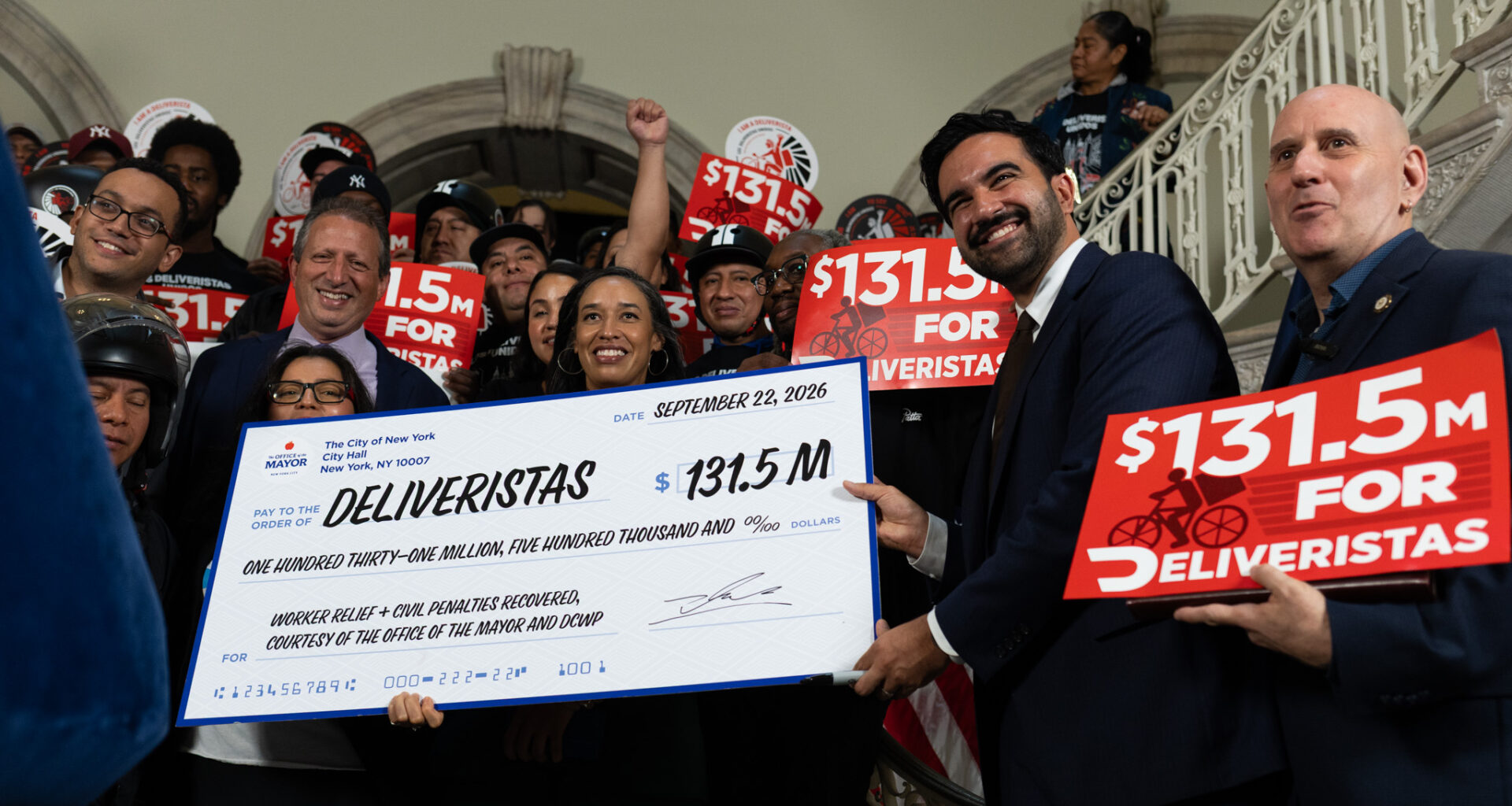
Delivery giant DoorDash agreed to pay a $131.5 million settlement after New York’s worker and consumer protection agency found the company had unlawfully withheld wages from thousands of delivery workers who were paid late or not at all.
A majority of the settlement funds will go directly to the approximately 260,000 deliveristas who were stiffed between 2022 and 2026 in payments slated to begin this fall, according to the office of Mayor Zohran Mamdani. In all, more than $115 million will go directly to workers, and the company agreed to pay approximately $16 million in penalties.
The settlement is notable not only for its scale — it is the largest of its kind involving delivery workers in the United States — but because of the company’s explicit admission that it did not comply with the city’s pay rules.
“We screwed up, and our mistakes meant some NYC Dashers were underpaid or paid late,” the company said in a statement posted to its website on Tuesday. “We’re making things right by paying every Dasher what they’re owed and fixing what caused this.”
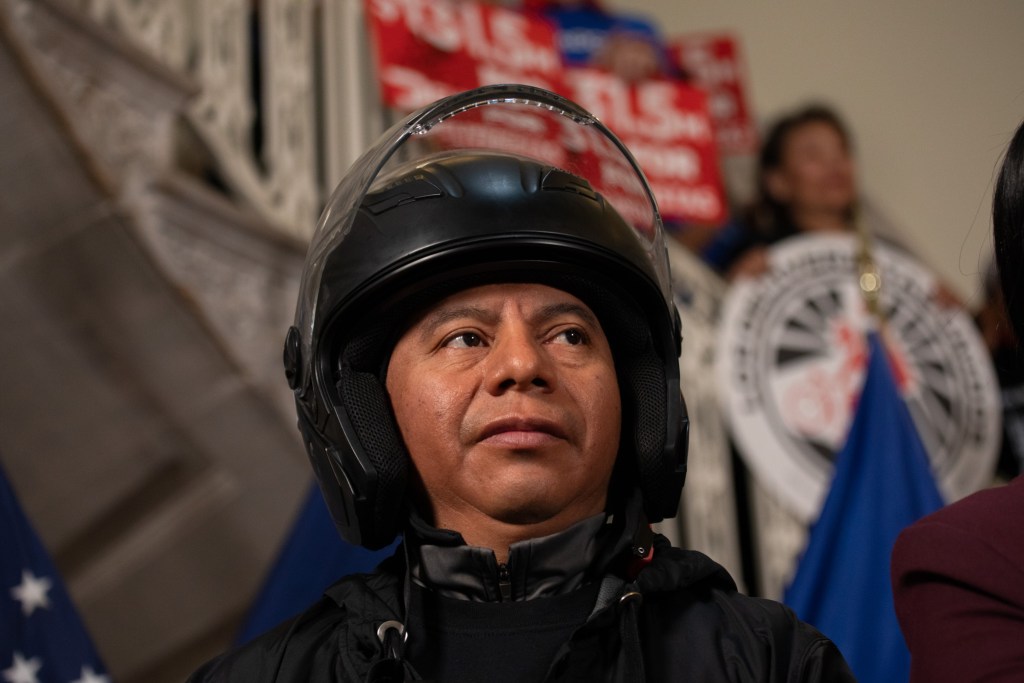 Deliverista Rosendo Tacam prepares to speak at City Hall about a $131 million settlement with DoorDash over wage theft, Sept. 22, 2026. Credit: Ben Fractenberg/The City Reporter
The agreement also settles a dispute over how to calculate so-called “on-call time” payments, essentially the interim time in between deliveries when workers are online waiting for an order to come in. DoorDash agreed to use the city’s formula going forward.
The Mamdani administration also said it is developing software that would allow workers to directly submit complaints to the city and will require companies to self-report their data so that the city’s worker protection agency can find real-time discrepancies in pay.
Mamdani told The City Reporter these interventions were necessary in a fractured workforce spanning tens of thousands of workers who toil not on factory floors but “in the streets in our city.”
“We are always looking at the question of how we can best protect the dignity of these workers and also recognize the worth and value of their labor,” he said.
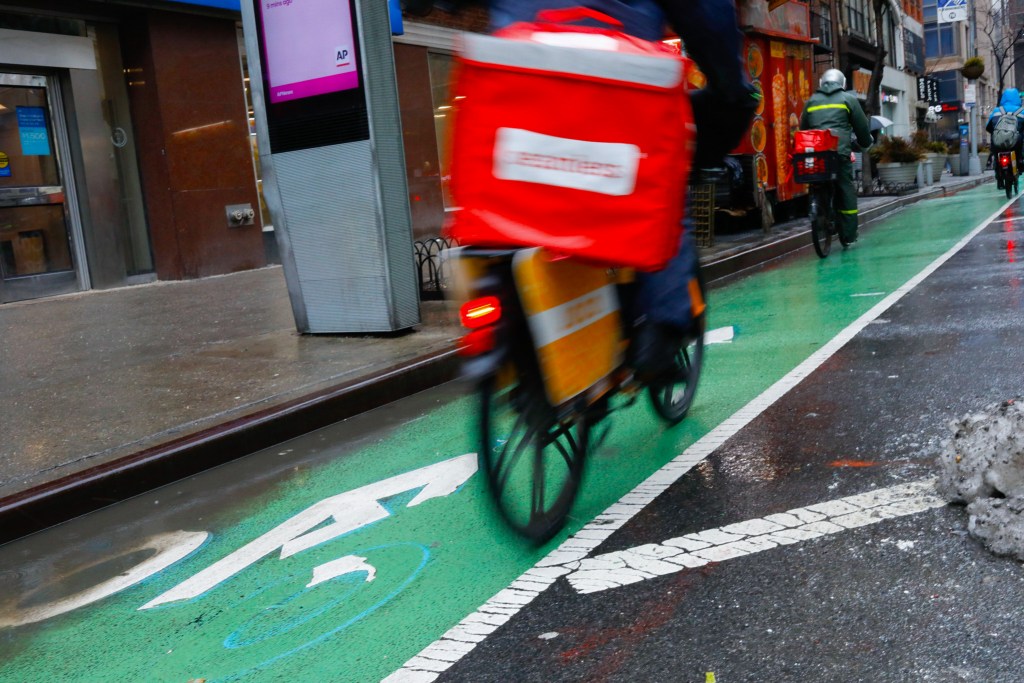 Delivery workers ride in a Chelsea, Manhattan, bike lane, March 3, 2026. Credit: Alex Krales/THE CITY
The city Department of Consumer and Worker Protection began investigating DoorDash in the summer of 2023, after several workers came forward with allegations that their accounts were deactivated without cause — essentially firing them — and that the company illegally withheld their final payments.
The city then expanded its probe and found DoorDash had failed to pay thousands of workers on time or at all, and other failures of a landmark minimum pay rate law for the industry that went into effect in 2023.
Some workers will receive as much as $5,000, according to Mamdani.
“City Hall will not sit idly by while a mega-corporation that made nearly a billion dollars in profits last year rips off the working people who keep this city moving,” the mayor said at a press conference at the City Hall rotunda.
‘I Just Want My Job Back’
Among the workers who filed the initial complaint is Rosendo Tacam, a delivery worker from East Elmhurst, Queens, whose DoorDash account was cancelled in April 2023 after, he told The City Reporter at the time, a customer left a negative review on a grocery order. He said the company also withheld approximately $450 from what should have been his final payment.
Tacam told The City Reporter on Monday that he has been unable to access his account ever since. He is a longtime member of Los Deliveristas Unidos, the leading group that has pushed for legal reforms and delivery workers rights since its creation during the pandemic.
“I just want my job and my money back,” he said in Spanish, adding that he was grateful that his organization and the mayor had “secured justice for people like me.”
On Tuesday at City Hall, Tacam said that he is entitled to $2,000 in back pay and will use that money to insure his bike and purchase new equipment ahead of the busy winter season. He was flanked by Ligia Guallpa, the head of the Deliveristas’ parent organization, Mamdani, DCWP Commissioner Sam Levine, and other officials.
The agreement dwarfs a $39 million settlement reached by the city and Starbucks in the waning days of the administration of then-mayor Eric Adams. When it was announced nine months ago, it was the largest settlement of its kind in city history.
MORE: Follow The City Reporter’s Coverage of NYC’s Deliveristas
It is not the first time DoorDash has agreed to refund its New York City drivers: the company has negotiated an untold number of private settlements directly with the Deliveristas and its parent organization, the Workers Justice Project, over the years.
The company said that its New York City “dashers” have collectively earned more than $1 billion since 2023 and that the missed or late payments amounted to “less than 1%” of all earnings during that time. The missed payments were the result, the company said in a lengthy online statement, of a confluence of errors including technical difficulties.
In New York City, all app-based food delivery companies are required to pay workers at least once a week under a law that has been in place since 2022. That law was inspired by The City Reporter’s stories exposing delivery workers’ struggles on the job, including alleged wage theft and withheld tips. Companies are now also required to compensate workers for the interim time in between deliveries. DoorDash and other industry leaders sued the city to try to quash those laws.
In January, UberEats was among three companies that agreed to pay a combined $5 million to 10,000 workers to settle an investigation into violations of the same wage laws.
The pay standards in effect today are the fruit of years of advocacy by Los Deliveristas Unidos, a group of delivery workers that began organizing on WhatsApp during the pandemic for better pay and working conditions. App-based delivery exploded in demand during the pandemic lockdown as restaurants shut their doors to in-person customers. Immigrant workers, cut out from federal assistance, flooded to the industry to sustain their families: the apps were the only ones hiring.
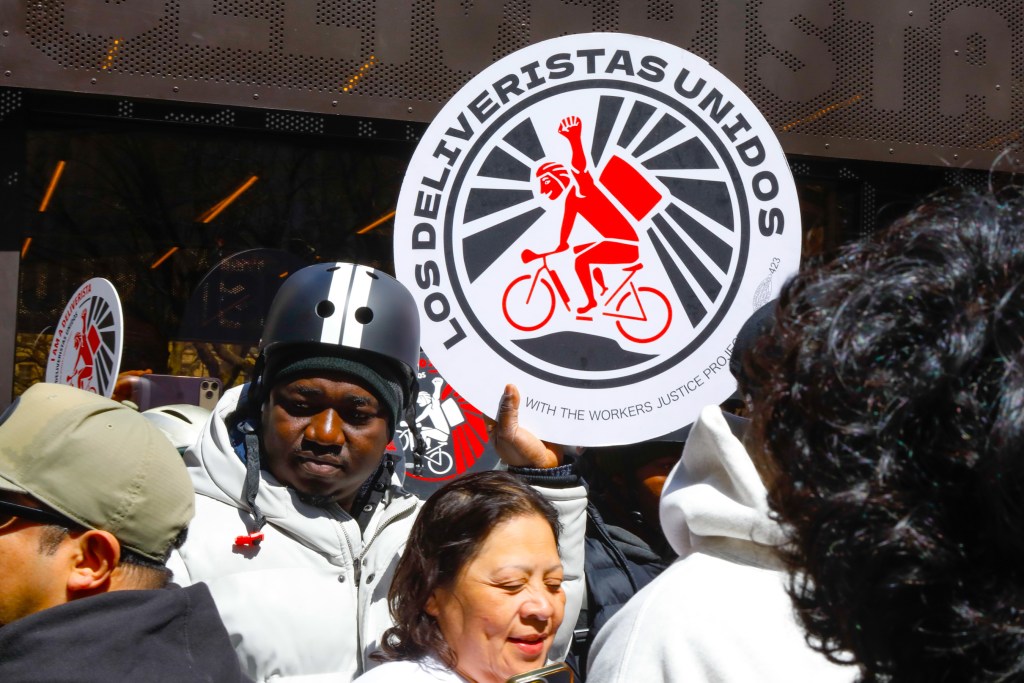 Delivery workers celebrate the opening of a new Deliverista Hub at City Hall Park, April 7, 2026. Credit: Alex Krales/THE CITY
But workers quickly found that the industry’s promise of enterprise and flexibility were not all they cracked up to be. In a 2020 exposé by The City Reporter, they detailed accounts of unpaid tips, injuries and assaults, and other indignities including restaurants refusing to let them use their bathrooms. The leading companies — DoorDash, Grubhub and Uber — turned a blind eye, they said, because the companies claimed its delivery workers were not their employees but independent contractors.
Former city comptroller Brad Lander, who as a Council member introduced the bill establishing minimum pay requirements, told The City Reporter that he will tackle the issue of classification upon his expected entry to Congress in January. (Lander, the Democratic nominee, is heavily favored to win a race to represent lower Manhattan and parts of Brooklyn.)
DoorDash held about a quarter of the app-based delivery market in New York City as of 2022, when DCWP published a wide-ranging study of the industry. The company went public in Dec. 2020 at a $30 billion valuation; its stock rose to $194.60 a share on Tuesday afternoon after the settlement was announced.
Tuesday’s settlement builds on a separate announcement last week by the city’s worker protection department establishing a new research and analytics division to track worker complaints and industry data in real-time.
Under the settlement, DoorDash agreed to submit detailed monthly data reports for three years disclosing their compliance with laws governing minimum pay, maximum trip distances, pay and trip transparency and more.
Related