
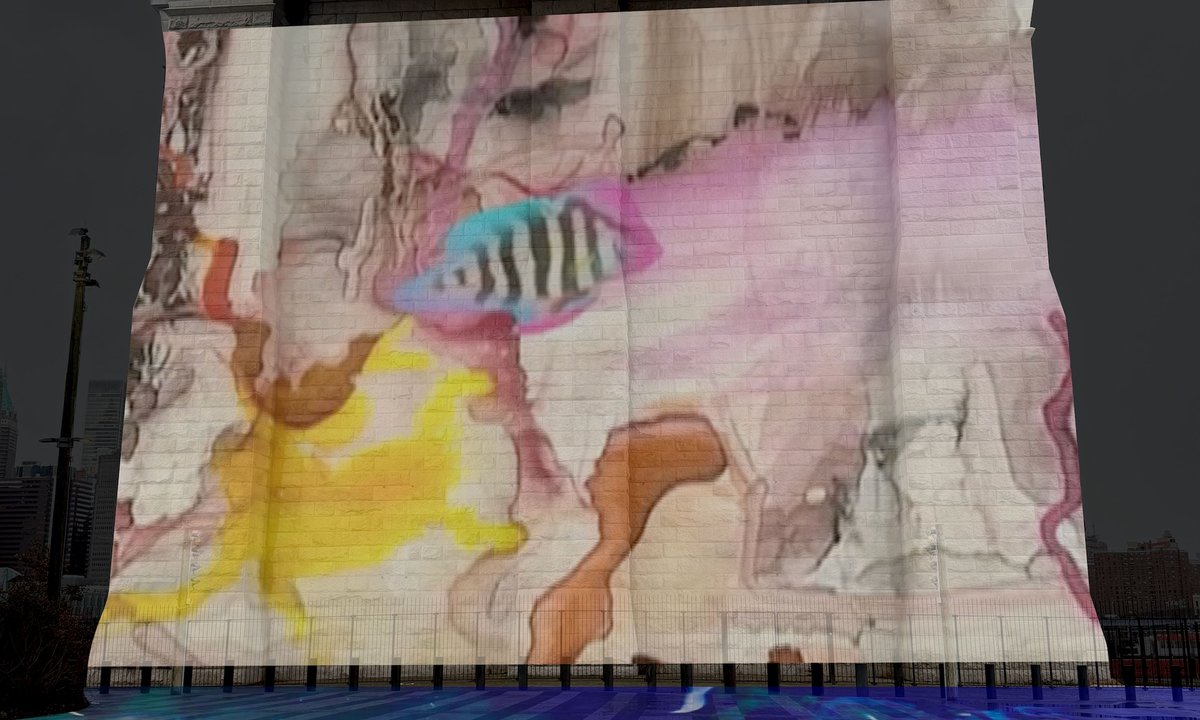
Located just 100 miles off the coast of New York City, Hudson Canyon is a monumental submarine valley that is home to a rich marine ecosystem. Supporting wildlife like sharks, corals, turtles and whales, its depth and size rival those of the Grand Canyon, reaching 2.5 miles deep and 7.5 miles wide. Despite its immense scale and importance, Hudson Canyon is not well known among most New Yorkers. Hoping to raise awareness of this vital underwater environment, the Australian American artist Anita Glesta has created AQUA COSMOS: The Hudson Canyon (2026), an immense projection for the Brooklyn Bridge that will offer New Yorkers a chance to imagine what species fill the depths of these waters.
“We tend to think of New York as buildings and streets and bridges and people,” Glesta tells The Art Newspaper. “There is this other New York, this almost Atlantean world just offshore, filled with extraordinary marine life.”
Glesta’s installation was undertaken in collaboration with Wildlife Conservation Society (WCS) and the non-profit ArtW, and presented through the New York City Department of Transportation’s art programme. Visitors can see the projection for two nights (25 and 26 September) between 7pm and 10 pm, with the best viewing spot in Brooklyn Bridge Park’s Emily Warren Roebling Plaza. The public art project coincides with Climate Week NYC, a citywide programme of environmental initiatives (until 27 September).
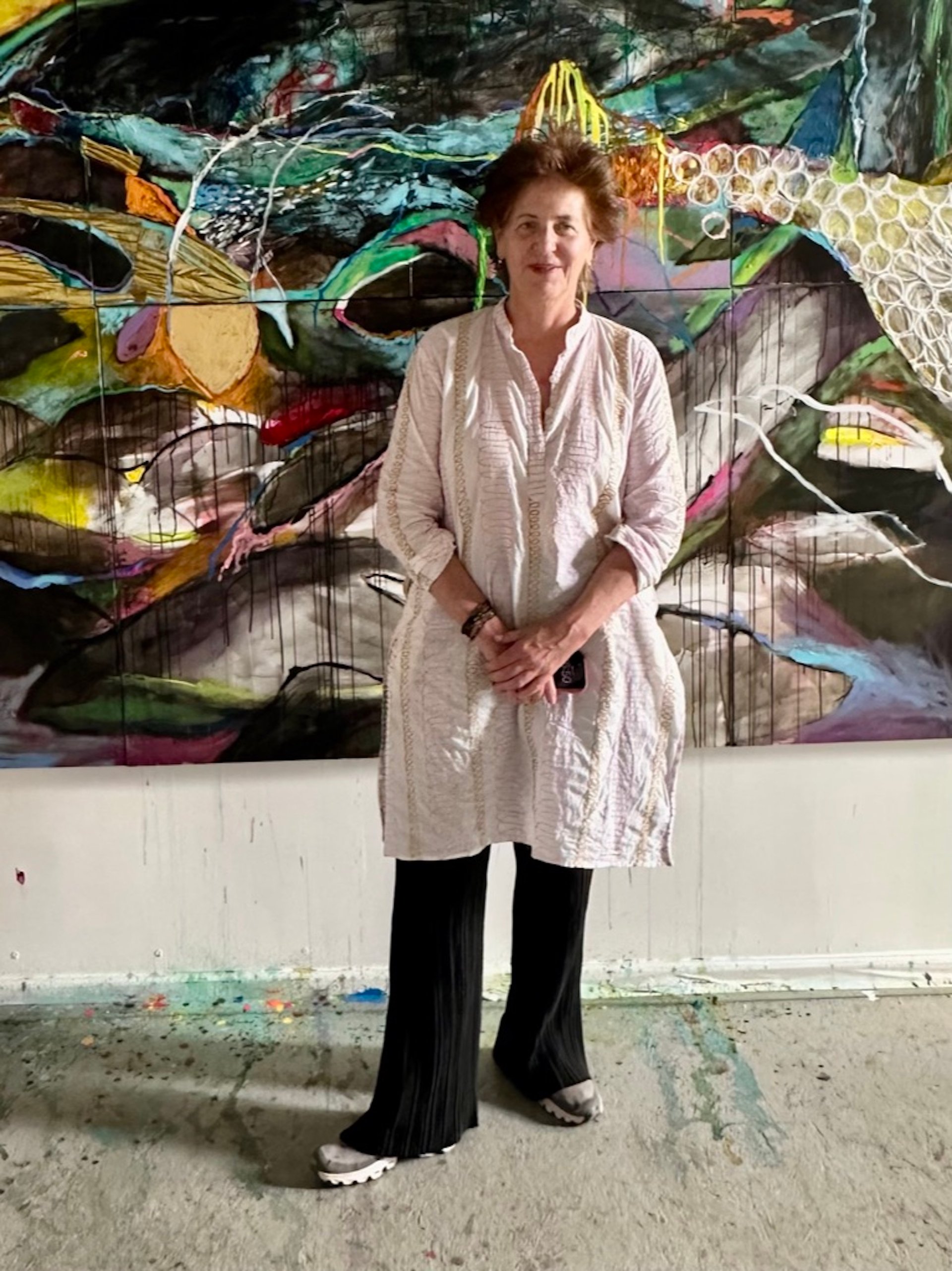
Anita Glesta in her studio Courtesy Anita Glesta
In creating AQUA COSMOS, Glesta drew inspiration from WCS’s Arcturus expedition in 1925, one of the first scientific explorations of Hudson Canyon. Among the crew were six women artists and scientists who helped document the trip and create illustrations in the deep sea where photography was not possible.
“Anita is now creating her own contemporary translation of that world through painting, animation, moving image and sound, in dialogue with science and new technology,” says Marjorie Martay, the founder and executive director of ArtW. “It connects women, art, science, history and public space across a century. To me, that is precisely why supporting forward-thinking women artists matters: their work belongs not only inside the art world, but at the centre of how we think about the world around us.”
On the 100th anniversary of the Arcturus expedition in 2025, the National Oceanic and Atmospheric Administration (NOAA) returned to Hudson Canyon. Footage from this endeavour, along with archival images and journals from the 1925 trip and Glesta’s own paintings and drawings, combine to form AQUA COSMOS.
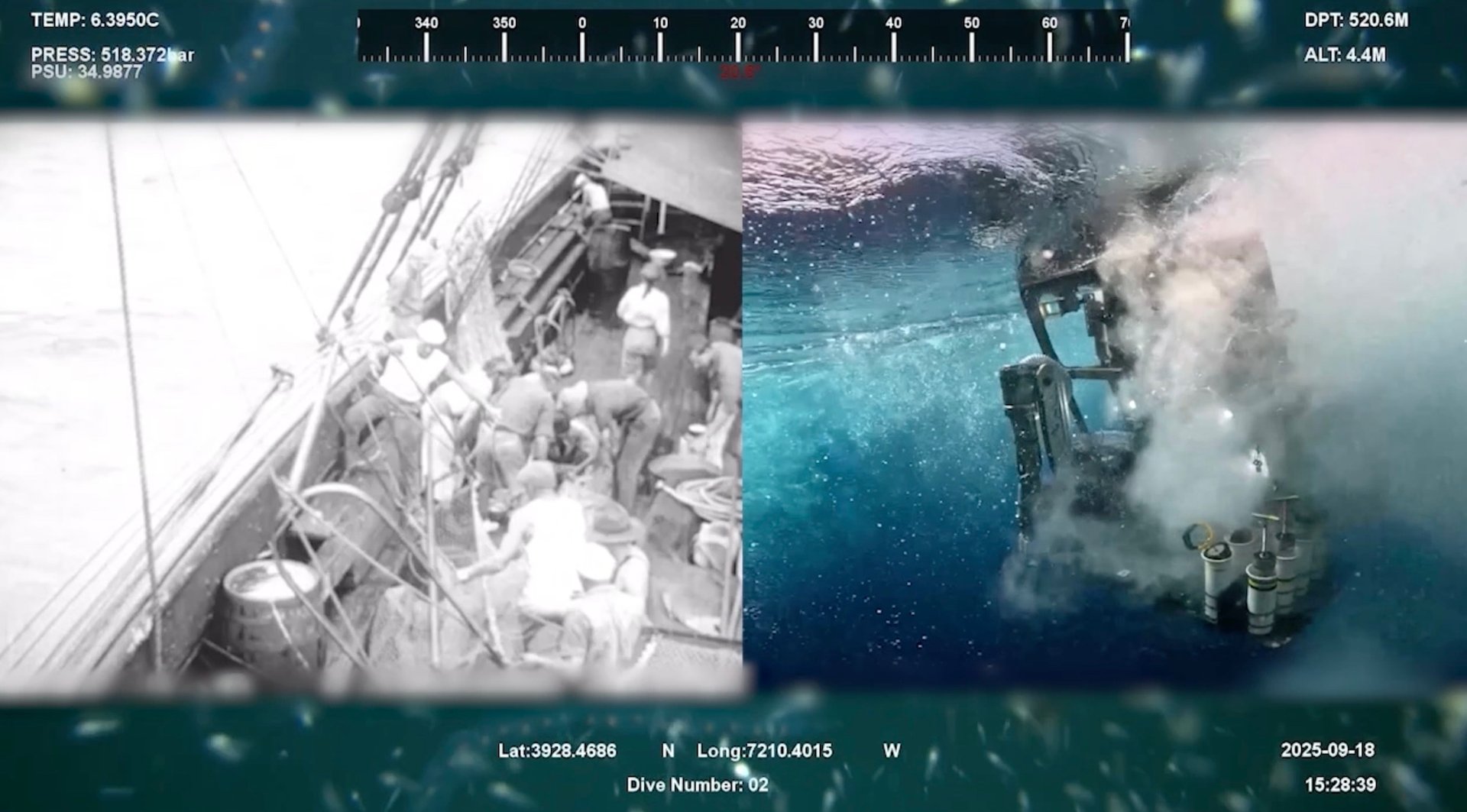
Still from Anita Glesta’s video AQUA COSMOS (2026) Image courtesy of the Wildlife Conservation Society Archive and National Oceanic Atmospheric Administration
“I didn’t want one element simply illustrating another,” Glesta says. “I wanted them to overlap and create something more visceral, so that the science becomes not only information, but something that can actually be felt.” Sounds of the ocean and whales will accompany the projections. Glesta also incorporated voices from the 1925 expedition preserved in WCS’s archive.
For WCS, Glesta’s work helps to convey the importance of Hudson Canyon in supporting a vibrant marine ecosystem, as well as local fisheries and tourism, an ongoing effort for the organisation. In 2016, WCS proposed Hudson Canyon’s designation as a National Marine Sanctuary to “balance conservation and sustainable uses and create an enduring legacy for future generations”, says John F. Calvelli, WCS’s executive vice president of public affairs.
With this designation, Hudson Canyon would be protected against potential threats, like offshore drilling for oil and gas. As the Arcturus expedition shows, WCS’s concern for the area began much earlier. The organisation hopes Glesta’s artwork can bring the canyon “to the shore”, Calvelli adds, “and spur people’s imagination for how they can help steward this incredible place”.
Part of the goal of staging this installation is to make visible something that is crucial to the marine ecosystem, yet remains unknown to many. “New Yorkers may be surprised to learn that it would take more than seven Empire State Buildings to go from the deepest portion of the Hudson Canyon to the surface of the ocean,” Calvelli says. Glesta’s project is one of several initiatives WCS has undertaken to raise public awareness about Hudson Canyon, which also include Canyon’s Edge, an ongoing exhibition at the New York Aquarium to highlight ocean habitats. It also works to promote sustainable and local fishing practices.
Glesta is more than happy to contribute her work to the cause. “I believe that preservation begins with seeing,” she says. “It is difficult to care deeply about something that remains abstract or invisible. But once you encounter it, once you begin to recognise its beauty, complexity and even its strangeness, your relationship to it changes.”