
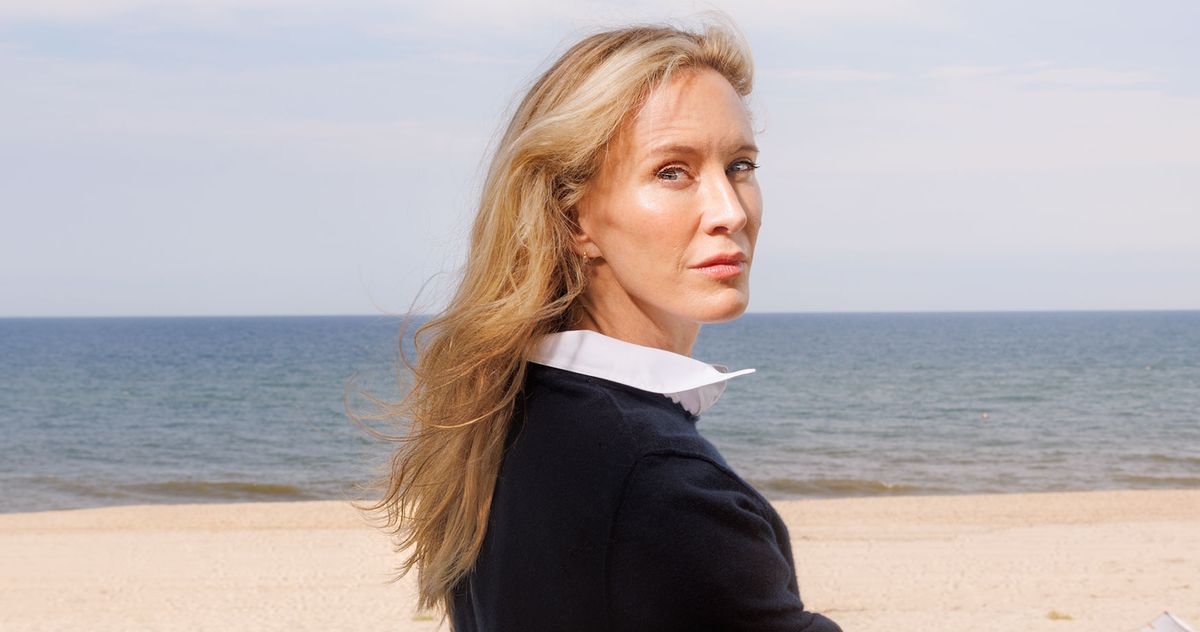
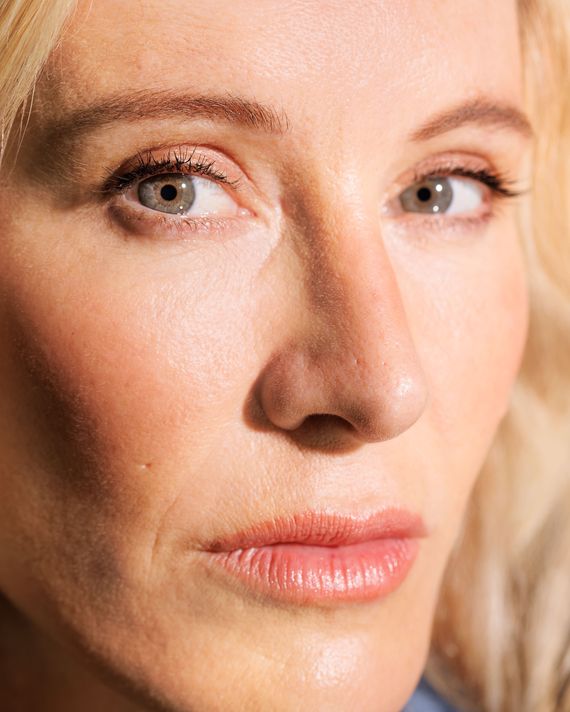
Photo: Elinor Carucci for New York Magazine
This article was featured in New York’s One Great Story newsletter. Sign up here.
Amy Griffin was staring out the car window, watching the evening sun through the trees as the cow pastures and foothills of central Virginia slipped by. It was early September 2025, and she and her husband, the billionaire hedge-fund founder John Griffin, were driving toward Free Union, a town north of Charlottesville, where they own an 18th-century farmhouse. They had spent the day at their alma mater, the University of Virginia, where their son was in his third year. There’d been an event honoring John for his teaching — he’d been a visiting professor at the school for 25 years — and for a student-investment fund he’d founded more than three decades before. Former students had flown in from across the country to deliver tributes. His wife had interviewed him onstage. After staying home to raise their four children, Amy, at the age of 41, founded a venture-capital fund that had a hand in seemingly all of the best-known female-founded and -run brands in American business: Goop, Spanx, Bumble.
Now, driving home, the Griffins felt grateful. The sun was going down behind the Blue Ridge Mountains, and as they neared their house, John took Amy’s hand. He just wanted to mark the moment, he said. It had been a difficult few months, and it was beginning to feel like they’d made it to the other side.
Was Amy Griffin Telling the Truth?
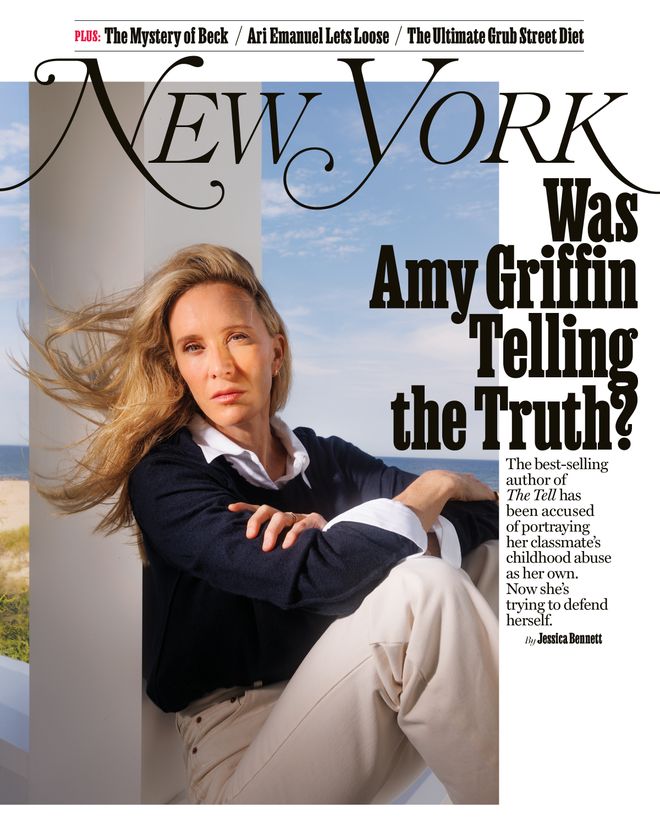
Six months before, Amy had published a memoir, The Tell, revealing that she’d spent decades running — often literally — from some dark, unknown secret in her past, something “locked away,” and that, at 44, with the help of MDMA therapy, she’d recovered memories of being sexually assaulted by one of her middle-school teachers. Amy had come from a well-off and attentive family in Amarillo, Texas. But as she recalled it, the abuse, brutal and cruel, had gone on for years, from when she was 12 to 16, and never been discovered. In the book, Amy describes her head hitting the wall of the school bathroom and the teacher tying her hands together with a bandanna. She remembers her face against yellow tiles; the man, in cowboy boots, stepping on her back. She writes of being raped in a classroom on the night of a Sadie Hawkins dance, recalling that she wore a “poofy” floral dress, borrowed from a family friend and as heavy as a curtain; that it was pulled over her head, blocking out the light. The teacher is given the pseudonym Mr. Mason. “If you tell anyone,” he says, “I’ll rip your teeth out.”
The process of remembering and writing had been difficult. Some days, Amy says, she curled up on the floor weeping. John would bring coffee and sit with her. But she’d achieved something significant. The book garnered a nearly $1 million advance, all of which she would be donating to organizations fighting sexual violence. It debuted at No. 2 on the New York Times best-seller list.
The rollout was extravagant. The launch, at the Ford Foundation, felt like a gala. Celebrity attendees included Gayle King, Christy Turlington, and Karlie Kloss; some guests were seated in the 170-person auditorium, while others were divided into satellite rooms, where they could watch by livestream. Griffin wore a gold suit; Oprah joined her onstage, a surprise “special friend.” There was, one guest remarked, “more security than for the Obamas.”
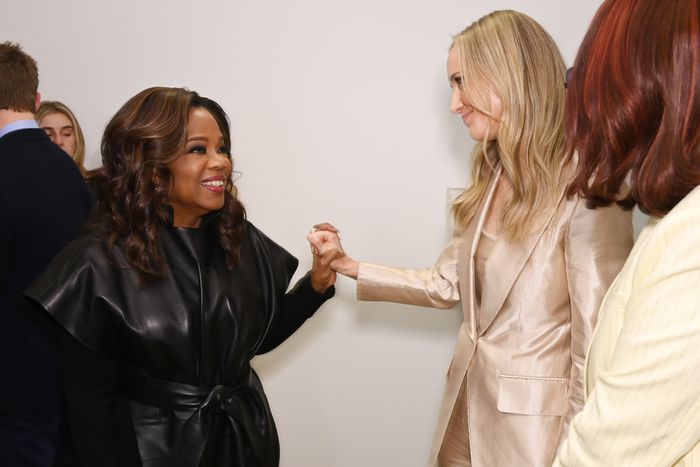
At the launch of The Tell with Oprah Winfrey.
Photo: Getty Images
At each subsequent tour appearance, there was another famous and powerful woman: Sheryl Sandberg, Drew Barrymore, Martha Stewart. The Tell was selected for Oprah’s Book Club and landed Griffin a spot on the 2025 Time “ 100 Most Influential People” list — in an accompanying essay, her close friend Reese Witherspoon called her “a beacon for women everywhere.”
The day before the memoir was released, in March 2025, Amy had received an email from a reporter at the Times whom she knew casually. He suggested they talk about a potential story. She connected him to her PR team and left for the tour. But by May, she was hearing from well-connected friends that the Times was working on “a hit piece”; there were rumors that reporters were digging into her story. In June, Amy began getting phone calls from friends back in Amarillo: A Times reporter was in town interviewing former classmates. She soon learned the paper had obtained a copy of her book proposal, which in error included two mentions of her alleged abuser’s real last name; the reporter was asking around about the teacher and trying to speak to him. “It feels,” Amy wrote in her journal at the time, “like they are slowly chipping away at my story. I feel like a small piece of me dies over and over again every time someone from home reaches out to me.” In July, without informing Amy, the Times reached out to another man named in the proposal, a family friend who she’d written had abused her as a child. (In a comment, the Times said, “Had the reporters been afforded access to Griffin, they would have been able to ask her directly about this man.”) She became so anxious, she says, her hair started falling out, and she and John decided to hire the defamation firm Clare Locke, known for quashing stories on behalf of powerful clients.
In August, one of Amy’s new lawyers called and told her the Times had found, as she recalls it, “another survivor” with a similar story. Amy was in her bedroom in the Griffins’ Upper East Side apartment on the tenth floor of a Romanesque building overlooking Central Park. She felt sick and relieved. As the Times dug into her world, she says, she’d “felt like I was a hostage. It was like I was being released.”
Amy had searched for other victims and any concrete evidence of her abuse for years. In late 2020, she hired the corporate-intelligence firms Exiger and Kroll to act as private investigators. She called old classmates. In August 2021, she brought her allegations to the Amarillo police department and attempted to press charges, only to learn the statute of limitations in Texas had passed. She’d found, as she writes in The Tell, “no smoking gun, no physical evidence, no tangible proof.” For days, the thought of another survivor would not leave her mind. She cried for what this woman must have endured, and she drafted her a letter.
The Griffins’ trip to Virginia was just a few weeks later. Back at the farmhouse, John stiffened up. He said he had to tell her something. An email had arrived from the Times. It was a fact-checking document, a list of claims the paper planned to publish, 11 pages long. It said the Griffins would have about four days to confirm, refute, or otherwise respond.
Amy and John sat together on a small couch in their wood-paneled study. She listened as he read aloud from his iPad, scanning through the first page of the document. The Tell, the reporters wrote, had been “an instant sensation,” but it had “become the subject of skepticism” — that skepticism, they said, was “now spilling into the public.” Then, at the bottom of the page, John read: “We report that a middle school classmate of yours shared … detailed accounts of being attacked — by a different teacher — in several of the same locations, including at the same middle-school dance … Her accounts raise questions about your recovered memories.”
John continued over the next seven pages, the claims accumulating into something amorphous but heavy:
MDMA is an illegal hallucinogen that the Food and Drug Administration declined to approve …
Our review shows that you liberally changed details …
The scope of your family’s wealth is not included …
A complaint was not filed against him during his 30-year career.
On the eighth page, the reporters returned to the classmate. “The classmate,” they wrote, “has clear memories that dovetail with central anecdotes” from The Tell. “The classmate wonders if you were aware as a child of the abuse she was suffering and whether you have appropriated her experiences.”
Amy thought of her daughters, who’d been so proud of her, who’d described her as lighter, more present since telling them the truth about her life. She remembered her teacher’s words as he’d assaulted her in the school bathroom: “You come from one of the nicest families in town. No one will believe you.”
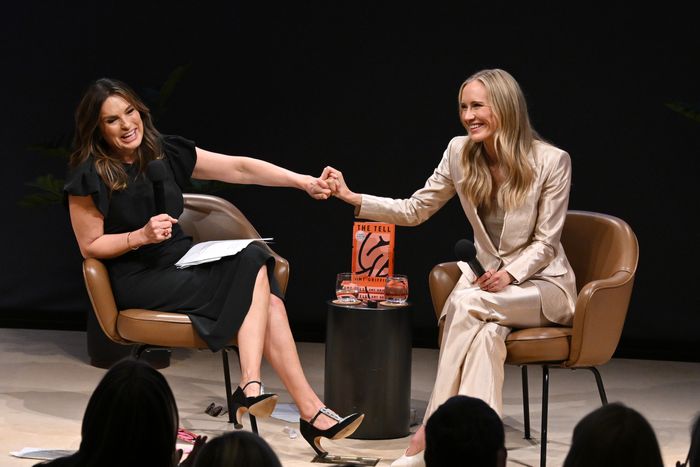
With Mariska Hargitay.
Photo: Getty Images
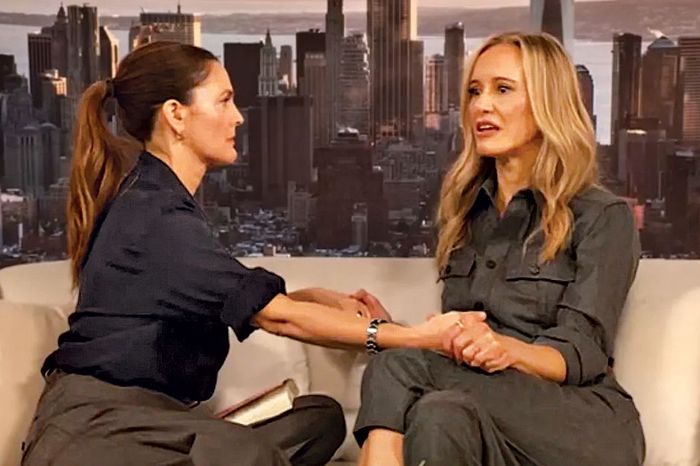
On The Drew Barrymore Show.
Photo: The Drew Barrymore Show
In July, I met Griffin at the Whitby Hotel in an eighth-floor suite. Thick off-white drapes veiled a terrace overlooking 56th Street. We were only a couple of blocks from the offices of Griffin’s investment fund, G9 Ventures, which had a better view — of Central Park — but she’d wanted something more intimate.
At 50, Griffin’s face is smooth. She is tall and thin and was dressed in all white, her blonde hair parted down the middle and hanging over a thin cashmere sweater. She wore a silver-and-turquoise belt buckle — a nod to Texas. She nervously adjusted the placement of our salads: organic chicken with sliced bok choy, cabbage, and avocado and sides of turkey meatballs. She’d ordered from Goop Kitchen, owned by her close friend Gwyneth Paltrow.
We sat on an English roll-arm sofa. Her publicist — a crisis expert she’d hired in March — and one of her defamation lawyers sat nearby; the lawyer, who had said she could not discuss the case, would have preferred the meeting were not taking place at all.
Griffin stretched her arms behind her, as if preparing for a race. An alarm blared over the hotel intercom, followed by an announcement that it was a test of the fire system. “Is there some sort of sign in that?” she asked, laughing.
After the Times’ fact-checking email, the Griffin camp had gone into overdrive, hoping to stop the article. One of her lawyers, Tom Clare, threatened to sue the paper, at one point claiming “the mere sending” of the fact-checking document “had caused additional trauma and extreme physical and emotional harm to a survivor of sexual assault.” He wrote that the Times had been “duped by a fabulist.” Sources inside the paper and close to the Griffins say their friend Darren Walker, then the president of the Ford Foundation, called the editor of the Times, Joe Kahn, to ask that he personally take a close look at the planned story. It was to no avail; according to Times insiders, Kahn loved it.
It was published on the front page in late September. The reporters wrote that they had found “notable omissions” in Griffin’s memoir, including that the Griffins’ foundation had invested in a pharmaceutical company focused on developing therapeutic MDMA and that John had donated $1 million to the Multidisciplinary Association for Psychedelic Studies, a nonprofit research group that has funded clinical trials of MDMA therapy for PTSD patients.
As for Amy’s former classmate, the reporters wrote, “Some of the descriptions … of Ms. Griffin’s being assaulted are eerily similar to the abuse she herself endured, she said. She has since retained a lawyer.” The anonymous woman had told the paper not only that she was assaulted the night of the same dance — in a supply closet, rather than a classroom — but that she too had been wearing a borrowed dress; hers, she said, belonged to Griffin. She alleged that she had been assaulted by a different teacher than the one Griffin described.
The article did not state outright that Griffin had “appropriated” the classmate’s story, as the fact-check suggested it might. But taken as a whole, the Times seemed to be mounting an argument for Griffin’s wrongdoing. (In a statement, the Times denied that it had accused Griffin of appropriating anyone else’s story or implied it. “We followed the facts over several months, sought corroboration, and published what we were able to confirm.”) The paper emphasized the uncertainty of Griffin’s MDMA-recovered account in her memoir as potentially “symbolic,” laden with “notable omissions,” and “not fact-checked” and juxtaposed it with her classmate’s “clear memories.” The two women’s lives were portrayed in opposition, as if the privileges of Griffin’s life were connected, somehow, to the classmate’s struggles. “This summer,” they wrote, “while Ms. Griffin traveled to the Venice wedding of Jeff Bezos and Lauren Sanchez, the classmate worked for $21 an hour as a home aide to an Alzheimer’s patient.” In middle school, the classmate faced “profound abuse and transience” and “strove for acceptance by the popular girls,” while “Ms. Griffin, their leader, treated her with distant benevolence.”
“It was like the Times wanted me to be a symbol of something,” Griffin told me. Until now, she had not spoken publicly about the article. Everyone she trusted told her to wait it out: her new lawyers; her neighbor Diane Sawyer; Senator Cory Booker, an old friend of John’s. Griffin said, “People just kept saying to me, like, ‘No one’s going to care.’”
“I felt ashamed all over again,” she said. “But for something that wasn’t true.” People compared her to James Frey, another Oprah’s Book Club author, infamous for concocting a best-selling memoir. But the idea of what she could have done was worse. The implication wasn’t just that she might be a liar, but that she had stolen someone else’s pain.
In the weeks following the article, Griffin said, “I couldn’t function, and I didn’t know what to do. I was completely empty, gone, disconnected from my joy and the life I built.” She didn’t want to see or talk to anyone outside her family. She rarely went into the office. “I shuffled my feet,” she said, “trying to get out of bed. I shuffled to the bathroom to take a bath. And I’d be like, Okay, water, warm, that feels good. I’d do that three or four times a day, and then I’d say, I have to eat.” She said she was hit with a series of respiratory infections, and in October, she got pneumonia.
Yet she managed to maintain her high-profile public life. In late October, she posted to Instagram from the court at the Barclays Center; she’d just become a part owner of the New York Liberty. In December, she co-chaired the Met’s annual Art & Artists Gala.
Then, in March, almost six months after the Times story, when Griffin was in Paris for Fashion Week, the unnamed classmate filed a lawsuit against her; her ghostwriter, Sam Lansky; and her publisher, Penguin Random House, and imprint, the Dial Press, asking for unspecified damages. The suit asserted that Griffin had “fabricated/lifted multiple key events” from her classmate’s life, including “the specific details” of two sexual assaults by a middle-school teacher: the assault at the Sadie Hawkins dance and another “more violent” assault in a school bathroom. All defendants were charged with invasion of privacy, the “publication of private facts,” and the infliction of emotional distress.
Though her friends and colleagues told her they believed her, the suit seemed to confirm to the broader public that she was a fraud. Her Instagram was flooded with angry comments: “More like Amy Grifter”; “Billionaires are so bored they need to buy someone else’s memories”; “I hope you get sued into oblivion.” Some were outraged by the idea of the psychedelic therapy: “Shame on you for destroying a man with your extremely shoddy science.”
A few weeks after the lawsuit was filed, Griffin’s team received an email from her editor at Dial, Whitney Frick: The paperback edition of The Tell, scheduled to be released in four months, would be put on hold “until more is resolved on the legal front.” Frick said she would be back in touch in the fall.
In June, Griffin filed her own lawsuit charging her former classmate — now her accuser — with defamation. The filing accused the woman — identified publicly for the first time as Joleene Altum — of falsely advancing the idea, in the Times, that Griffin “stole the rape of another woman” and painted her as a “fraud and a thief.” Now, it said, Altum was “seeking to capitalize on the harm the Times article had already caused,” further defaming her.
It was in fact Altum, the lawyers wrote, who had stolen Griffin’s story. Griffin was also seeking unspecified damages, but she would drop the suit entirely if, as her lawyers put it, Altum “tells the truth publicly and plainly.”
During our lunch, Griffin seemed to be looking for a way to convey her rage without agitating her lawyers. Key to Altum’s suit was the claim that she and Griffin had met as adults in 2019, the year before Griffin first took MDMA. This was completely false, Griffin said. “I don’t know Joleene Altum,” she told me. She didn’t remember her at all — not from middle school or any time after.
Among Altum’s more complicated claims was the idea that she was represented in The Tell as a character named Claudia: that is, that she appears in the book as both Griffin — having suffered the assaults Griffin describes — and someone else entirely. Claudia, another classmate, is a key figure in the memoir. The day after Griffin’s first dose of MDMA, Claudia is one of the first people she thinks of, recalling that she lent the “sweet girl” a dress. She comes to believe Claudia may be the person who can best corroborate the story of Mr. Mason’s abuse.
“Joleene is not ‘Claudia,’” Griffin told me. “All of it, all of it, is lies.”
Long before the article in the New York Times, The Tell was the subject of aggressive gossip and speculation in Griffin’s Park Avenue social world. From the moment it was released, as an acquaintance put it, “people were talking about it literally everywhere — galas, dinners, the Hamptons. And the question always was: Do you believe her?”
Griffin and her publisher had anticipated some skepticism. Though experts agree that it’s possible for people to recall, with basic accuracy, events they haven’t thought about in a long time, recovered memories can also be unreliable, and they have notoriously led, in some high-profile cases, to false accounts of childhood sexual abuse. As for MDMA, though it’s been studied as a treatment for PTSD for more than 20 years, it’s still far better known as a party drug.
But Griffin’s team did not seem to have anticipated how people’s feelings about her would affect the reception. Amy Griffin, who owns at least five extravagant homes around the world; Amy, who is not just a wife but a financial power broker; Amy, who competes in triathlons, who in photographs with Paltrow looks like her sister. Now, she was supposedly an accomplished author too. “I think the feeling was,” a close friend of Griffin’s told me, “You can’t be that rich and that beautiful and that perfect — there’s got to be something wrong.” For those primed to see it, the book’s ostentatious rollout had signaled artifice, and the memoir’s success seemed predetermined.
In Lansky, Griffin had chosen an experienced collaborator to help her turn hundreds of pages of notes into a salable product. A former Time journalist, Lansky was one of the ghostwriters of Britney Spears’s blockbuster 2023 memoir, The Woman in Me. And like that memoir, The Tell was fast-paced, propulsive, novelistic. Yet early readers noted it could also be oddly frictionless, speeding through key moments, skating over ambiguity. One journalist who attended the launch described it as feeling “weirdly weightless for a book about something so heavy.” The narrative moved somewhat out of time — there were few dates to orient the reader — and the dialogue could feel polished to the point of contrived. “The prose,” said one memoirist who has friends in common with Griffin, “is too slick.”
The criticism repeated most often was that there was something off about Griffin’s basic story — of buried memories suddenly returning after one session of MDMA therapy. It seemed both too tidy and far-fetched. “How,” an acquaintance of Griffin asked, “do you go from no memory whatsoever to, like, remembering the smell of his leather belt?”
In Griffin’s extended circle, speculation about her motives could be vicious. “She wanted to be more than just a pretty billionaire’s wife,” said a society publicist.
After the Times article and Altum’s lawsuit, some casual friends believed she’d stolen the story. “Maybe she was jealous that everyone else had trauma,” said one, an Upper East Sider.
Her closest friends thought this was all a lot of static. “I think we have a bit of a humiliation fetish for successful women,” said one. She was the first person Griffin had called after her initial MDMA session. The whole idea made no sense, she said: “Why the fuck would she do that to herself?”
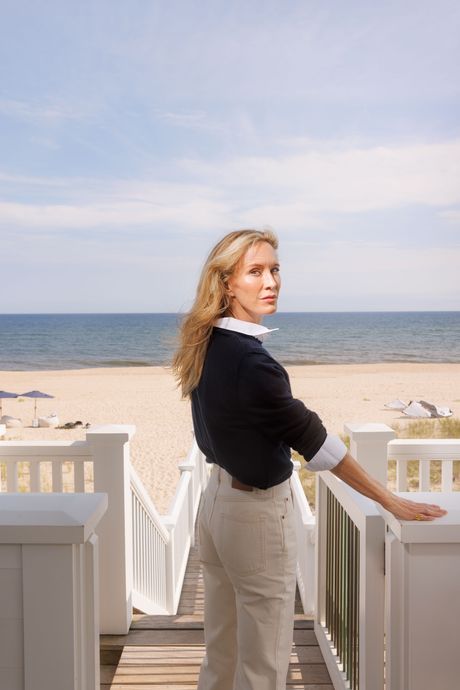
Photo: Elinor Carucci for New York Magazine
In retrospect, the way the New York Times crafted its story on Griffin was confusing. Did the paper have some evidence of wrongdoing on Griffin’s part that it had not included but felt comfortable insinuating? Or had it just collected more evidence of abuse at the same school?
Griffin is certain the reporters were committed to finding fault with her account from the beginning. In the lawsuit against Altum, Griffin’s lawyers devote considerable space to excoriating the Times, writing that the reporters “embarked on a months-long fishing expedition aimed at smearing Mrs. Griffin.” They allege that Katherine Rosman, a correspondent on the “Metro” desk, and her co-author, Elisabeth Egan, a features writer who covers books and the publishing industry, “spent four months combing Mrs. Griffin’s hometown” and “asking leading questions designed to elicit doubt.” (I was previously an editor and writer for the Times, and I have worked with both Rosman and Egan.) The lawyers also claim, offering no direct attribution, that Rosman told a source, at some unspecified time and place, that she “could not believe that the child of a wealthy family could be violently abused without anyone noticing.” In a comment, the Times said, “We reject any notion of a preconceived narrative or pursuing reporting with any agenda.”
The story started out at the “Styles” desk, where elite Manhattan chatter is writers’ bread and butter. The first reporter to contact Griffin was Jacob Bernstein, who often profiles society figures and people mired in scandal. (I have worked with Bernstein at the Times and elsewhere.) Sources inside the Times say Bernstein chose not to pursue the story after reading the book because he thought Griffin’s claims would be too difficult to either substantiate or disprove. It was in May, after Bernstein walked away from the story, that Rosman and Egan teamed up to pursue it.
Griffin believes the reporters were influenced by the din of gossip around the book, and maybe they were. But there were other angles of interest: that a wealthy first-time author had seemed to leverage her rolodex to create a best seller, that she was relying on memories recovered through drug therapy, that her alleged abuser was probably easily identifiable, and that she had admitted to finding no corroborating evidence. The editor eventually assigned to the story seemed to give Griffin’s claims credence from the beginning, believing her account might signal a much larger sexual-abuse scandal at the school.
When Rosman first reached out to Griffin’s team requesting an interview, she wrote that she and Egan wanted to pursue “two main lines-of-questions”: how the book had become such a success and what had happened in Amarillo “to Amy and presumably other children.” Griffin can quote the last part of their message by heart: They would use her book as a “guide to learn all we can and verify everything we can.” The reporters repeatedly asked to talk; Griffin wouldn’t speak to them on the record.
That June, Rosman flew to Amarillo. She requested records from the Amarillo school district, the state education department, and the police. The reporters interviewed the detective sergeant who’d recorded Griffin’s account in 2021, and they spoke with dozens of people around Amarillo. They were particularly interested in finding Claudia and had a copy of Griffin’s book proposal, in which Claudia was described as being in foster care and living in “a group home.” Cold-calling through the middle school’s yearbooks from that era, they eventually reached Altum, who’d lived in a group home and been in and out of foster care.
In the article, the reporters write that Altum told them she was “unfamiliar” with The Tell when they first contacted her. Then, “after she was mailed a copy of the memoir and read it, she said she was deeply unnerved.” This seemed to allow for the possibility that it was Altum who had lifted details from Griffin’s story — that “only after reading it,” as Griffin’s lawyer later put it, “did Ms. Altum claim the story as her own.”
In response to questions, the Times said that Altum had recalled her abuse in precise detail before being sent the book. If the reporters did in fact have Altum remembering the specifics of the Sadie Hawkins dance before reading the book, why would they exclude such an important fact?
In a statement, the Times disputed that there was any slant in how it presented its reporting, writing, “We left it to readers to decide what to make of the situation.” It also wrote, “Unlike the Amy Griffin character in The Tell, Ms. Altum had not relied on psychedelics to remember that she was abused, and she had discussed the abuse with family and friends over the decades.” The Times declined to make Rosman and Egan available for comment.
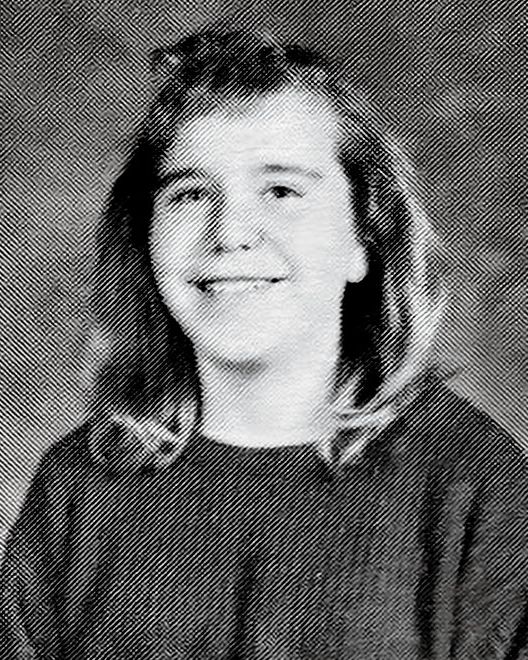
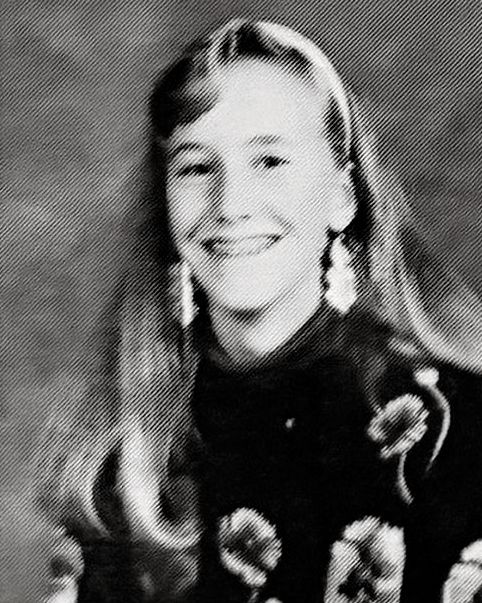
Joleene Altum, left, and Amy Griffin in eighth grade. Altum and Griffin attended Stephen F. Austin Middle School in 1990. Years later, they both stated they were sexually assaulted by different teachers at the school. Photo: Stephen F. Austin Middle School.
Joleene Altum, left, and Amy Griffin in eighth grade. Altum and Griffin attended Stephen F. Austin Middle School in 1990. Years later, they both state… more
Joleene Altum, left, and Amy Griffin in eighth grade. Altum and Griffin attended Stephen F. Austin Middle School in 1990. Years later, they both stated they were sexually assaulted by different teachers at the school. Photo: Stephen F. Austin Middle School.
In August, I met Joleene Altum at her home in suburban Las Vegas, a two-story stucco house owned by her close friends, who are often on the road. Out back was a kidney-shaped in-ground swimming pool and a pond. A small platform stage was set up facing the pool. Altum and her housemates are hobbyist musicians and Jimmy Buffett fans — she’s a singer and the president of a local Parrothead Club. Inside, the place was decked out in “Margaritaville” paraphernalia; the house’s entryway was painted with tropical birds.
Altum was warm, though nervous, a little shaky. She wore a pale-blue two-piece set, silky pants and a blouse, and her chin-length blonde hair was tucked behind her ears. Her face had gentle lines, and her voice was very soft, almost childlike.
She first met Griffin, according to her lawsuit, in 1988 or 1989, when both were students at Stephen F. Austin Middle School in Amarillo. During that period, Altum was living in the local Presbyterian Children’s Home; her parents were drug addicts and alcoholics, she said, so she had been in the system from birth. She was in and out of foster care and ran away a few times; the first time, she told me, was shortly after the eighth-grade dance. In her sophomore year of high school, she ran away for good and began living on her own.
Altum’s accusations against Griffin are complex and sometimes hard to follow, and on the advice of her lawyer, who joined us via her iPhone, she would not discuss anything connected to the legal battle. In her lawsuit and related filings, Altum describes the dress Griffin allegedly lent her for the Sadie Hawkins dance as “floral, puffy” and notes that, in The Tell, Griffin recounts lending a “floral” dress with “puffy sleeves” to Claudia. (Griffin makes clear in the memoir that it was for a different dance, cotillion.) This matches Griffin’s description — in both her memoir and her 2021 police report — of the dress she herself was wearing on the same night to the Sadie Hawkins dance, when she says she was raped. Altum says in a sworn declaration that she was “excited and grateful that Amy was willing to lend me one of her dresses, because I did not have many nice clothes of my own.” Residents of the children’s home, a filing says, were not allowed to borrow clothes from other children.
Altum states that she returned Griffin’s dress to her, “still stained with bodily fluids,” in a plastic bag before a meeting of the two girls’ church youth group. (Griffin and her mother, Julie Mitchell, say Griffin wasn’t a part of any church group in those years. Earlier, Altum had told the New York Times the meeting took place at Griffin’s house.)
Altum claims that she had “no meaningful contact” with Griffin “for decades” after middle school but that in 2019 Griffin called and asked if they could meet for coffee; Griffin was going to be in her area. Altum was living in Morongo Valley then — a tiny town outside Joshua Tree, where she’d raised two children. She says she and Griffin met in Palm Springs, about 30 minutes away, in a “boutique coffee shop.”
The purpose of this alleged meeting is unclear. That day, the suit says, Altum and Griffin talked about growing up around Amarillo and attending the same summer camp; about their shared love of Taco Villa, a local chain; and about Griffin’s work — Griffin, it claims, referred to herself “as a ‘girlboss’” and told Altum “she was one, too.” But according to Altum, the two did not speak about sexual abuse in any form: She did not tell Griffin what had happened to her. Altum writes that she understood the meeting as simply “a personal reconnection with someone from the past.” She says the two women never spoke again.
Then, around April 2022, she alleges, she received a phone call from a man identifying himself as Dominique, without a last name, who claimed to be a talent agent and producer. “He had heard from an unidentified third party that she had led a fascinating life,” her suit says; he was supposedly interested in turning her story into a movie. In her filings, Altum has submitted a phone number once registered to a Dominique Price who was a contestant on Temptation Island in 2019 — a 30-something content creator and recruiter. In her lawsuit, Altum says she and the man spoke a few times a week for a month, spending hours on the phone each time. She says, in the filings, that along with the rest of her life story, she gave him a detailed account of being sexually assaulted in middle school by a teacher. When she asked for a contract, she says, the man disappeared.
Altum ultimately alleges that “Dominique” was “acting as an agent” for Griffin, or Lansky, and that he was working to extract the details of her abuse story so Griffin could publish them as her own. But in a sworn affidavit, Price says he had never met or heard of Griffin until the summer of 2025. That was when he was contacted by the New York Times. It is not clear what the Times knew about Price’s connection to Altum’s story. In his affidavit, he says the paper asked him if he was “familiar with a specific woman whose name I did not recognize.” The Times reporters did not mention Price in their story.
In her own lawsuit, Griffin says that she has never met Altum as an adult and specifically that the Palm Springs meeting never took place. Her lawyers point to flight logs of her private jet showing she did not fly to Palm Springs in 2019. Griffin’s lawyers, in their suit, claim Altum “has essentially conceded that she does not possess a single document, communication, photograph, or receipt substantiating the meeting at the center of her account.” Altum’s lawyer noted that discovery period had only just begun.
In conversation, Griffin calls Altum’s claims absurd, and her lawyers point out that the timing of Dominique’s alleged calls makes it impossible. Griffin had already spoken to the Amarillo Police Department — to Sergeant Gordon Eatley — describing her assaults in great detail, and had been recorded in a lengthy transcript, eight months before the calls between Price and Altum would have taken place.
In Griffin’s conversation with Eatley, lasting roughly two hours, she recalls the cicadas in the park on the evening of the school dance and the walk with her teacher to his classroom door, knowing what was coming. She remembers her dress — with “poofy sleeves”; pink and yellow and floral — pushed over the top of her head, much as she described it in The Tell. She remembers the contested incident in the bathroom and falling against the stall; the teacher on top of her under the bleachers; that he made her feel they were breaking the rules together, like they were “connected”: “It was us doing something, not him doing something to me.” (The man Griffin alleges abused her did not respond to repeated attempts to reach him.)
In the same report, Griffin also recounts being assaulted on her knees in “a janitor’s closet” on the school’s second floor — an incident not included in The Tell. She can see a mop and bucket and cleaning supplies. It is almost impossible that Altum could have seen this report before speaking to the Times and narrating her own assault in the “supply closet.” Further, Altum’s claim of being sexually assaulted at the school dance, independent of her accusations against Griffin, has been supported in court declarations by two people who say they were aware of the incident at the time. One person, a close friend who lived at the children’s home, says he saw her disappear from the dance with the teacher in question. Another, who also lived at the group home, says she later helped Altum try to scrub a stain off a “fluffy floral dress.”
Sitting on the couch in her living room, Altum told me it had taken her a long time to read The Tell. When she finally got to the passages about the assaults, she had to put the book down. It was a “gut punch,” she said. “I was thinking, I can’t be reading this. I don’t even know how to explain it.” She was looking down as she spoke, tears in the corners of her eyes. “There were no good feelings, no good moments.”
In a subsequent phone call with Altum and her lawyer, I asked when she had come to see the book as the story of her own abuse. Did she ever think maybe it had happened to Griffin too?
Altum went again to the feeling of it: “It was the most bizarre — ”
Her lawyer interrupted: “Let’s leave it at that.”
Later, I pressed Griffin on the parallel question: Putting aside Altum’s accusations against her — putting aside Palm Springs, Price, and all of her claims about the memoir — did she believe Altum could be telling the truth about her own assaults? Her lawsuit states that she “takes no position on whether Mrs. Altum has been sexually abused.” Griffin eventually answered in writing: “I hope she finds healing from any trauma she has experienced in life. I can only say with certainty that I did not know of or steal her account of abuse.”
Griffin remains adamant she is telling the truth about her assaults. But the book does contain fictions. Many are small and innocuous; some are relatively standard for a memoir. There were, for example, composite scenes — various events or conversations compressed into one. In one, Griffin discusses the nature of memory with her therapist. It was, as Lansky put it in a comment on the in-progress draft, “a way to educate the reader.”
Griffin wanted the memoir to be, as she put it, “universal.” Her real goal, she told me, was to write something “people would check out of libraries in 20 years and put on school curriculums.” To this end, and contrary to the conventional wisdom of what makes a great and lasting — and universal — book, she and Lansky decided to remove particularities. Together, they scrubbed references to COVID and other markers of the time period, including the Trump presidency, and sanded down mentions of Griffin’s wealth. “East Hampton” became the beach. Her famous friends, if included, went unnamed. “It wasn’t to be deceptive,” as one person familiar with the editing process told me. “It was an attempt to make it accessible.”
The character of Mr. Mason was likewise denuded, appearing faceless and ageless. The reader isn’t told what subject he teaches at the school or anything about who he might be as a person beyond his violence. Much of this was at the advice of lawyers, protecting Griffin and the publisher from defamation suits. Mason is described as one of Griffin’s “favorite teachers,” and yet there are few interactions between them before the assaults begin. “I remember being upset by a lot of the cuts,” Griffin told me that day in the hotel. “Like, Wait, but this ruins the buildup to the story. It ruins the understanding of what happened.”
When she speaks about the teacher now, her body visibly trembles. She never names him, avoiding even the book’s pseudonym. At several points in our meeting when discussion turned to the abuse, she began repeatedly yawning. The first time it happened, she apologized. She wasn’t tired, she explained; it was a nervous-system response.
“This person didn’t grab my arm in the hallway one day and drag me into the bathroom,” Griffin said. She was with him all the time. She told me he would pull her out of class by sending her other teachers handwritten notes, pretending she was needed in his room. When she arrived, he’d proclaim to the class, “Amy’s here!” and throw his long arms open, she said, “as wide as wings.” All of this, she said, was cut from late drafts of The Tell.
In her memoir, Griffin’s sexual abuse by Mr. Mason does not appear until well into the story, where it comes as a dramatic reveal. Lansky wanted it to read like a mystery. There was also a sense that readers were tired of trauma stories. One person close to the process told me, “The thinking was if you opened with ‘This is a book about sexual abuse,’ nobody was going to want to read it.” At Frick’s suggestion, Lansky set about organizing the narrative into three parts. The first would detail Griffin’s life as she recalled it before recovering her memories, culminating in the first moments of her first MDMA session — a cliffhanger. The middle section would recount her abuse and attempts to make sense of it all, and the final third would portray Griffin’s efforts to heal.
But it was not true that Griffin had ever fully forgotten what happened to her. She knew, in a way she struggled to define — in a way she had worked hard to suppress — that she had been sexually abused.
“You know, I — ” her voice cracked as she spoke. “I would get glimpses of this feeling of I did something wrong. This is so deeply shameful. This is so horrific. But then it was like, No, no, I can’t — I’m not going to go there.”
In college, Griffin seemed to try to open up to a friend, a volleyball teammate. The friend told me that on two occasions Griffin implied she’d been sexually violated, but she was vague and dropped the topic quickly. Seven years ago, when Griffin needed a six-hour surgery — for a labral tear; her decades of running had taken a toll — she thought about telling someone. “I was alone, and I was about to be put under,” she told me. “And I thought to myself, Should I be honest about this now, in case something happens to me?”
Griffin said she did not connect this awareness to Mr. Mason until the MDMA allowed her to look at these dark memories. And yet she’d thought about him every day for most of her life. “Being in his car,” she said, “pulling out of the school driveway. I knew exactly the mannerisms of how he moved. I knew exactly how he leaned against a desk. I remember the color and decals on his car as well as I remember my own name.” Every day, she said, these recollections felt like something closing in her chest. Sometimes thinking of the teacher made her feel ill.
The MDMA allowed her to finally link this feeling with her awareness of abuse. As Griffin explained it now, the drug did not reveal new memories whole cloth but let her stop and face what she knew in fuller view. While on the drug, she was no longer afraid to look. Griffin told me that calling the memories “recovered” “was too simplistic.”
In the book, when the MDMA facilitator, Olivia (a pseudonym), arrives at Griffin’s house for the first time, Griffin tells her, “There’s something I can’t face. I know something happened to me, something I’m talking around. But I don’t know what it is. It’s like I can’t remember. Or maybe I don’t want to remember.”
In real life, Griffin says, the two women were on their way downstairs to a guest room when Griffin told Olivia what she knew. Griffin was holding a Starbucks coffee; Olivia had just been suggesting Griffin get socks and a sweatshirt before they began, that she might get cold. “I have to tell you,” Griffin said, “I experienced a lot of sexual trauma and abuse between childhood and 21.” (At 21, she was sexually assaulted by an acquaintance.) “I don’t know what to do with it,” she said. The real person represented by Olivia, who asked that I not use her name as the work she does remains illegal, confirmed the substance of Griffin’s account.
In a statement, a representative for Dial Press said that they were unaware there had been any decision to withhold a revelation or that Griffin was aware of her abuse before taking MDMA. As a defendant in Altum’s lawsuit, Lansky was wary of saying too much. But he provided a statement approved by his lawyer: “I have wondered whether certain aspects of the book may have been misinterpreted by readers. Because it didn’t focus on Amy’s wealth, when people saw the scale of the book’s rollout, some readers may have assumed, wrongly, that she was hiding something. And then there was the structure — which we wanted so the book would feel cinematic and propulsive … But I never could have anticipated the response. Nobody writes a literary memoir expecting it to later be subjected to a forensic analysis.”
One person close to the process saw it differently: “I think the narrative choices were deeply questionable. And in a lot of ways, they set her up.”
Two weeks before my trip to Las Vegas, I met Claudia — or the woman Griffin refers to as Claudia — over Zoom. She had told me over text that she hadn’t read The Tell and that she didn’t want to talk, but a few days later, she changed her mind.
Claudia was polite and cautious, circumspect. She confirmed she knew Griffin in childhood — they’d overlapped for one year in middle school. “We weren’t friends,” Claudia said. “But I remembered her fondly. She did something nice for me many years ago.” She meant the dress, which Griffin had indeed loaned her for cotillion when Claudia was in seventh grade.
When Griffin asked to meet up at a coffee shop in 2023, “I thought, This woman obviously needs to get something off her chest,” Claudia said. “And if talking with me could help her healing process, why wouldn’t I go?” Just as Griffin writes in The Tell, she brought Claudia Taco Villa. When Griffin began to talk about the teacher and the assaults, she says, “I just let her talk.” Claudia told her she was sorry.
Claudia clarified that she had read some passages from The Tell — her mom had texted her screenshots — and she bristled at how she’d been represented. “I mean, who refers to somebody as poor?” she said. She also said that Griffin had not let her know she was writing a book. When the memoir came out, Claudia felt misled. (Griffin disputes this; but she said, “I was so grateful for this meeting, it was such an important step for me.”)
Claudia told me — as she’d told Griffin — she did not remember Mr. Mason. But she could clearly recall the dress Griffin lent her. “It was navy,” she said. “With pink flowers.”
Griffin had been warned against telling her story; friends were sure it would upend her life. Before the book deal, in early 2023, she had lunch with Anna Wintour, then the editor of Vogue. Both women served on the board of the Metropolitan Museum of Art. Griffin had written an essay about the assaults by her teacher, called “The Flow of Water,” and asked if she could send it to Wintour to see what she thought of it. “But you have such a nice life,” Wintour replied. (Griffin decided to not publish the essay.) Her mom friends in the city also discouraged her from going public. “Look, it’s the Upper East Side,” one told me. “You should only appear in the paper on your wedding day and in your obituary.”
But Griffin believed that publishing the book would be worth it and that she was far better positioned than most to endure whatever opprobrium might come. “She blew up her very private, very comfortable life to do this thing,” the Upper East Side friend said. “Sure, she wanted the attention and she wanted to validate her own story. But I also think she really cares. She wanted to help survivors.”
The way it all played out, the friend said, was a tragedy. Two women in a tug-of-war to own a horrific trauma, while the two accused men recede from the story. Even in this investigation, their identities are protected. (While Griffin’s alleged abuser was shielded by the statute of limitations, Altum never tried to bring charges against hers.) In the court documents for both women’s lawsuits, the teachers are redacted completely. Even the subject Mr. Mason taught is blacked out.
“I just think it’s possible,” Griffin’s friend said, “that it happened to more than one girl.” In an email sent after we met, Altum’s lawyer told me he and his client believe it is “implausible” the two girls could have been sexually assaulted by two different teachers on the same night. But abusers borrow tactics from one another all the time. It is also very easy to understand, Griffin’s friend said, how some of the details could have gotten mixed up. “Something similar happened at my middle school,” the friend went on. “So many of us have had these experiences. In a weird way, it’s all of our story. There is no one unscathed, right?”
In early September, I spoke with Griffin’s middle-school volleyball coach, Barb Bixler, who appears in The Tell as Bess Taylor. “I believe Amy wholeheartedly,” she told me. Looking back at Griffin’s time at the middle school, she said, “I’m surprised at my own inability to have seen it.” Bixler told me she was abused as a child herself; she felt she should have understood what she now believes was right in front of her. Mr. Mason, she said, “was always around. He was always in the gym, always there in that time period for volleyball practice.”
When I asked about Altum’s claims, Bixler said she hadn’t known Altum well — she’d taught her in PE — but she didn’t doubt her story. “Honestly, I think there could have been two perpetrators,” she said. “I think Amy had one, and I think Joleene had one.” Bixler believed she knew who Altum’s alleged abuser may have been. He and Mr. Mason, she said, were good friends. She told me she had seen him be inappropriate with students — being touchy, making lewd comments — and that at one point she removed students from his supervision.
In mid-September, one of Griffin’s lawyers sent over a photo: It was Griffin as a young teenager in the floral dress — poofy sleeves, pink and yellow and green. She has braces and wears pink lip gloss. The lawyer said it was the night of the dance in question. And it seems to be: Griffin’s date is wearing a version of the old “hillbilly” Sadie Hawkins costume: denim-and-cowhide pants, a denim shirt, a red bandanna, and a cattleman’s hat.
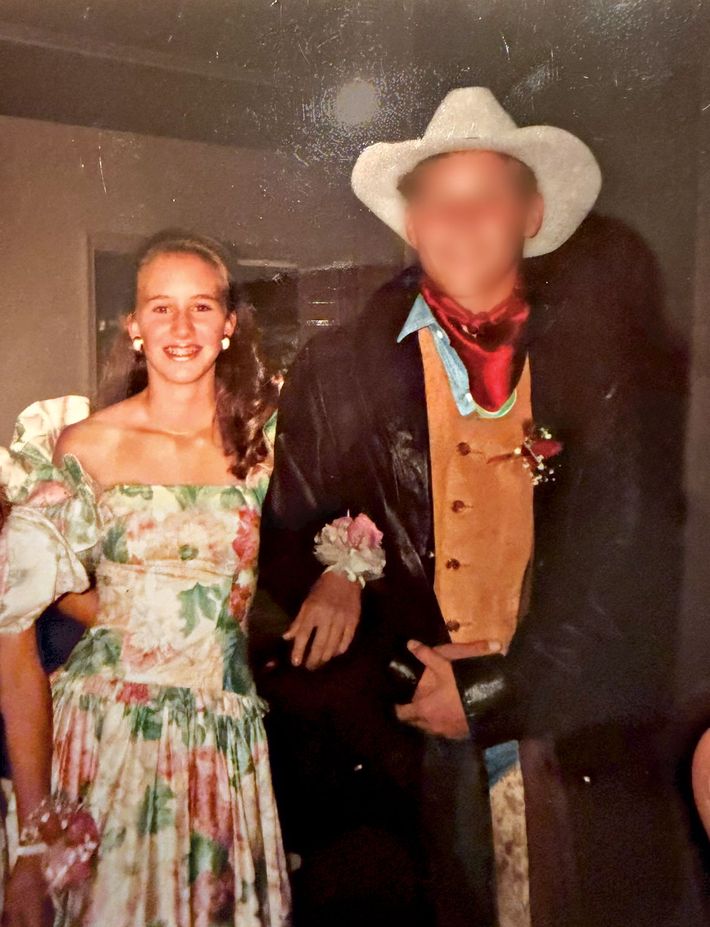
Griffin the night both women say they were sexually assaulted.
Some hours later, the lawyer sent a second photo. It was one of Griffin’s friends from Amarillo, given the pseudonym Allie in the book, wearing the same dress a year later when Griffin had gone off to high school.
I spoke with Allie in August. She lives in Austin now. “I looked up to Amy,” she said. They’d been close, playing volleyball and serving together on a student committee.
In The Tell, Allie says she can vividly recall Mr. Mason paying Griffin special attention. He was “always staring,” she tells Griffin. “I have such a clear memory of him standing really close to you, talking, in the hallway.” The year after Griffin graduated, Allie tells her, Mason chaperoned an overnight student trip. Allie told me it was to Palo Duro Canyon, not far outside Amarillo. Mr. Mason, she said, had driven one of her friends to the site, into the high plains, with the top down, staring between her legs as they went. That night, when everyone was asleep, the girls in a room together, Allie woke up — a light was on. And there was Mr. Mason, staring at her.
Allie had one more story, not included in The Tell. She said she did not tell Griffin about it while the book was being written.
It was the week before Allie started eighth grade, and she had come to campus for a club meeting. She was alone with Mr. Mason in his classroom, and she walked up to his desk to ask a question. As he answered, she said, he leaned back in his chair, putting his hands behind his head and kicking up his feet. “He always had boots on,” she told me. Mason stared at her a moment. “He said, ‘God, I miss Amy.’ He looked me dead in my eyes and he said, ‘Do you want to be my new Amy?’”
Thank you for subscribing and supporting our journalism.
If you prefer to read in print, you can also find this article in the September 21, 2026, issue of
New York Magazine.
Want more stories like this one? Subscribe now
to support our journalism and get unlimited access to our coverage.
If you prefer to read in print, you can also find this article in the September 21, 2026, issue of
New York Magazine.
One Great Story: A Nightly Newsletter for the Best of New York
The one story you shouldn’t miss today, selected by New York’s editors.
Vox Media, LLC Terms and Privacy Notice